

A strong-looking sales report doesn’t automatically make a restaurant franchise resale a sound purchase. When buying a restaurant franchise resale, the real test is whether the reported performance, franchise rights, and site obligations hold up under scrutiny.
That uncertainty is understandable. Sales figures need reliable supporting records, and you need to know which assets, lease terms, equipment obligations, and franchise rights can transfer. The franchisor’s approval process and transfer terms can also affect whether the opportunity works as expected.
This guide explains how a resale differs from opening a new franchise location and how to build a disciplined diligence plan. You’ll learn which financial and operating records to review, what approvals and transfer details to clarify, and how to assess the business separately from its lease and equipment obligations. Restaurant For Sale Marketplace offers franchise resale listings and brokerage support to help organize the transaction from listing through closing.
Key Takeaways
- Understand how a franchise resale differs from opening a new location, and separate the business from the rights, premises, equipment, and real estate involved.
- Before moving forward, map the approval process and review the franchise documents that set the terms for brand access and ongoing operations.
- When buying a restaurant franchise resale, compare seller claims with source records and examine sales, costs, labor, occupancy, inventory, and equipment.
- Use a staged diligence plan to move from initial screening through records review, transfer conditions, approvals, and closing.
- Set search criteria around your ownership goals and operating capacity, then compare opportunities by business fit, available records, premises, and transfer considerations.
What Buying a Restaurant Franchise Resale Actually Means
A restaurant franchise resale is an existing franchised business offered to a new owner. Unlike opening a new unit, you’re evaluating an operation with a history. It may have staff, customers, suppliers, equipment, and established routines. That history can help you understand the opportunity, but it also gives you records and obligations to examine. Buying a restaurant franchise resale means assessing not only the business, but also which parts of the existing arrangement can transfer.
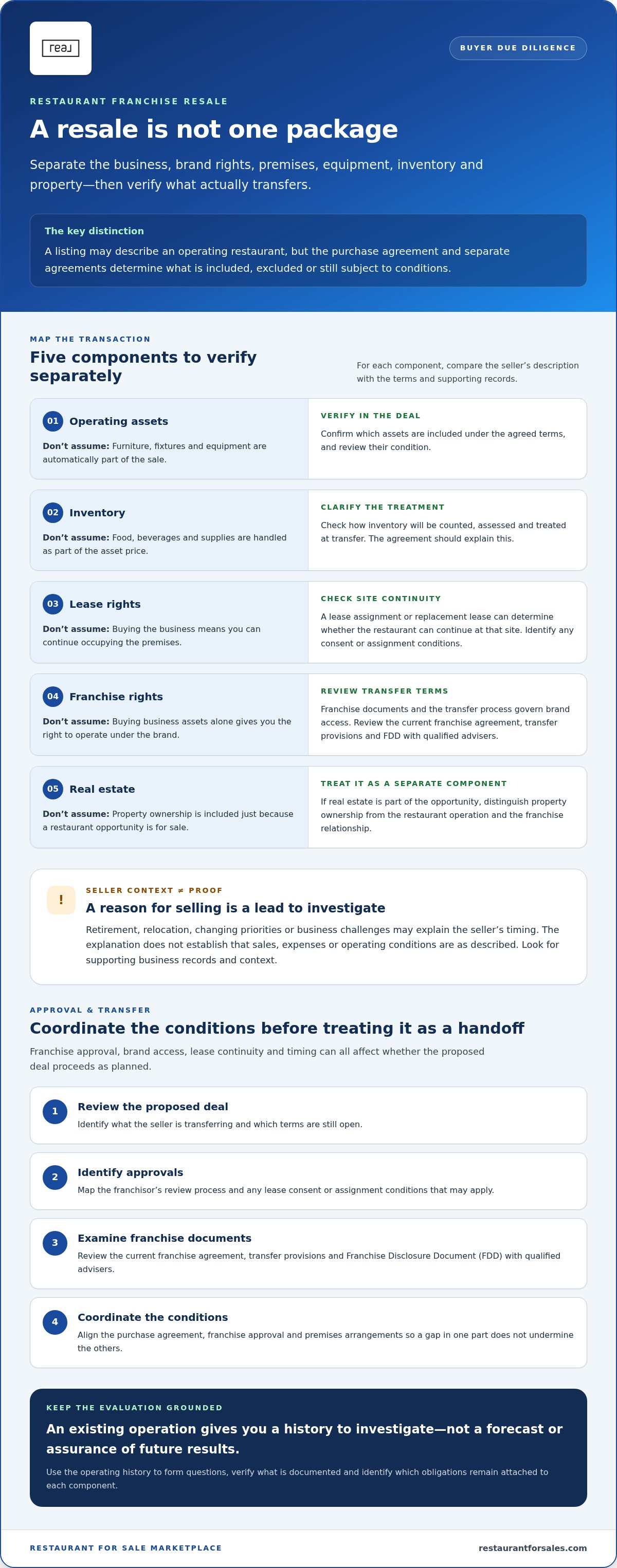
Franchising connects an operator to a brand’s established business model and operating framework. The overview of Franchising provides useful background, but a specific restaurant resale is shaped by its own agreements and transaction structure. Don’t assume that everything described in a listing comes as one package. The operating business, franchise rights, lease, equipment, inventory, and property may be treated as separate components.
What may be included in a restaurant franchise resale?
The purchase agreement determines which assets and obligations are part of the transaction. Ask for a clear breakdown, then compare it with the supporting records and agreements. A listing might describe an operating restaurant, while the deal itself covers selected assets or depends on separate arrangements.
- Operating assets: Furniture, fixtures, and other equipment used to run the business may be included, subject to the agreed terms and their condition.
- Inventory: Food, beverages, and supplies may be counted and handled separately at transfer. The agreement should explain how inventory will be assessed and treated.
- Lease rights: The right to occupy the premises is distinct from owning the business. A lease assignment or replacement lease can determine whether the restaurant can continue operating at that site.
- Franchise rights: The ability to operate under the brand is governed by franchise documents and the transfer process. Buying business assets alone doesn’t necessarily provide those rights.
- Real estate: If the property is part of the opportunity, treat ownership of the real estate as a separate component from the restaurant operation and franchise relationship.
This separation matters because a listing can make an opportunity appear complete even when critical components require separate agreements. Before evaluating the transaction as a whole, map what is included, what is excluded, and which obligations remain attached to each component.
Why do franchise owners sell an operating restaurant?
An owner may sell because of retirement, relocation, changing priorities, or business challenges. The reason can help explain the seller’s timing and intentions, but it doesn’t establish whether sales, expenses, or operating conditions are as described. Look for supporting business records and context rather than treating an explanation as evidence.
An owner’s explanation for selling provides context, not documented proof of the restaurant’s performance.
An existing operation offers a record to investigate, not a forecast or assurance of future results. Customer demand, staffing, costs, equipment condition, and the terms attached to the site or franchise may change after a transfer. Use the operating history to form questions and identify what needs verification. That keeps the appeal of a turnkey business separate from the evidence needed to judge its prospects.
How Franchise Approval and Transfer Terms Shape the Purchase
You may agree with the seller on the business terms and still need to meet separate franchise transfer requirements. Approval, brand access, lease continuity, and the timing of each condition can affect whether the deal proceeds as planned. Before treating a resale as a straightforward handoff, establish what the franchise documents require and how those requirements fit with the proposed transaction.
Use a deliberate sequence:
- Review the proposed deal. Identify what the seller is transferring and which terms are still open.
- Identify approvals. Map the franchisor’s review process and any lease consent or assignment conditions that may apply.
- Examine the franchise documents. Review the current franchise agreement, transfer provisions, and Franchise Disclosure Document (FDD) with qualified advisers.
- Coordinate conditions. Align the purchase agreement, franchise approval, and premises arrangements so a gap in one part of the transaction doesn’t undermine the others.
What should buyers understand about franchisor approval?
A franchisor may review a proposed buyer and set qualification requirements before approving a transfer. The process can vary by brand and applicable rules, so don’t assume the seller’s description reflects current requirements. Review the relevant agreement with legal counsel and identify any application materials, buyer qualifications, training, or operating standards that could affect the transition.
Consider how approval interacts with the premises. If the lease must be assigned or replaced, you may need to coordinate landlord and franchisor conditions. For example, you could be approved to operate under the brand but still face a delay if the premises arrangement isn’t ready. Build these dependencies into the transaction timeline instead of treating approvals as paperwork to complete after settling the business terms.
How do the franchise agreement and FDD inform the decision?
The franchise agreement sets out the operating relationship, including obligations, fees, term, and transfer provisions. The FDD provides disclosures about the franchise offering and can help you understand the system’s stated terms. Review the documents together: compare what the resale listing describes with the obligations and conditions that would apply to you as the incoming owner.
A resale transfers an opportunity, not automatic freedom from brand rules. Don’t assume the existing owner’s arrangements will carry over unchanged. Ask qualified legal and financial advisers to help interpret the documents, identify questions for the franchisor, and assess how the terms affect the proposed purchase. For a broader overview of the transaction, see this complete guide to franchise resale.
For buyers comparing opportunities, restaurant franchise resale listings offer a practical starting point. Use the listing details to frame your diligence, then confirm the approval path and transfer conditions before relying on the proposed deal structure.
How to Test a Restaurant Franchise Resale’s Financial and Operational Claims
Seller materials are a starting point, not verified results. When buying a restaurant franchise resale, compare reported performance with source records and investigate gaps before relying on the figures in your analysis. Review sales and cost trends over consistent periods, then consider what may explain changes, including seasonality, owner involvement, staffing levels, hours, or operating changes. A busy period or seller summary alone can’t establish the business’s underlying performance.
Which financial records help test the opportunity?
Review tax returns, profit-and-loss statements, point-of-sale (POS) reports, bank records, and payroll documentation. Compare matching periods and investigate differences, such as POS sales that don’t align with deposits or payroll records that don’t match reported labor costs. Ask how adjustments were calculated and what records support them. The 2026 restaurant valuation guide can provide context for how financial information informs valuation.
Seller-reported earnings may use different measures. Seller’s discretionary earnings (SDE) generally considers the benefit available to one owner-operator, including certain owner-related adjustments. Earnings before interest, taxes, depreciation, and amortization (EBITDA) is another measure, often used to assess operating earnings before those items. Definitions and adjustments can vary, so don’t assume either measure fits every deal. Have a qualified adviser review the calculations and supporting records.
What operational signals can change the investment case?
Look beyond total revenue. Examine sales mix, labor patterns, hours, customer concentration, and how much the seller personally contributes to daily operations. Review equipment condition and maintenance records, vendor arrangements, and the brand’s operating standards. A business that depends on the seller’s relationships or unusually intensive involvement may operate differently after a transition.
Use an evidence-based comparison to distinguish documented strengths from issues that remain open. Treat each label as provisional until records, agreements, or inspection findings support it.
| Review area | Documented strength | Open question | Potential improvement need |
|---|---|---|---|
| Sales | POS reports reconcile with deposits across comparable periods. | Do seasonal patterns explain fluctuations? | Are weak periods tied to hours, demand, or operating changes? |
| Costs and labor | Statements and payroll records support reported trends. | Are staffing levels consistent with the seller’s involvement? | Do schedules or cost patterns point to an operating challenge? |
| Equipment and operations | Condition and maintenance records support readiness. | Are repairs or vendor arrangements unresolved? | Will updates or brand requirements affect the transition? |
Historical results help frame questions and inform your analysis, but they don’t guarantee future revenue or profitability. No single revenue figure establishes a resale’s future performance. Assess financial records alongside operating conditions, owner dependence, and the requirements that will apply after transfer. If the seller describes the business as a turnaround or a proven performer, test that description against evidence before using it to guide your decision.
A Practical Due Diligence Sequence for Buying the Resale
A disciplined review helps you identify problems while there’s still time to address them in the transaction terms. When buying a restaurant franchise resale, treat the financial, legal, operational, franchisor, and property reviews as connected workstreams. A promising business may still be difficult to acquire if the franchise transfer or premises arrangement can’t be completed on workable terms.
- Screen the opportunity. Compare the business type and available information with your ownership goals and operating capacity. List the records and deal details you’ll need before deciding whether to proceed.
- Review records and operations. Reconcile seller-provided financial information with independent documentation. Examine equipment, inventory, staffing, vendor arrangements, and obligations tied to the business. Record discrepancies and request supporting information instead of relying on explanations alone.
- Assess the transaction structure. Identify the assets and obligations included, and how the proposed purchase relates to franchise rights and premises. Have qualified advisers review financial, legal, tax, and operational matters. Property review should account for the lease or any real estate included in the opportunity.
- Coordinate conditions and approvals. Align the purchase terms with franchisor review and the lease assignment or new lease process. Make responsibilities, deadlines, contingencies, and unresolved issues clear in the transaction documents.
- Resolve open items before closing. Confirm that required reviews and approvals are complete and that the agreed assets, records, and premises arrangements match the final deal.
What should the buyer verify before committing?
Focus on evidence and dependencies. If reported sales don’t match source records, establish what accounts for the difference and how it affects your analysis. If equipment needs repair or inventory is handled separately, understand how that will be reflected in the agreement. Review staffing and vendor arrangements for continuity concerns, and identify obligations that will remain with the business or transfer to you.
Give the lease its own review rather than treating it as a quick check alongside the asset list. Determine whether an assignment or a new lease is part of the transaction, what conditions apply, and how the premises timeline relates to franchisor approval. The guide to restaurant lease assignments offers additional context on this workstream.
How can buyers keep the transaction on track?
Maintain a diligence tracker with each requested document, the person responsible, the deadline, the status, and the decision it informs. Include separate entries for financial records, franchise materials, lease documents, equipment review, and outstanding questions. This makes it easier to spot conflicts early, such as an approval timeline that doesn’t align with the proposed closing date.
A signed letter of intent can outline proposed terms, but it doesn’t replace completed diligence. Keep contingencies and decision points visible as the review progresses, and involve advisers early enough to address issues before they become closing obstacles.
Explore restaurant franchise resale opportunities and use a clear diligence plan to evaluate the transaction from initial review through closing.
Find and Pursue a Restaurant Franchise Resale With a Clear Plan
A focused search starts with the kind of ownership you can realistically take on. Before comparing listings, define your preferred restaurant format, the role you want to play in daily operations, your relevant experience, and the investment limits you need to stay within. Consider your capacity to oversee staffing, hours, and the brand’s operating requirements. These criteria help narrow the search to opportunities that fit your goals, not simply those that look appealing at first glance.
Buying a restaurant franchise resale also means evaluating the fit between the business and its transfer conditions. A suitable candidate needs more than a compelling description. Review the available records, premises details, franchise transfer considerations, and any obligations that may affect your ability to operate after purchase. A broader restaurant acquisition guide can help place the resale process within the larger purchase plan.
How should buyers screen available resale listings?
Start with practical criteria: restaurant format, desired operating role, and the premises or ownership requirements that matter to you. Then compare each listing using the same categories, such as business type, records disclosed, lease or property details, and franchise transfer considerations. Seller-provided figures are useful for initial screening, but treat them as reported information until you’ve reviewed the supporting documentation.
Keep a short comparison record for each candidate. Note what appears to fit, which documents are available, and what remains unanswered. Record questions about the premises, transfer process, or operating requirements while the details are fresh. This makes it easier to distinguish a promising lead from a good fit, and to prioritize follow-up without confusing incomplete information with a confirmed concern.
When can brokerage support help move a purchase forward?
Restaurant For Sale Marketplace connects buyers and sellers through restaurant listings and brokerage services. Brokerage support can help organize communication and guide the transaction from listing through closing. A broker can help keep the business terms and transaction steps in view, while legal, financial, tax, and property advisers address their respective areas of review. For context on how brokerage fits into a sale, see the restaurant broker’s role in a business sale.
Valuation resources can help you assess information in a listing and frame questions about the opportunity. They’re a tool for analysis, not a substitute for reviewing the specific records and circumstances of a transaction or obtaining independent advice.
Use a clear search brief to compare opportunities and decide which ones merit closer review. Explore restaurant franchise resale opportunities and take the next step toward a transaction path that fits your ownership goals.
Turn Your Search Into a Disciplined Next Step
The right opportunity is one that fits your ownership goals and can withstand careful review. As you move forward with buying a restaurant franchise resale, keep your criteria clear and treat each next step as a decision point. A focused search can help you spend time on businesses that suit your experience, operating capacity, and plans.
Restaurant For Sale Marketplace connects restaurant buyers and sellers nationally, with franchise resale listings and resources to support your evaluation. Brokerage, valuation, and financing tools can help you organize the path from exploring an opportunity to assessing the transaction, alongside advice from your independent professional advisers.
Explore restaurant franchise resale opportunities and identify listings that align with your goals. Start with a clear plan and take the next step toward a purchase that fits your ownership goals.
Frequently Asked Questions
Can I buy a restaurant franchise resale without prior restaurant experience?
Yes, it may be possible, but the franchisor’s qualification and training requirements can affect approval. Consider how you’ll handle practical responsibilities such as scheduling staff, monitoring food costs, maintaining service standards, and overseeing daily operations. For example, a buyer with strong business experience but limited restaurant exposure may need a more experienced operating partner or a clear staffing plan. Review the franchise requirements and assess whether your capabilities and support can meet them.
Is the seller’s reason for selling a reliable sign of the restaurant’s condition?
No. A seller’s explanation provides context, but it doesn’t verify the restaurant’s condition. A personal move or retirement may be genuine, while business challenges can also influence a sale. Compare the explanation with the timing of sales changes, staffing turnover, maintenance needs, and lease obligations. If the stated reason doesn’t align with the records or operating picture, treat that gap as a question to resolve, not proof of a particular conclusion.
What happens if the franchisor does not approve a proposed buyer?
The transfer may not proceed as planned, depending on the agreements and purchase conditions. Before making an unconditional commitment, understand how the purchase documents address approval, deadlines, and the parties’ options if approval isn’t obtained. You might also need to complete additional training or provide further information before a decision. Have qualified legal counsel review the specific documents and coordinate the approval process with the proposed transaction timeline.
Can a restaurant franchise resale include the building?
Yes, a transaction can include real estate, but the property and operating business are distinct components. Determine whether the restaurant operates in seller-owned premises, leases its space, or is offered alongside a property sale. If the building is included, assess property condition, maintenance responsibilities, and ownership-related obligations separately from franchise and business matters. Commercial real estate and legal advisers can help evaluate how property ownership changes the scope of the acquisition.
How much working capital should I plan for after buying a restaurant franchise resale?
There’s no universal amount. The need depends on the restaurant’s cash flow, operating cycle, transition plan, and expected obligations. Build a cash-flow forecast that accounts for the timing of customer receipts and payments to employees, vendors, and the landlord. Include plausible repair or staffing needs, and distinguish these operating reserves from the purchase consideration. Use verified business records and conservative assumptions, then review the forecast with financial and accounting advisers before committing.
Can I change the menu or restaurant concept after buying a franchise resale?
Not necessarily. A franchise agreement and brand standards may limit changes to the menu, suppliers, signage, service procedures, or overall concept. For example, if you plan to remove menu items or introduce a new service model, determine whether those changes require approval or are allowed at all. Review the relevant agreement and brand materials before building a business plan around changes the franchise system may not permit.
What happens to gift cards and loyalty rewards when a restaurant franchise changes owners?
Their treatment depends on the transaction structure, brand policy, and any applicable customer or third-party commitments. During diligence, request records of outstanding gift card balances, loyalty rewards, and other customer obligations. Clarify in the transaction documents who will be responsible for honoring them and how related records will be handed over. Legal and accounting advisers can help assess the obligations and account for them appropriately in the proposed deal.


