

What if the sale is ready to close, but the franchisor hasn’t approved you yet? Getting approval from a franchisor to buy a resale is a separate review track, not a final signature at the end of the deal. The franchisor may assess your finances, experience, and readiness to operate while you evaluate the business and arrange financing.
Unclear requirements, a delayed decision, or a rejection can disrupt your plans. Preparing early helps you respond to review requests and coordinate the seller, franchisor, lender, and closing steps. This guide explains what to review before applying, what information to prepare, and how to keep the approval process moving without treating approval as a substitute for due diligence.
You’ll learn how franchise documents shape transfer requirements, how franchisor review fits alongside financial and lease diligence, and how to plan for training and other transition conditions. You’ll also see how to build a timeline that makes dependencies and open items visible. Restaurant For Sale Marketplace lists franchise resale opportunities and provides brokerage support for buyers and sellers evaluating an existing restaurant business.
Key Takeaways
- Getting approval from a franchisor to buy a resale is a distinct part of the transaction, so build it into your plan from the start.
- Review the franchise agreement and disclosure materials to identify transfer terms and buyer qualifications before preparing your application.
- Organize records that address potential questions about your financial capacity, experience, and readiness to operate.
- Track application materials, outstanding requests, responsible parties, and follow-up dates to keep the review process organized.
- Coordinate franchisor approval with purchase documents, lease arrangements, financing, and transition tasks in one closing timeline.
Why franchisor approval matters when buying a franchise resale
Buying an operating franchise location doesn’t automatically give you the right to use its name, systems, or other brand assets. Those rights come from a franchise relationship between the franchisor and franchisee. In a resale, the franchisor may review the proposed buyer and transfer under the applicable franchise documents. That review can affect whether and how the ownership change proceeds, so treat it as a separate transaction requirement from the outset.
The seller’s operating history may make the business attractive, but it doesn’t establish that you meet the brand’s requirements. Getting approval from a franchisor to buy a resale means understanding the applicable transfer process and preparing to meet its stated criteria. Don’t assume the purchase agreement alone transfers the seller’s franchise rights.
What does franchisor approval mean in a resale?
Franchisor approval is the brand’s review of a proposed transfer and prospective franchisee. Depending on the governing documents, the process may involve assessing the buyer’s qualifications and completing steps such as interviews, training, or submitting specified information. Requirements vary by brand and transaction. Review the applicable franchise agreement and disclosure materials to identify which provisions and procedures apply to the resale.
For broader context on the relationship between a franchisor and franchisee, see this Franchising overview. In a resale, the practical point is that you’re seeking to enter the brand relationship, not simply acquire the seller’s business assets. Identify the approval conditions early and include them in your transaction plan.
How approval fits into the larger acquisition
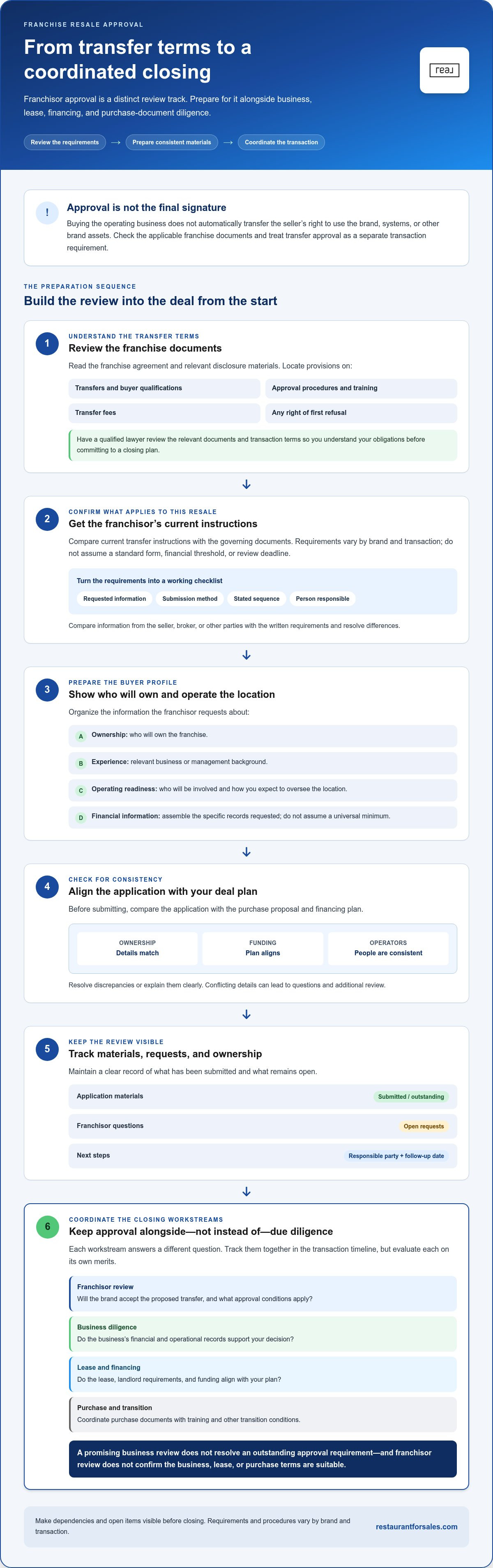
Transfer review runs alongside other due diligence, not in place of it. Assess the business’s financial and operational records, understand the lease and any landlord requirements, arrange financing, and review the purchase documents. Each workstream answers a different question: whether the business and terms make sense for you, whether the premises and funding align with your plan, and whether the brand will accept the proposed transfer.
A promising location can pass your business review and still have an unresolved approval requirement. Likewise, a franchisor’s willingness to consider you doesn’t confirm that the business’s financials, lease, or purchase terms are suitable. Coordinate the reviews, but evaluate each on its own merits.
- Track approval requirements and requested materials separately from business and financial diligence.
- Build the franchisor’s review steps into the transaction timeline alongside lease, lender, and closing tasks.
- Compare transfer terms with the applicable franchise documents instead of relying on informal assumptions.
For a fuller view of how these workstreams fit into an acquisition, the complete franchise resale guide covers the broader purchase process. Coordinating the workstreams helps you spot dependencies early and see what remains unresolved before closing.
How to prepare a strong franchisor approval application
Start with the brand’s transfer process, not a generic checklist. Requirements vary by franchise system and transaction, so don’t assume there’s one standard form, financial threshold, or review deadline. Getting approval from a franchisor to buy a resale is easier to manage when you identify what the franchisor requires, prepare a consistent application package, and track follow-up items from the beginning.
Review the franchise documents and transfer requirements
Begin with the franchise agreement and relevant disclosure materials. Locate provisions covering transfers, buyer qualifications, approval procedures, training, transfer fees, and any right of first refusal. These terms may affect the order of steps and the conditions that must be met. Have a qualified lawyer review the relevant documents and transaction terms so you understand your obligations before committing to a closing plan.
Next, obtain the franchisor’s current instructions for a resale transfer. Compare them with the documents and note what applies to this transaction. Turn the requirements into a working checklist: requested information, submission method, stated sequence, and the person responsible for each item. If the seller, broker, or another party provides information about the process, compare it with the written requirements and resolve any differences.
Organize buyer information before submitting
Prepare a clear picture of who will own the franchise and who will be involved in operating it. Describe relevant business or management experience and outline how you expect to oversee the location. If the franchisor requests financial information, assemble the specific records it asks for instead of assuming a universal minimum or sending an unstructured bundle of documents.
Before submitting, compare the application with your purchase proposal and financing plan. Ownership details, proposed funding, and the people named as operators should be consistent across the materials. Resolve discrepancies or explain them clearly, since conflicting details can lead to questions and additional review.
Use this sequence to keep preparation orderly:
- Obtain the transfer requirements. Identify the applicable documents, instructions, and stated steps.
- Assess readiness. Compare your experience, ownership structure, and available information with the brand’s stated qualifications.
- Organize the package. Label requested materials and check that each document is current and legible.
- Submit through the required channel. Keep a copy of what you sent and note the submission date.
- Track the review. Record questions, responses, outstanding items, and follow-up dates so requests don’t get lost among other deal tasks.
Keep one organized record of the application and updates. If the franchisor asks for clarification, answer the specific question and check that your response matches the rest of the submitted information. This process helps you prepare while leaving room for brand-specific requirements. As you evaluate opportunities, browse franchise resale listings as a starting point for identifying businesses to assess.
What franchisors may evaluate, and how to address concerns
A franchisor’s review may look beyond whether you can complete the purchase. It may consider your financial capacity, proposed ownership and operating structure, relevant experience, readiness to follow brand requirements, and transfer conditions affecting the seller. Criteria depend on the franchise system and transaction, so use the areas below as preparation prompts, not a universal checklist or a promise of approval.
When getting approval from a franchisor to buy a resale, aim to answer questions clearly and consistently. Gather information that supports your plan, distinguish confirmed facts from projections, and avoid overstating your experience or resources. A thorough application can address concerns, but it can’t guarantee the franchisor’s decision.
Financial and operational readiness
Present a funding plan that matches the proposed purchase and explains the sources of funds you expect to use. If financing is part of the plan, make sure the ownership details and funding assumptions in your application align with the information provided to the lender. Describe who will oversee the location and what operating resources you expect to have in place. Don’t assume a standard net-worth, liquidity, or staffing threshold; follow the requirements stated for the specific franchise.
| Potential review area | Preparation and documents to discuss |
|---|---|
| Financial capacity | Organize the requested financial records and prepare a clear outline of proposed funding sources. Keep figures consistent with the purchase proposal and financing plan. |
| Ownership structure | Explain who will own the buyer entity and identify the people expected to take part in operating the business. Ensure names and roles match across application materials. |
| Operating readiness | Set out your intended oversight approach and relevant resources. Describe the proposed operating plan and how responsibilities will be assigned. |
| Experience and training | Summarize relevant management or business experience accurately. Identify training steps described in the franchise materials and plan for them in the transition. |
| Transfer and compliance conditions | Review stated transfer requirements and any seller obligations or unresolved conditions that could affect the ownership change. Keep supporting correspondence and documents organized. |
Experience, training, and compliance
Describe relevant experience through specific responsibilities rather than broad claims. For example, connect your background in staff management, budgeting, or customer-facing operations to the role, if those accurately reflect your experience. If you lack direct experience in a particular area, explain how you plan to address it rather than implying expertise you don’t have.
Training may be part of the franchisor’s process, but its format and timing depend on the applicable requirements. The seller’s compliance status and any transfer conditions may also affect the transaction. Track these items as open questions, document responses, and account for unresolved conditions in the deal plan. Preparation helps you respond constructively, but you still need to wait for the franchisor’s decision.
How to manage review, conditions, delays, or a declined application
After submitting the application, treat the review as an active workstream rather than a task that will move forward on its own. A clear record helps you respond accurately, spot dependencies, and keep the seller and other transaction participants aligned. It also helps you identify whether a delay is tied to a missing document, an unanswered question, or a condition affecting the planned closing.
Keep the approval process moving
Maintain one shared tracker or file with submitted materials, dates sent, franchisor communications, open questions, assigned owners, and follow-up dates. Keep copies of the application and supporting records. If the franchisor requests clarification, answer the specific question with consistent information and note when you sent the response. If an item depends on the seller or another party, assign responsibility and track it rather than letting the request sit unanswered.
Coordinate follow-up among the buyer, seller, and transaction professionals. A brief status update can show what’s complete, what’s outstanding, and whether a purchase, financing, or lease milestone may be affected. Don’t assume a pending review means a condition has been waived or a timeline has changed. Avoid irreversible commitments that conflict with unresolved approval requirements, and review the purchase agreement’s contingencies and deadlines before changing course.
If approval is conditional or declined
A conditional response isn’t the same as unconditional approval. Read the stated conditions carefully, identify who must satisfy each one, and determine how completion will be documented. Conditions may involve additional information, training, transfer steps, or another requirement in the applicable franchise documents. Ask for clarification on any unclear point and record the response so everyone involved is working from the same understanding.
If the application is declined, don’t assume there’s an appeal or that the decision will be reversed. Review the written response and relevant franchise and purchase documents to understand the available next steps. Discuss contractual options, notice requirements, and deadlines with qualified transaction counsel. Depending on the terms and circumstances, you may need to reassess the purchase, timeline, financing arrangements, or other commitments. Update the seller and lender promptly if the decision affects the transaction’s feasibility.
Keep approval status connected to the closing plan. If a franchisor’s condition affects training or the transfer date, reflect that dependency in the timeline and tell the parties responsible for related tasks. If lease arrangements or financing depend on a particular closing date, assess the impact before agreeing to changes. A tracker supports coordination, but it can’t replace the governing documents or the franchisor’s written decision.
If you’re still identifying a suitable opportunity while planning for these approval steps, browse franchise resale listings to explore businesses available for evaluation.
Complete the franchise resale with a coordinated closing plan
A franchise resale involves several connected workstreams. Franchisor approval, purchase documents, lease arrangements, financing, and transition planning each have their own requirements, but progress in one area may depend on another. Put them on a single timeline so everyone can see what remains open, who owns each task, and which conditions must be satisfied before closing.
For context on the broader transaction, the restaurant acquisition guide can help frame the purchase sequence. Adapt that sequence to the resale using the franchise-specific requirements in the applicable documents. Don’t leave approval until the end as an administrative step.
Build a closing checklist around approval conditions
Record approval status, outstanding conditions, responsible parties, and target milestones in one closing checklist. Include related tasks for purchase documentation, lease arrangements, financing, and the seller’s transition. For each item, identify the person responsible and any task it depends on. This makes timing conflicts easier to spot, such as a lease assignment or funding step that must be coordinated with the transfer.
Before finalizing documents, compare the franchise transfer terms with the purchase agreement and lease documents. Make sure the timeline reflects written approval conditions, required training, and agreed seller transition arrangements. If a condition changes, update the relevant milestones and inform the parties responsible for affected tasks. Qualified transaction counsel can help assess document obligations and deadlines.
- Approval: Record the decision and any remaining conditions.
- Purchase: Track required signatures, documents, and contractual milestones.
- Lease: Confirm the status of lease arrangements and related assignment steps.
- Financing: Monitor remaining lender requirements and timing dependencies.
- Transition: Align seller support and training plans with written requirements.
Assign an owner to every open item to prevent assumptions from turning into closing problems. You may be waiting on a franchisor response while the seller prepares transition materials and the lender handles separate requirements. Keep status updates focused on decisions, dependencies, and next actions.
Find and evaluate a resale opportunity
Before committing to a location, compare the opportunity with your operating goals, experience, resources, and readiness to meet the brand’s requirements. Review the business and proposed terms alongside the approval process, lease, financing plan, and transition needs. Brokerage support can help coordinate the broader evaluation and sale process; learn more about a restaurant broker’s role in a business sale.
Getting approval from a franchisor to buy a resale is one part of assessing whether an opportunity can work for you. Restaurant For Sale Marketplace lists franchise resale opportunities and provides brokerage services for buyers and sellers evaluating restaurant transactions. Explore franchise resale opportunities as a starting point for comparing businesses with your goals and planning the steps from evaluation through closing.
Choose your next step with confidence
Use the approval process to test the fit between the opportunity and the business you want to build. Getting approval from a franchisor to buy a resale is one part of the decision. Consider whether the location, ownership responsibilities, and transaction terms align with your goals. A clear view of your priorities can help you assess opportunities thoughtfully instead of moving forward simply because a deal is available.
As you consider an acquisition, ground your decision in both the business opportunity and your readiness to take it on. Restaurant For Sale Marketplace lists franchise resale opportunities to help buyers begin that evaluation. Explore franchise resale opportunities and take the next step toward finding a business that fits your plans.
Frequently Asked Questions
How long does franchisor approval take for a resale?
There’s no single timeline for franchisor approval. Timing can depend on the brand, how complete the application is, and circumstances such as ownership complexity or outstanding transaction details. For getting approval from a franchisor to buy a resale, request the written process and track submitted materials, review status, and dependencies. Coordinate purchase and closing deadlines with the transaction documents, and have qualified counsel review the timing provisions.
Can a franchisor reject a buyer for a resale?
A franchisor’s ability to reject a proposed buyer depends on the franchise agreement and applicable law, so there isn’t a universal yes-or-no answer. If a decision is made, review the stated reason against the transfer provisions and discuss it with qualified franchise counsel. Then check the purchase documents for relevant contingencies, deadlines, and available next steps. Don’t assume the seller’s approval or operating history determines the outcome for a new buyer.
Do I need restaurant experience to buy a franchise resale?
Not necessarily. Experience criteria differ among franchise systems and may focus on management or operational capability rather than a specific restaurant background. Present your relevant responsibilities accurately, such as supervising employees or managing business operations, and explain how your proposed operating plan addresses any experience gaps. Compare your background with the franchisor’s stated criteria. Relevant experience can support your application, but it doesn’t guarantee approval.
Will I have to complete training after buying an existing franchise?
Training may be required for a transfer or new franchise arrangement, but the details vary by franchisor and transaction. Review the written approval conditions and applicable documents to identify who must attend, when training must occur, and whether completion affects the transfer or opening. Don’t assume the seller’s prior training satisfies your requirements. If timing is unclear, resolve it early enough to account for training in your transition plan.
Can I sign a purchase agreement before franchisor approval?
The parties may structure a purchase agreement around approval conditions, but the right approach depends on the transaction and applicable law. Before signing, have qualified counsel review the approval contingency, deadlines, deposit terms, and termination rights. For example, clarify what happens if approval is delayed past a stated date or isn’t granted. A conditional agreement can address transaction risk, but signing it doesn’t itself secure franchisor approval.
Does buying a resale automatically transfer the seller’s franchise agreement?
No, don’t assume the seller’s franchise agreement transfers unchanged. The governing documents and the franchisor’s process may call for a transfer document or a new agreement, depending on the franchise system and transaction. Review the proposed post-sale terms with qualified counsel, including the agreement’s duration, obligations, and any conditions that apply to the incoming owner. Understanding those terms before closing helps you evaluate the rights and responsibilities you’ll receive.


