

What if the most critical factor in your next hospitality venture isn't the menu, but the lease agreement? While many aspiring owners focus on culinary trends, sophisticated buyers recognize that successful hospitality investments are primarily a play on real estate and deal structure. You're likely aware that thin profit margins and complex lease transfer processes can derail even the most promising concepts. Finding an accurate business valuation in today's dynamic markets often feels like a moving target. This guide provides the technical framework you need to evaluate, structure, and secure profitable restaurant investments in high-value metropolitan markets. You'll learn which financial metrics signal a genuine opportunity and how to identify turnkey assets with solid foundations. We also explain the strategic advantage of using a professional broker to access off-market listings that never reach the public eye. By the end of this article, you'll have a clear roadmap to navigate the evolving regulatory landscape, including critical labor compliance factors and essential disclosure requirements, with total confidence.
Key Takeaways
- Evaluate the differences between independent brand growth and the proven systems of franchise resales to choose the right entry point for your portfolio.
- Master the critical financial metrics, including EBITDA and prime cost ratios, that define the long-term profitability of Bay Area restaurant investments.
- Learn why securing a favorable lease assignment and landlord approval is a higher priority than the physical kitchen equipment during the due diligence phase.
- Utilize a professional restaurant brokerage to access off-market listings and ensure you receive an accurate business valuation before initiating a transaction.
The Core Principles of a Restaurant Investment Opportunity
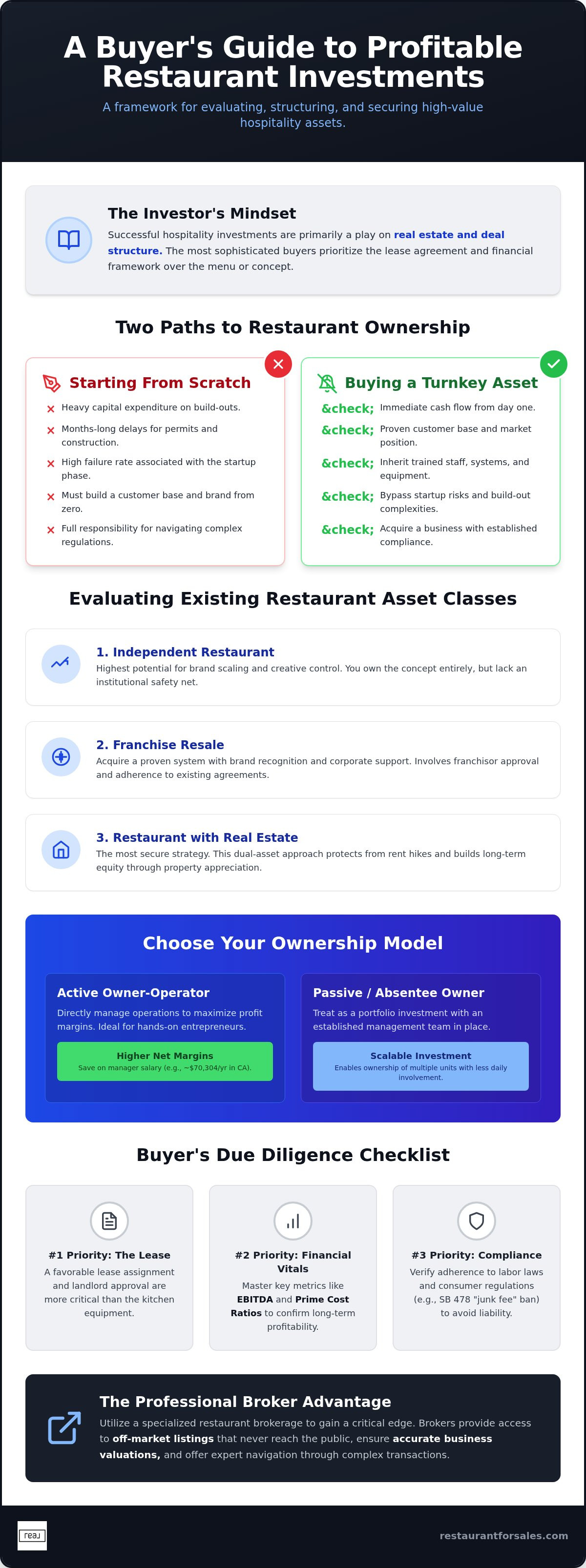
Successful Bay Area restaurant investments represent a strategic acquisition of cash-flowing assets rather than just a passion project. Investors must choose between building a concept from the ground up or acquiring an existing business. While metropolitan markets demand higher initial capital, the density of high-income consumers and established foot traffic often justifies the premium. A turnkey asset is particularly valuable here. It allows an investor to bypass the heavy capital expenditure of kitchen build-outs and ventilation systems, which can take months to permit and install. By acquiring a business that's already operational, you're buying time as much as you're buying equipment. This approach allows you to focus on growth instead of construction delays.
Investment Models: Passive vs. Active Ownership
Choosing an ownership structure dictates your daily involvement and your ultimate return on investment. Active owner-operators often see higher net margins because they eliminate a high-level manager's salary. With the 2026 exempt salary threshold for California managers now set at $70,304, taking on an active role can significantly reduce payroll pressure. Conversely, the absentee-owner model appeals to those looking for a passive addition to their portfolio. These listings typically feature established management teams and systems already in place. While the profit margins might be tighter due to management costs, this model offers better scalability for investors looking to own multiple units. You'll often find these opportunities labeled as "absentee-run" in brokerage listings, indicating the current owner provides only high-level oversight.
Why Buy an Existing Restaurant Instead of Starting New?
Acquiring an established business provides immediate cash flow and a proven customer base. It also mitigates the regulatory hurdles that often stall new openings. For instance, existing venues have already navigated the SB 478 "junk fee" transition and the June 2026 compliance audit deadlines. Buying a business with these operational standards already met saves months of administrative labor and legal consultation. You also inherit an existing staff. In a market where retention is difficult, having a functional team is a massive competitive advantage. Recent data shows that hybrid models combining traditional dining with retail windows have seen a 22% increase in organic delivery orders. Finding an existing space with this infrastructure is far more efficient than building it yourself. By focusing on asset transfers, you avoid the high failure rate of the startup phase and move straight into optimizing an active revenue stream.
Evaluating Different Restaurant Asset Classes
Categorizing Bay Area restaurant investments into specific asset classes is the first step toward building a resilient portfolio. Each category offers a different risk profile and operational requirement. Independent restaurants provide the highest potential for brand scaling and creative control, but they lack the institutional safety net found in other models. For those prioritizing stability, specialty venues like bars or lounges often provide higher margins due to lower food costs and higher beverage turnover. Understanding these distinctions helps you align your capital with your long-term financial objectives. Buyers must also vet independent listings for compliance with the recent SB 478 "junk fee" regulations, as the California Attorney General's office began random audits in mid-2026.
The Benefits of Franchise Resales
Franchise resales offer a middle ground between the risk of a startup and the high cost of a new build-out. You're acquiring a business with an established operational playbook and existing brand recognition. The transfer process involves corporate approval, ensuring the buyer meets the franchisor's standards for experience and liquidity. When evaluating these deals, pay close attention to the remaining term on the franchise agreement. A short remaining term might require a costly renewal fee or a mandatory equipment refresh. However, the corporate support and national marketing spend often provide a floor for your ROI that independent venues simply can't match. You can browse current franchise resale listings to compare corporate performance metrics across different brands.
Investing in Restaurants with Real Estate
Acquiring restaurants with real estate represents the most secure investment strategy in competitive markets. This dual-asset approach protects you from the volatility of commercial rent hikes, which can otherwise erode thin margins. It also creates two distinct revenue paths: operational profit from the dining business and long-term equity through property appreciation. Financing these deals is often more straightforward. The Small Business Administration (SBA) frequently offers loans covering up to 90% of the sales price when real estate is included. This leverage allows you to preserve cash for operational improvements while securing a tangible asset. Owning the land and building provides the ultimate exit strategy, as you can eventually sell the business while retaining the property as a landlord. This strategy remains a primary focus for seasoned investors looking to hedge against inflation while building a regional footprint.
Key Financial Metrics for Evaluating an Investment Opportunity
Data transparency is the cornerstone of any successful transaction. When reviewing Bay Area restaurant investments, look beyond the surface level revenue. High gross sales don't always translate to high net returns, especially in markets with high operational overhead. Analyzing the Profit and Loss (P&L) statement allows you to identify red flags like unrecorded cash expenses or inconsistent vendor pricing. You must verify that the financial records match the tax returns and point-of-sale reports. Discrepancies here often indicate systemic management issues or unreliable data that could compromise your ROI.
The Role of Professional Business Valuation
A formal Broker Opinion of Value (BOV) is essential for verifying seller claims. Unlike a seller's asking price, which is often based on emotion or debt obligations, a professional appraisal uses historical data and market multiples. This process ensures you don't overpay in a competitive environment. Professional valuation services also account for current market trends, such as the 1.3 percent inflation-adjusted gain projected for the national restaurant industry in 2026. Having an objective valuation provides the leverage needed to negotiate a fair market price based on actual performance rather than speculation.
Analyzing Cash Flow and Profitability
EBITDA is a measure of a business's operating performance that calculates earnings before interest, taxes, depreciation, and amortization are deducted, providing a clear picture of its core profitability. While EBITDA is a standard metric for larger acquisitions, many small to mid-sized restaurant deals use Seller's Discretionary Earnings (SDE). This figure adds back the owner's salary and one-time expenses to show the total financial benefit available to an owner-operator. Understanding the difference is vital for determining if the business can support your debt service and personal income requirements.
Prime costs serve as your most reliable health metric. These include the following components:
- Cost of Goods Sold (COGS): The raw cost of food and beverage inventory.
- Total Labor Costs: Including taxes, benefits, and the $70,304 manager salary threshold effective in 2026.
Ideally, prime costs should remain below 60 percent of total sales. If these numbers fluctuate wildly in the historical statements, it suggests poor inventory management or staffing inefficiencies. Evaluating the sustainability of these revenue streams requires a deep dive into quarterly payroll filings and digital menu performance. Consistent margins over a 24-month period indicate a stable investment with predictable future returns. Focus on businesses that demonstrate a tight grip on these variables, as they are best positioned to weather market volatility.
Navigating Lease Assignments and Legal Due Diligence
Many investors mistakenly focus on the quality of the kitchen equipment when the true value of Bay Area restaurant investments lies in the leasehold interest. A high-performing venue is only as stable as its right to occupy the space. Without a secure, long-term lease, your capital is at risk. You must determine if the deal is structured as an asset purchase or a stock purchase. Asset purchases are more common as they allow you to acquire the business's physical and intangible components without inheriting the previous owner's liabilities. This distinction is critical for protecting your investment from past tax issues or legal claims.
The Critical Nature of the Lease Agreement
The lease assignment process is often the most complex phase of a transaction. Landlords must approve the new tenant, which requires a professional presentation of your financial liquidity and operational experience. Review the 'option to renew' clauses immediately. If a lease has fewer than five years remaining without an option, the business's valuation drops significantly. Look for 'red flags' like demolition clauses or exorbitant Triple Net (NNN) reconciliations. If you need assistance navigating these negotiations, our team specializes in restaurant lease assignments to ensure a smooth transition of the premises.
The Due Diligence Process for Buyers
Legal due diligence extends beyond the lease. You must verify the status of all health department permits and liquor licenses. Ensure there are no pending violations that could trigger a suspension of service. Under the 2026 regulatory environment, you should also review the seller's compliance with SB 478 regarding menu pricing and junk fee disclosures. Random audits by the California Attorney General's office make this a high-priority checklist item.
- FF&E Inspection: Verify that all Furniture, Fixtures, and Equipment are in working order and owned outright rather than leased or encumbered by liens.
- Employment Review: Audit payroll filings to ensure compliance with the $70,304 manager salary threshold and current overtime reclassifications.
- Contractual Obligations: Identify any existing vendor contracts or delivery platform agreements that carry over after the sale, specifically reviewing chargeback rules under AB 578.
Reviewing these elements prevents post-closing surprises. While kitchen equipment depreciates, a well-structured lease and clean legal history provide the long-term security required for a high-value investment. Focus on securing the asset's foundation before finalizing the operational transition.
How to Source and Secure Active Restaurant Listings
Finding the right Bay Area restaurant investments requires a departure from traditional real estate search methods. Many of the most profitable venues never appear on public listing sites. Sellers often prioritize confidentiality to maintain staff morale and customer confidence during a transition. A dedicated restaurant brokerage marketplace serves as a filter. It allows you to target businesses based on verified financial metrics and lease terms rather than just geographic location. This targeted approach saves time and prevents you from pursuing deals that don't align with your capital requirements. Using a centralized platform ensures you're viewing active, vetted opportunities rather than outdated listings.
Why Use a Specialized Restaurant Broker?
A specialized broker acts as an essential facilitator in these high-stakes transactions. They provide access to "pocket listings" that aren't available to the general public. Beyond sourcing, a broker manages the entire lifecycle of the sale. They ensure the business valuation is accurate and help you navigate the landlord approval process for lease assignments. Their expertise is particularly valuable when dealing with the 2026 regulatory environment, including new manager salary thresholds and mandatory fee disclosures. Working with a professional ensures that you aren't just buying a business, but acquiring a legally and financially sound asset. They act as the matchmaker that aligns your investment goals with the right seller.
Preparing to Act on an Investment Opportunity
Efficiency is the key to securing a deal in a competitive market. Serious investors maintain a "Proof of Funds" document and a clear set of investment criteria before initiating contact. This preparation signals to brokers and sellers that you're a qualified buyer capable of closing. You should also be aware of current financing opportunities. The Small Business Administration (SBA) continues to offer loans for up to 90% of the sales price for qualified buyers in 2026. This leverage can be the difference between acquiring a single unit and building a regional portfolio.
- Define your criteria: Determine your preferred asset class, such as independent venues or franchise resales.
- Register for alerts: Use a specialized marketplace to receive notifications of new listings that meet your parameters.
- Establish a relationship: Connect with a broker to access off-market opportunities that fit your specific ROI goals.
- Verify benchmarks: Review historical P&Ls against 2026 industry standards to ensure the business is healthy.
The right opportunity is often found through persistent monitoring and professional networking. Once you've identified a potential asset, move quickly to perform the due diligence discussed in previous sections. You can start by exploring our current inventory. Browse active restaurant listings and find your next investment to see what's available in the current market.
Securing Your Position in the High-Value Hospitality Market
Navigating the complexities of Bay Area restaurant investments requires a disciplined approach to both financial analysis and legal due diligence. Success depends on identifying assets with sustainable prime costs and robust lease agreements that protect your long-term equity. By prioritizing turnkey opportunities and verified cash flow metrics, you're better positioned to capitalize on the 1.3 percent inflation-adjusted growth projected for the industry in 2026. Our team provides specialized restaurant valuation services and professional brokerage for bars and restaurants to ensure you never overpay for a listing. We also offer expertise in complex lease transfers, helping you clear the most difficult hurdle in any acquisition. With the right data and a steady hand, you can confidently build a profitable portfolio in one of the world's most dynamic metropolitan markets. Start your search for the perfect restaurant investment today and take the first step toward ownership. Your next high-value opportunity is within reach.
Frequently Asked Questions
Is buying a restaurant a good investment in 2026?
Buying a restaurant in 2026 is a strong strategic move as the national industry is projected to hit $1.55 trillion in sales. The market is stabilizing with a more reliable labor pool and lower inflation compared to the post-pandemic era. This environment creates favorable conditions for acquiring cash-flowing assets. Investors can find value in retiring baby boomers who are exiting the market, providing a steady supply of established businesses for new owners.
What is the average profit margin for a successful restaurant?
Average profit margins for successful restaurants generally range from 3% to 10%. While these figures seem lean, the high volume in metropolitan areas can lead to significant annual net income. You must keep your prime costs below 60% of total sales to maintain this profitability. Efficient operators use modern technology and data analytics to optimize their menu pricing and labor schedules, ensuring they stay on the higher end of that performance margin.
How do I find a restaurant for sale with real estate included?
You can find restaurants with real estate by using specialized brokerage platforms that filter for fee-simple property sales. These listings are highly sought after because they combine business income with property appreciation. Working with a dedicated broker is the most effective way to identify these opportunities before they're widely advertised. Owning the real estate provides a hedge against inflation and eliminates the risk of future rent hikes from third-party landlords.
What is a restaurant lease assignment and why does it matter?
A restaurant lease assignment is the formal process of transferring the current tenant's rights and obligations to a new owner. It's a critical component of most Bay Area restaurant investments because it secures your right to occupy the space. Landlords must usually provide written consent for the transfer. You'll need to present a strong financial package and a clear business plan to ensure the landlord approves your tenancy without demanding unfavorable new terms.
Should I buy an independent restaurant or a franchise resale?
Choosing between an independent brand and a franchise resale depends on whether you prefer creative freedom or operational structure. Franchise resales come with established playbooks and national brand recognition, which can simplify the management process. Independent restaurants offer the potential for higher brand equity and unique concept development. Both models require a professional valuation to ensure the asking price aligns with the actual cash flow and asset value of the business.
How much experience do I need to invest in a restaurant?
You don't necessarily need years of kitchen experience to invest, but you do need strong financial literacy and management skills. Landlords and lenders will scrutinize your professional background during the approval process. If you're a passive investor, hiring a manager who earns above the 2026 $70,304 salary threshold is essential for maintaining operational standards. Your ability to lead a team and analyze P&L statements is more important than your ability to cook.
What are the common red flags when buying a restaurant?
Major red flags include declining revenue trends over the last 24 months or a lease with fewer than five years remaining. You should also be wary of businesses that cannot provide clear payroll records or proof of compliance with recent junk fee bans. Inspect the equipment thoroughly to ensure it isn't nearing the end of its lifespan. Any lack of transparency during the due diligence phase usually suggests hidden liabilities or systemic operational failures.
How can a restaurant broker help me find the best deal?
A restaurant broker assists by providing access to "pocket listings" and managing the complex logistics of the sale. They use specialized valuation tools to help you avoid overpaying for Bay Area restaurant investments. By acting as a matchmaker, they connect you with motivated sellers and guide you through lease assignments and escrow. Their expertise ensures the transaction remains professional and efficient, protecting your capital from common errors during the acquisition process.


