

What if the best way to introduce a new owner is to start with what customers already love? If you’re deciding how to announce new ownership of a restaurant to customers, it’s natural to worry that regulars may feel uncertain or stop coming in. A clear, thoughtful message can recognize the restaurant’s history, reassure guests about what will stay the same, and explain confirmed changes without promising more than you can deliver.
This guide offers a practical communication plan for announcing the transition. You’ll learn what to say about the former owner, how to answer questions about future plans, and how to keep your message consistent in person and online. The aim is to make the change easy to understand and give customers a genuine reason to return.
We’ll cover what to share, when to announce it, and how to invite guests into the restaurant’s next chapter. Customer communication is one part of planning a business transition, alongside the transaction itself. Lead with continuity, be direct about what’s changing, and build trust through what you do next.
Key Takeaways
- Start with verified details, then separate what will stay the same, what will change, and what’s still undecided.
- When planning how to announce new ownership of a restaurant to customers, tailor the message to your guests and explain the transition in straightforward terms.
- Choose channels your customers already use, and coordinate the wording so in-person and digital announcements stay consistent.
- Brief staff before the public announcement so they can answer common questions accurately and confidently.
- Make the announcement the start of an ongoing relationship: invite feedback, respond thoughtfully, and follow through on what you’ve shared.
Why a Clear New-Ownership Announcement Matters to Restaurant Customers
A change in ownership can raise questions even before customers notice a difference in the food or service. Regulars may wonder whether the restaurant is still open, whether familiar staff and dishes will remain, or whether the hours are changing. A clear announcement addresses those concerns directly instead of leaving guests to fill in the gaps themselves.
A restaurant ownership announcement explains who is taking over, when the transition takes effect, and what customers can expect, including any confirmed operational changes. Lead with practical facts. If the restaurant will continue operating as usual, say so plainly. If service, hours, or access will change, explain what customers need to know and when. Don’t imply continuity while plans are still being settled.
Uncertainty can affect a customer’s decision to visit before any operational improvements become visible. A regular may want to know whether their usual meal is available, while an occasional guest may care most about hours or booking arrangements. Make the announcement personal and factual, in a voice that fits the restaurant rather than a generic corporate notice. A written release can serve as an official statement to the media, but the message should still speak to the people who dine there.
What customers usually want to know first
Start with the immediate customer impact: whether the restaurant remains open, whether familiar service continues, and whether anything guests rely on is changing. Don’t assume every customer has the same concerns or the same connection to the previous owner. Regulars may want to know what will remain familiar; other guests may simply need current menu, hours, or booking information.
Point customers to a dependable place for updates, such as the restaurant’s website or active social channels, and keep the information current. If details aren’t final, say when or where customers can expect an update instead of guessing.
How to reassure customers without overpromising
Organize the message into three clear categories: what’s staying the same, what’s changing, and what’s still being considered. Only describe operational decisions the new owner has made and can stand behind. If future plans aren’t final, acknowledge that directly. “We’re reviewing the menu and will share confirmed updates here” is more credible than promising that nothing will change.
When considering how to announce new ownership of a restaurant to customers, prioritize clarity over grand promises. Thank the former owner when appropriate, introduce the new owner, and give customers a useful next step, such as checking the posted hours before visiting. Customer communication is part of planning a restaurant sale or acquisition. The announcement earns trust when later updates and the guest experience match what it says.
How to Prepare a Restaurant New-Ownership Announcement Customers Can Trust
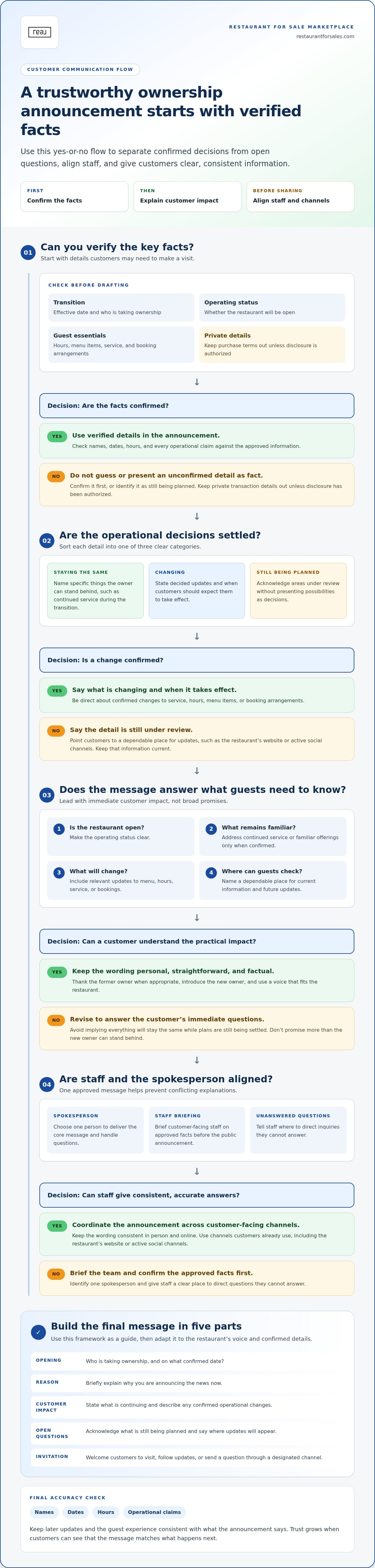
A reliable announcement starts before anyone writes a post or speaks with a guest. Treat preparation as a short approval process: confirm the facts, identify who needs the information, draft the message, coordinate timing, and review everything for accuracy. This helps the new owner avoid conflicting answers from staff and public channels.
Gather the facts before drafting
Confirm the effective transition date and the operational details customers may need, including whether the restaurant will be open and whether hours, menu items, or booking arrangements are changing. The owner, manager, and customer-facing staff should work from the same approved information. Keep purchase terms and other private transaction details out of customer messaging unless disclosure has been authorized.
Sort the information into three groups before drafting:
- Staying the same: Identify specific things the owner can stand behind, such as continued service during the transition.
- Changing: State decided updates and when customers should expect them to take effect.
- Still being planned: Name areas under review without presenting possibilities as decisions.
This distinction makes the announcement useful without suggesting that every part of the operation will remain unchanged.
Build a concise announcement message
Choose one spokesperson to deliver the core message and handle questions, then brief staff on the approved facts and where to direct inquiries they can’t answer. The spokesperson might be the new owner or another designated representative. Consistent answers are more reassuring than several well-meaning but conflicting explanations.
A flexible message framework can help. Adapt it to the restaurant’s voice and the details that are settled:
- Opening: “We’re sharing that [new owner] will take ownership of [restaurant] on [date].”
- Reason: Briefly explain why you’re announcing the news now.
- Customer impact: State what’s continuing and describe any confirmed operational changes.
- Open questions: Acknowledge what’s still being planned and say where updates will appear.
- Invitation: Welcome customers to visit, follow updates, or send a question through a designated channel.
Use this as a framework, not a universal script. Before publishing, check names, dates, hours, and every operational claim. Read the announcement aloud to catch language that sounds overly formal or promises more than the owner can guarantee. Knowing how to announce new ownership of a restaurant to customers also means planning communication as part of the broader transition. Owners considering a sale or acquisition can explore restaurant sale and acquisition planning.
Which Channels Work Best for Announcing New Restaurant Ownership?
The strongest channel plan meets customers where they already look for restaurant information. A social post may reach active followers, but it won’t necessarily reach every regular. Some customers rely on staff, email, or the restaurant’s website instead. Choose a coordinated mix based on how guests find updates, rather than posting everywhere without a clear purpose.
Match each channel to the announcement task
- Staff conversations: Give customer-facing employees the confirmed facts and a clear way to handle questions during visits. A brief, consistent answer can help guests who hear the news in person.
- Email: Send a fuller explanation to customers who have opted in to restaurant updates. Describe the transition, clarify what’s changing, and point readers to current information.
- Website: Publish a central announcement customers can find later. Link to it from relevant pages, and make practical details such as hours or booking instructions easy to locate.
- Social media: Share a concise announcement on the accounts customers already follow. Introduce the news and direct people to the fuller reference on the website.
Each channel can serve a different role, but the core facts should stay aligned: who is taking over, when the change takes effect, what customers can expect, and where to find updates. Adapt the length and format, not the underlying information. This makes it easier to explain the ownership change without creating separate versions that contradict one another.
Coordinate online details and customer questions
Before publishing, review the restaurant’s public-facing profiles and contact details. If the transition changes listed hours, booking information, or another customer-facing detail, update the relevant channels so guests don’t encounter conflicting instructions. Make the website announcement the reference point, then check that social posts, email, and staff talking points match it.
Prepare short answers to common questions about hours, menu availability, and reservations. Staff don’t need to speculate. They should share confirmed information and explain where customers can find updates on plans still being considered.
Synchronized updates prevent conflicting customer information, so guests get the same accurate answer whether they ask a staff member, read an email, or check online. Assign someone to review details across channels whenever a change is made. A coordinated approach keeps the announcement useful after its first post and helps customers find what they need without relying on a single social update.
When to Announce the Ownership Change and How to Roll It Out
Set the announcement date by working backward from the ownership transition and the first day customers will experience the new arrangement. The right timing depends on what’s settled, how service will continue, and whether the incoming owner is ready to answer practical questions. There’s no universal number of days that fits every restaurant. Announce once you can share accurate customer-facing information, not simply because a particular date seems customary.
Choose a timing that supports a confident handover
Before sharing the news publicly, confirm the transition details you plan to disclose and decide what customers need to know before their next visit. If the restaurant will remain open through the handover, explain that clearly. If hours or reservations will be affected, publish the relevant details alongside the announcement. Customers need a useful point of reference before they encounter a change, rather than incomplete news without an explanation of what it means for them.
Timing also depends on the owner’s readiness to speak for the business. Allow enough preparation for the new owner and designated staff to review the announcement, agree on answers, and know where to direct questions they can’t resolve. A coordinated rollout gives employees a chance to hear the approved message before customers do.
Prepare staff and follow through after launch
Give frontline employees a brief fact sheet with the transition date, confirmed customer-facing details, approved responses to common questions, and a clear route for anything unanswered. Keep it practical. Staff should know what to say about hours, menu changes, and reservations without being expected to speculate about future plans.
After the announcement, monitor customer questions and the restaurant’s public-facing information. Correct inaccurate details promptly, especially if they could lead someone to arrive at the wrong time or use outdated booking instructions. Send a follow-up message when it adds confirmed information or addresses a recurring concern. Avoid updates that simply repeat the original announcement.
As the handover develops, keep a simple record of customer questions and the answers provided. This helps the owner spot gaps in the message and keep responses consistent across staff and public channels. If an operational detail changes, update the relevant information and explain what changed in plain language. Communication is part of transition planning, alongside the transaction itself. For more on the transaction role, read the role of a restaurant broker in a business sale.
If you’re planning a restaurant sale or acquisition, explore restaurant brokerage resources as you prepare for the transition.
Turn the Ownership Announcement Into a Strong Start With Customers
An announcement opens the conversation, but the customer experience that follows is what gives it credibility. The practical test of how to announce new ownership of a restaurant to customers is whether guests encounter clear, consistent information and service that reflects what they were told. Treat the message as the start of a relationship, not a substitute for reliable day-to-day operations.
Reinforce the message through the customer experience
Make sure staff can explain the transition in the same calm, straightforward language used in the public announcement. They don’t need to repeat a script word for word, but they should share consistent facts and know where to direct questions they can’t answer. Welcome regular customers personally where appropriate, while recognizing that some guests may be new or less attached to the previous owner.
Keep online updates aligned with actual decisions about the menu, hours, reservations, and service. If plans change, revise the relevant information instead of leaving an outdated announcement to create confusion. Preserve familiar touchpoints where operationally feasible, such as a well-known dish or a customary way of booking, but don’t promise that every detail will remain unchanged.
Invite feedback through a clear, appropriate channel, such as a designated email address or the restaurant’s active social account. Listen before responding. Acknowledge a concern, clarify what’s known, and explain any next step without arguing with the customer or making promises on the spot. In the early weeks, review questions and comments for patterns. Repeated confusion about reservations or hours may signal that an update needs clearer wording. Recurring concerns can also help the owner understand what guests value.
Plan the business transition with communication in mind
Customer messaging works best when it’s considered alongside the ownership handover, lease arrangements, and operating-transition planning. These decisions can affect what the new owner can confidently tell guests and when. Build communication into the transition plan, then update the message as customer-facing details become settled.
If you’re preparing to acquire a restaurant, use this complete guide to buying a restaurant to explore the broader acquisition process. A restaurant transaction involves more than announcing a new owner. Aligning the handover with clear customer communication helps set a grounded foundation for the next chapter.
Restaurant For Sale Marketplace connects restaurant and bar buyers and sellers, and provides brokerage support for transactions. Explore restaurant brokerage services to learn more about transaction support.
Set the Next Chapter Up for Success
A clear ownership announcement gives customers a reliable account of who is taking over and what they can expect. To decide how to announce new ownership of a restaurant to customers, confirm the facts first, distinguish settled changes from plans still under consideration, and share consistent information through channels guests already use.
Then follow through. Make sure staff can answer questions, keep public details aligned with actual decisions, and listen for recurring concerns after the announcement. Customer trust grows when the experience supports the message, not through promises no one can guarantee.
Communication is one practical part of planning a restaurant transition. Restaurant and bar brokerage services can support a sale from listing through closing, while restaurant valuation and lease-assignment services can support transaction planning. If you’re preparing to sell or acquire a restaurant, explore restaurant brokerage services.
With accurate information and steady follow-through, new ownership can become a clear beginning for the business and its customers.
Frequently Asked Questions
How do you announce a new owner of a restaurant to customers?
Use a direct, consistent message that introduces the new owner, states when the transition takes effect, and explains what customers can expect. A practical approach to how to announce new ownership of a restaurant to customers is to confirm the facts first, then share them through channels guests already use, such as staff conversations, email, the restaurant website, and social media. Make clear what’s staying the same, what’s changing, and where customers can find updates.
When should a restaurant announce a change in ownership?
Announce the change when the transition details and customer-facing information are settled enough to communicate accurately. Consider what guests need to know before they next visit, including whether the restaurant will be open and whether hours or reservations will change. Brief staff before sharing the public announcement so they can respond consistently. The right timing depends on the transaction and operational readiness, so avoid relying on a universal number of days.
What should a restaurant ownership announcement include?
Include the new owner’s name, the effective transition date, and a plain explanation of what the change means for customers. State specific continuity customers can rely on, such as confirmed operating hours, and describe any decided changes to the menu or booking process. If some plans aren’t final, say so rather than presenting them as settled. Close by telling customers where to find updates or how to ask a question.
Should the previous owner be mentioned in the announcement?
Often, a brief, respectful acknowledgment is appropriate, especially if the former owner has a visible relationship with regular customers. Thank them for their contribution without sharing private transaction details or speculating about their reasons for leaving. Keep the focus on the transition and what guests need to know next. If the previous owner’s role or involvement hasn’t been agreed for public discussion, don’t imply an endorsement or ongoing participation.
How do you reassure customers that a restaurant will not change?
Don’t promise that the restaurant won’t change unless the owner can genuinely stand behind that statement. Instead, name the specific things that are confirmed to continue, such as current hours or familiar service, and distinguish them from areas still under review. This gives customers concrete reassurance without locking the business into a blanket guarantee. If plans evolve, update customers clearly and explain what’s changing and when.
Is social media enough to announce new restaurant ownership?
Usually, one social media post shouldn’t be the only announcement channel. Some regulars may not follow the restaurant or see the post, while others may look for updates on the website, through email, or by asking staff. Use social media to share the news and point to a dependable reference, such as a website announcement. Keep the central facts consistent across channels so customers don’t receive conflicting details.
How should restaurant staff answer questions about new ownership?
Give staff a short fact sheet with the transition date, confirmed operational details, and answers to common questions about hours, menu changes, and reservations. Ask them to use calm, consistent language and avoid guessing about plans that haven’t been decided. Identify a spokesperson or clear route for questions staff can’t answer. This lets employees respond helpfully without feeling pressured to make promises on the new owner’s behalf.
Can a new restaurant owner announce changes before they take effect?
Yes, if the changes have been decided and the announcement clearly states when they’ll begin. For example, explain that new hours start on a specific date, rather than allowing customers to assume they apply immediately. Share only operational details the owner can stand behind. If a change is still being considered, label it as under review and provide a reliable place for future updates instead of announcing it as a certainty.
Planning a restaurant sale or acquisition? Explore Restaurant For Sale Marketplace’s brokerage services for support from listing through closing.


