

What if the best way to find a restaurant buyer isn’t to show everyone your business, but to introduce it carefully to the right prospects? If you’re researching how to find restaurant buyers, you may be wondering where serious buyers look and how to keep employees, customers, and suppliers from learning about a planned sale too soon. A public listing can attract interest, but an inquiry alone doesn’t show whether a prospect has the experience, goals, or resources to move forward.
Finding a buyer is a staged qualification process, not simply a matter of publishing an opportunity. The right approach helps you reach people actively seeking restaurant opportunities while controlling what information you share and when. A specialist marketplace is one possible route, and broker support can help organize the sale process and buyer conversations.
This guide explains how to identify promising buyer channels, screen inquiries for fit and financial readiness, and protect sensitive details during early discussions. You’ll also learn how to move from initial outreach to a substantive conversation, so you can focus your time on prospects with a credible reason and ability to pursue the purchase.
Key Takeaways
- Define buyer fit by matching a prospect’s goals, restaurant experience, and funding readiness to the opportunity.
- Compare marketplaces, broker networks, and targeted outreach based on reach, effort, confidentiality, and screening support.
- Ask focused questions about purchase objectives, operating experience, and financing readiness before sharing sensitive details.
- Prepare an accurate overview of the concept, operations, assets, lease situation, and sale structure, with records to support your claims.
- Learn how to find restaurant buyers and move promising inquiries through confidential information sharing, meetings, and careful offer review.
How to find restaurant buyers: start with the right buyer profile
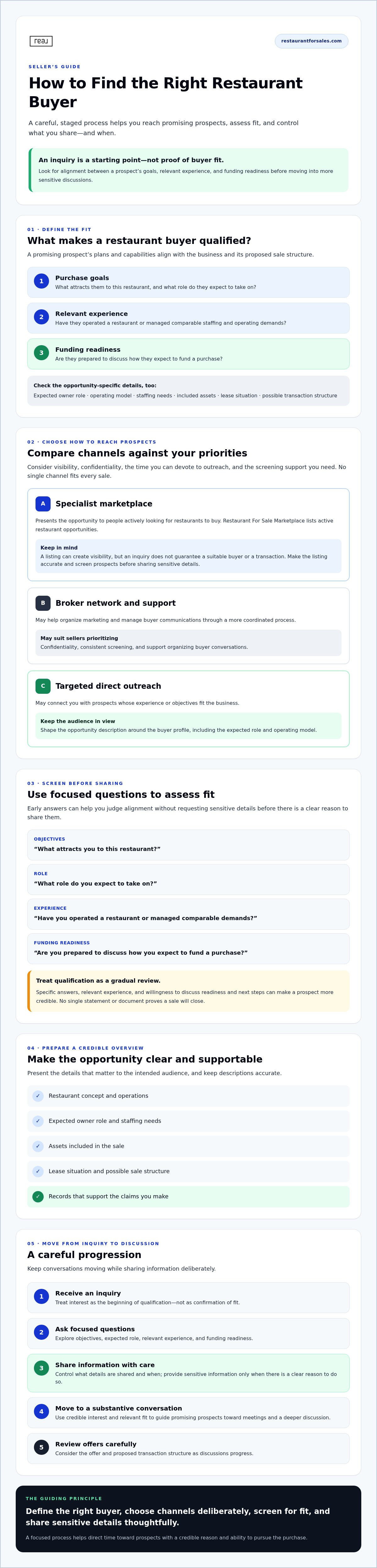
Before deciding where to advertise, define who is most likely to pursue this specific opportunity. A qualified restaurant buyer is a prospect whose purchase goals, relevant experience, and funding readiness align with the business and its proposed sale structure. This definition helps you assess fit instead of treating every inquiry as a serious lead.
Think beyond the restaurant’s concept. A buyer’s plans should also suit the operating model, staffing requirements, assets included in the sale, and lease situation. Someone seeking a hands-on owner-operator role may not be a strong match for a business that relies on an established management team. A buyer’s preferred transaction structure may also affect whether discussions can progress.
Which buyers may be interested in your restaurant?
Owner-operators may want an established business they can run directly and will need a clear understanding of the day-to-day role. Experienced restaurateurs can assess whether the concept, operations, staffing needs, and assets fit their capabilities or existing business. For a franchise opportunity, include franchise resale prospects who are specifically interested in that type of business. Business brokers can act as intermediaries in privately held business sales, and broker support may help organize buyer conversations.
What makes a buyer qualified?
Start with questions that clarify the prospect’s objectives: What attracts them to this restaurant? What role do they expect to take on? Have they operated a restaurant or managed comparable staffing and operating demands? Ask whether they’re prepared to discuss how they expect to fund a purchase. These early answers help you judge alignment without requesting sensitive details before there’s a clear reason to share them.
An expression of interest is only a starting point. A prospect becomes more credible when their answers are specific, their experience relates to the opportunity, and they’re willing to discuss their readiness and next steps. No single statement or document proves that a sale will close. Treat qualification as a gradual review, not a pass-or-fail decision based on one piece of information.
Use the buyer profile to shape how you present the opportunity. Highlight details that matter to the intended audience, such as the expected owner role, operating model, staffing needs, included assets, and possible transaction structure. Keep descriptions accurate and supportable. A specialist marketplace is one way to reach people already looking for a restaurant to buy.
This is the first step in how to find restaurant buyers: identify the fit before widening your outreach. A focused buyer profile can make screening more consistent and help you guide promising prospects toward a confidential, substantive conversation.
Where to find restaurant buyers without relying on one channel
No single channel fits every sale. A specialist marketplace can reach people actively searching for restaurant opportunities. A broker network can support coordinated marketing and buyer conversations. Targeted direct outreach may connect you with prospects whose experience or objectives fit the business. Compare the channels against your priorities: visibility, confidentiality, the time you can devote to outreach, and the screening support you need.
Do restaurant listing marketplaces help sellers find buyers?
A specialist marketplace gives sellers a way to present an opportunity to an audience looking for businesses to buy. Restaurant For Sale Marketplace, for example, lists active restaurant opportunities. A listing can create visibility, but it can’t guarantee that every inquiry is suitable or that a transaction will follow. Make the opportunity clear and accurate, then screen prospects before sharing sensitive details. Industry context can also help you describe the business thoughtfully; National Restaurant Association research offers material on restaurant trends and the broader market.
When can broker-supported outreach make sense?
Brokerage support may suit sellers who want help organizing marketing and managing buyer communications. It can be useful when confidentiality and consistent screening are priorities, since inquiries can be handled through a more coordinated process. Read about the role of a restaurant broker in a business sale when weighing professional representation. No channel or representative can promise a particular sale price, volume of qualified buyers, or timeline.
Use this comparison to weigh the trade-offs. The actual reach and support depend on the channel and how you use it.
| Channel | Reach | Seller effort | Confidentiality control | Screening support |
|---|---|---|---|---|
| Specialist marketplace | People searching for restaurant opportunities | Prepare and maintain listing details | Depends on what the listing discloses | Seller-led unless other support is arranged |
| Broker network | Prospects reached through broker relationships and marketing | Coordinate with the broker and provide information | Can support a staged, coordinated process | Broker may help organize buyer conversations |
| Targeted direct outreach | Selected prospects identified by the seller | Research, contact, and follow up | Can be controlled by choosing what to share | Seller-led |
For many sellers, how to find restaurant buyers comes down to choosing a channel mix that fits the opportunity and the seller’s capacity. You might use a marketplace for visibility while considering broker support for outreach and communication. Review restaurant listing and brokerage options to assess which route may fit your sale.
How to screen restaurant buyers before sharing sensitive details
Screen in stages. Start with the prospect’s initial inquiry, then ask a few questions to understand their fit and intentions. Before providing nonpublic information, establish an appropriate confidentiality process. Share detailed financial and operational records only as discussions advance and there’s a clear business reason to review them.
This sequence helps you respond consistently without treating every inquiry as equally serious. It also gives you a reason to pause if a prospect avoids basic questions, asks for sensitive records too early, or can’t explain how the opportunity fits their plans.
What should sellers ask a prospective restaurant buyer?
Start with the prospect’s objectives: What type of business are they looking to acquire, and why does this restaurant interest them? Ask about relevant restaurant or business ownership experience, while recognizing that experience is one part of the assessment, not the only qualification. At an appropriate stage, discuss how they expect to approach financing and what steps they would need to take before making a decision.
Listen for clear, consistent answers. A buyer who can describe their goals and decision process may be ready for a more substantive conversation. Initial interest, however, doesn’t establish funding readiness or ensure a completed sale.
How can sellers protect confidential business information?
Use staged disclosure. An initial overview can describe the concept and general opportunity without exposing sensitive records. More detailed financial or operational information can follow once you’ve explored the prospect’s fit and established an appropriate confidentiality process.
Sellers commonly use confidentiality agreements before sharing nonpublic business information. The right terms and process depend on the circumstances, so ask qualified professional advisers to review any confidentiality document rather than treating a generic template as legal advice. Keep a simple record of what you shared, with whom, and when.
As discussions progress, share only information relevant to the next step. A prospect may need a high-level explanation of operations before a meeting, while a deeper review of records may be appropriate later. Protect details that could identify the business or expose employees, customers, suppliers, or commercial arrangements until disclosure is justified.
A broker can help coordinate buyer communications and organize the exchange of information. Whether you manage inquiries directly or work with brokerage support, use the same screening questions and disclosure stages for each prospect. That consistency makes it easier to distinguish curiosity from a buyer prepared to continue a serious discussion.
How to prepare a restaurant opportunity buyers will take seriously
A clear, well-supported presentation helps buyers understand what the restaurant includes and what they’ll need to evaluate. Keep the overview factual and consistent with your records. Describe operational considerations candidly, too. A realistic picture gives prospects a sound basis for deciding whether to continue discussions.
What information should a buyer-facing summary include?
Build a concise summary around the details a buyer needs to assess the opportunity:
- Concept and operations: Explain the restaurant’s format, service model, and key operating features.
- Assets and transition: Identify the assets included in the proposed sale and clarify any transition details you can substantiate.
- Financial performance: Organize verified statements and distinguish historical results from projections or assumptions.
- Premises and structure: Describe whether the sale involves a lease or real estate, and outline the proposed transaction structure without assuming a lease assignment or other approval.
For valuation context, consult the 2026 restaurant valuation guide. Keep any valuation discussion aligned with records and assumptions you can explain.
How can sellers build credibility with buyers?
Consistency matters. Check that the listing, buyer-facing summary, and supporting records describe the same business and financial picture. If figures need explanation, clarify what they represent instead of relying on broad claims about profitability or future growth.
Organize relevant documents so they can be provided for appropriate review as discussions progress. Track buyer questions, document requests, and responses. This makes it easier to give accurate answers and avoid inconsistencies across conversations.
Be candid about operating considerations a buyer will need to assess, such as staffing demands, the owner’s role, and known issues affecting the premises or assets. A careful description doesn’t need to predict future performance. It should help a prospective buyer understand the opportunity and identify questions for further review.
Preparing the opportunity this way supports the broader process of how to find restaurant buyers: present a credible, relevant business that prospects can evaluate. If you’re ready to organize your sale materials and explore restaurant brokerage and listing options, start with the facts and records you can substantiate.
From Restaurant Buyer Inquiry to Serious Discussion
A promising inquiry starts a process; it doesn’t commit you to sell. A clear sequence helps both parties understand what’s being considered while keeping discussions organized. Typically, you confirm buyer fit, share appropriate information, hold focused conversations, and arrange professional review as the parties assess whether an offer makes sense.
What happens after a buyer shows interest?
Once an inquiry appears credible, confirm the prospect’s goals and agree on what information is appropriate to share next. A focused meeting can cover the buyer’s operating plans, expected role, transition needs, and questions about the business. Track open items and follow up with accurate responses. Prompt, consistent communication can maintain momentum, but it doesn’t guarantee a particular closing date or outcome.
If discussions lead to an offer, review its terms carefully rather than focusing on the proposed price alone. The deal structure, financial assumptions, lease situation, and other transaction details may all warrant attention. Before making commitments or finalizing transaction documents, involve qualified legal and financial advisers. Their review can help you understand the proposed terms and identify questions that need resolution.
When should a seller consider marketplace or broker support?
Support may be useful if you’re finding it difficult to reach relevant prospects, manage inquiries, or coordinate the steps between initial interest and a serious discussion. Restaurant For Sale Marketplace offers active restaurant listings, brokerage services, and valuation services. A marketplace can provide a route to buyers searching for opportunities, while brokerage support may help organize the sale process and buyer communications.
As you consider how to find restaurant buyers, identify your next practical priority: expanding visibility, coordinating conversations, or getting a clearer view of the opportunity’s value. You don’t need to settle every transaction question before speaking with a prospect, but you should be prepared to proceed carefully and seek professional input at the appropriate stages.
If marketplace or brokerage support could help you organize your next steps, explore restaurant sale and brokerage options.
Move Forward With a Clear Sale Strategy
Finding the right buyer takes more than attracting inquiries. A focused buyer profile, thoughtful channel selection, and staged information sharing can help protect the business while moving credible prospects toward a serious discussion. Accurate records and consistent communication give buyers a sound basis for evaluating the opportunity.
Knowing how to find restaurant buyers also means knowing when to seek support. Restaurant For Sale Marketplace lists active restaurant opportunities and offers restaurant brokerage and valuation services, along with tools related to valuation and financing. These resources can help you consider your next steps as you prepare to bring an opportunity to market.
To explore the marketplace and available support, review restaurant sale and brokerage options. A clear process and realistic expectations can help you approach the sale with confidence and keep promising conversations moving forward.
Frequently Asked Questions
How do I find someone to buy my restaurant?
Start by identifying the type of buyer whose goals and resources fit your restaurant, then reach prospects through relevant channels. A specialist restaurant marketplace can put your opportunity in front of people searching for businesses to buy. Broker networks and carefully targeted outreach are other options. Prepare a clear, accurate overview and use a consistent screening process to focus on inquiries that show a credible fit and readiness to discuss next steps.
Where do people look for restaurants to buy?
Prospective buyers may search specialist restaurant marketplaces, business-for-sale websites, broker networks, and industry connections. Some also find opportunities through trade publications or direct outreach. A specialist marketplace presents restaurant opportunities to people actively looking in the category, but visibility alone doesn’t establish whether an interested person is a good fit. Compare each channel’s audience, confidentiality options, and screening support before choosing where to market.
How can I find a buyer for my restaurant confidentially?
Use staged disclosure: begin with a high-level opportunity overview, screen the prospect, and share sensitive financial or operational records only when appropriate. Avoid identifying details in early outreach if they could reveal the sale to employees, customers, or suppliers. Sellers commonly use confidentiality agreements before providing nonpublic information. Ask qualified professional advisers to review the document and process, and keep a record of what you share, with whom, and when.
What should I ask a potential restaurant buyer?
Ask what type of restaurant or business the prospect wants to acquire and what interests them about your opportunity. Explore relevant ownership or operating experience, the role they expect to take on, and how they plan to evaluate the business. At an appropriate stage, discuss their decision process and financing approach. Specific, consistent answers can help establish whether to continue the conversation, but no single response confirms that a transaction will close.
How do I know if a restaurant buyer is financially qualified?
An expression of interest isn’t proof of financial readiness. Begin by asking whether the prospect is prepared to discuss how they expect to fund a purchase and what steps they need to take before making an offer. As discussions progress, request appropriate supporting information through a confidential process and have qualified advisers review it as needed. Assess funding readiness alongside goals, experience, and deal fit. No single document guarantees that a sale will proceed.
Should I use a restaurant broker to find buyers?
A restaurant broker may be useful if you need support organizing marketing, handling inquiries, or coordinating buyer conversations. Professional representation can help structure communication and organize the sale process, particularly when confidentiality and screening are priorities. Consider the support you need and clarify the proposed scope before engaging a broker. Restaurant For Sale Marketplace offers restaurant brokerage and valuation services, but using a broker doesn’t guarantee a buyer, sale price, or closing timeline.
What information should I share with a potential restaurant buyer?
Start with a high-level summary of the restaurant concept, operating model, included assets, lease or real estate context, and proposed sale structure. Share verified financial information at the appropriate stage, clearly separating historical results from projections. After screening the buyer and establishing a suitable confidentiality process, consider providing more detailed records for review. Keep descriptions accurate, avoid unsupported claims about future performance, and consult qualified advisers about sensitive documents and transaction terms.


