

The most expensive risks of buying a restaurant business may be invisible during your first walkthrough. A busy dining room and a well-equipped kitchen can’t reveal an unpaid tax bill, a lease that can’t be transferred, or employee obligations that could affect the deal.
It’s reasonable to focus first on the food, location, and customer experience. But the real test is whether the restaurant’s financial records, contracts, licenses, and operating details support the asking price and can carry forward after closing. A promising business can still expose you to liabilities or leave an uncertain path to taking over.
This 2026 guide explains how to identify hidden liabilities and assess risks before you commit. You’ll learn what to review in tax returns, profit-and-loss statements, POS reports, bank deposits, lease terms, licenses, and employee records, and how to spot inconsistencies that call for closer scrutiny.
Use the practical checklist to evaluate the business’s value, investigate lease assignment and staff-retention concerns, and plan a closing with fewer unanswered questions.
Key Takeaways
- The risks of buying a restaurant business can hide in revenue records and unpaid obligations. Reconcile tax returns, POS reports, and bank deposits, and investigate potential liens and vendor balances.
- Assess the condition of major equipment and review the restaurant’s online reputation before relying on its current performance.
- Confirm lease assignment requirements, landlord consent, and how common-area maintenance charges could affect future occupancy costs.
- Set clear due diligence terms in the LOI and understand how escrow can protect your deposit while you assess the business.
- Professional valuation and lease assignment expertise can help you test the asking price and address key transaction hurdles.
Financial Risks: Uncovering Hidden Liabilities and Revenue Discrepancies
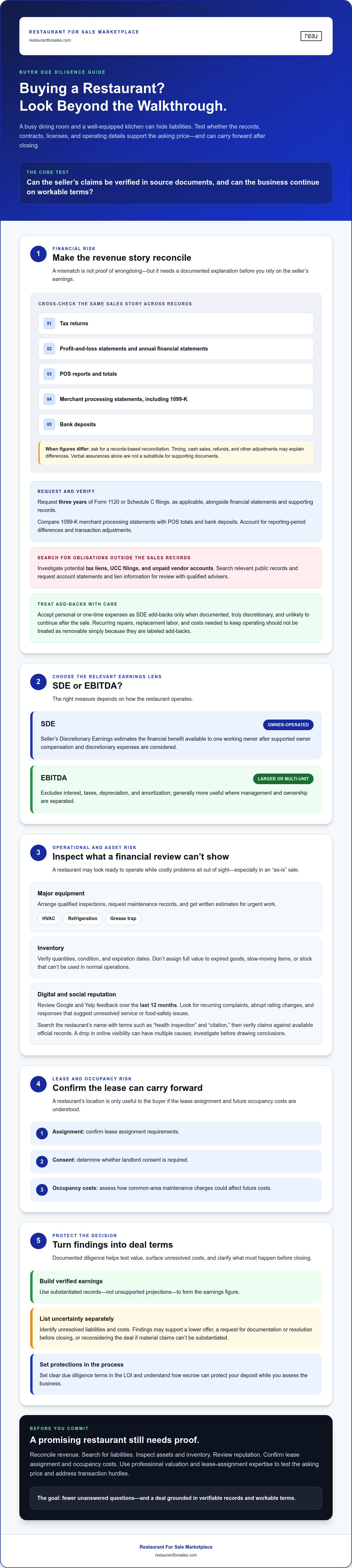
A restaurant’s sales story should hold up across tax returns, profit-and-loss statements, point-of-sale (POS) reports, merchant processing records, and bank deposits. A mismatch isn’t proof of wrongdoing, but it needs a documented explanation before you rely on the seller’s earnings to set your offer.
Unrecorded cash sales aren’t dependable buyer value. If revenue can’t be substantiated in business records, it may not support the stated profit, valuation, or future operating plans. It can also complicate tax and transaction reviews. The risks of buying a restaurant business include liabilities that don’t appear in a walkthrough or seller-prepared summary, such as tax liens, UCC filings, and unpaid vendor accounts. Search relevant public records and request account statements and lien information for review with qualified advisers.
Use the due diligence process to test each claim against source documents, not just verbal assurances. For example, compare POS sales by period with filed tax returns, merchant processor statements, and deposits. Differences may reflect timing, cash sales, refunds, or other adjustments, but the seller should be able to reconcile them with records.
SDE vs. EBITDA: Which Profit Metric Protects You?
For 2026 restaurant valuations, Seller’s Discretionary Earnings (SDE) is the standard measure for owner-operated businesses because it estimates the financial benefit available to one working owner after supported owner compensation and discretionary expenses are considered. EBITDA, which excludes interest, taxes, depreciation, and amortization, is generally more useful for larger or multi-unit acquisitions where management and ownership are separated. The right measure depends on how the restaurant operates. See 2026 restaurant valuation methods.
Audit-Proofing the Seller’s Claims
Request three years of Form 1120 or Schedule C filings, as applicable, alongside annual financial statements and supporting records. Cross-check 1099-K merchant processing statements against POS totals and bank deposits, accounting for differences in reporting periods and transaction adjustments.
Review every proposed SDE add-back. Personal expenses or one-time costs may be valid adjustments only when they’re documented, truly discretionary, and unlikely to continue after the sale. Recurring repairs, replacement labor, or expenses required to keep the restaurant operating shouldn’t be treated as removable just because the seller labels them an add-back.
Price the uncertainty. Build a verified earnings figure from substantiated records, then list unresolved liabilities and costs separately. Use the findings to support a lower offer, request documentation or resolution before closing, or reconsider the deal if the seller can’t substantiate material claims. A professional restaurant valuation can help test whether the asking price reflects verifiable earnings rather than unsupported projections.
Operational and Asset Risks: From Failing Equipment to Reputation Decay
A restaurant can look ready to operate while costly problems sit out of sight. An “as-is” sale may leave you responsible for failing HVAC, unreliable refrigeration, or a grease trap that needs repair. Include these assets in your due diligence: arrange qualified inspections, request maintenance records, and get written estimates for urgent work. Use documented defects to negotiate the offer or closing terms rather than assuming the equipment will last.
These operational issues are among the risks of buying a restaurant business that a financial review alone won’t uncover. The same applies to inventory. Inspect it and verify quantities, condition, and expiration dates before assigning value. Don’t pay full value for expired goods, slow-moving items, or stock that can’t be used in normal operations.
Digital and Social Reputation Audit
Review Google and Yelp feedback over the last 12 months. Look for recurring complaints, abrupt changes in ratings, and responses that suggest unresolved service or food-safety issues. Search the restaurant’s name alongside terms such as “health inspection” and “citation,” then verify any claims against available official records. A drop in online visibility can have multiple causes, so investigate before concluding that an account has been restricted or “shadow banned.”
Confirm which social accounts, reservation profiles, website domains, and customer communication channels can transfer. Ask what access credentials and customer data are included, whether platform rules permit transfer, and whether the seller can provide the necessary permissions. Don’t assume a follower count or customer list automatically becomes an asset you can use.
The Equipment Life-Cycle Assessment
Have a qualified kitchen equipment professional assess major assets, including refrigeration, ventilation, HVAC, and grease management. Request the age, service history, and known defects for each item, then separate immediate repairs from likely near-term replacements. Review the 2026 FDA Food Code provisions on food safety management, employee illness policies, food defense, and equipment disinfection. Confirm which standards apply locally before estimating upgrade needs.
Technology can carry its own replacement risk. Check whether POS and reservation systems require proprietary hardware, ongoing subscriptions, or seller-controlled administrator access. Confirm that transaction history and customer records can be exported and lawfully transferred before valuing them or relying on them for continuity.
Staff continuity deserves equal attention. Ask which key employees plan to stay, identify roles that depend on the seller, and discuss retention directly where appropriate. A sudden departure can disrupt service and institutional knowledge, so include realistic hiring and training needs in your transition plan.
For a second opinion on the transaction’s value, explore restaurant valuation services to assess condition, earnings, and identified risks together.
The Lease Trap: Why Occupancy Costs Are the Greatest Risk to Longevity
A restaurant’s location may drive its sales, but the lease determines whether you can keep operating there on viable terms. Don’t assume buying the business automatically transfers the right to occupy the premises. The lease may require landlord consent, and its terms can give the landlord grounds to reject an assignment or require a new lease. Review the document early, alongside the restaurant lease assignment process, so you can assess this risk before committing to the purchase.
Rent is only part of the occupancy cost. Check how the lease calculates common-area maintenance (CAM) charges and other pass-through expenses, whether the landlord provides supporting statements, and whether the tenant has audit rights. Compare historical charges with the lease formula and ask how costs could change. A personal guarantee creates another exposure: if the business defaults, the guarantor may be personally responsible under the agreement. Have a qualified attorney explain its scope, duration, and any release conditions before signing.
Assignment Clauses and Consent Fees
Read the consent standard carefully. “Reasonable” consent generally sets a different expectation from language that gives the landlord “sole discretion,” but the precise effect depends on the full lease and applicable law. Look for recapture clauses that may let the landlord terminate the lease instead of approving a transfer. Confirm any assignment fees, including how they’re calculated and what costs they cover. The amount can be material to the deal.
Remaining Term vs. Options to Renew
A lease with only two years remaining can leave too little time to recover acquisition and improvement costs, especially if renewal is uncertain. Verify that renewal options are valid, have not expired, and can be exercised by a buyer after assignment. Review notice deadlines, required conditions, and whether rent resets to market rate. In 2026, don’t assume a market-rate reset will match the current rent. Model the potential increase before finalizing your valuation.
For a sound comparison, assess both paths: an assignment under the existing lease and negotiating a new lease. An assignment may preserve favorable terms but carry restrictive clauses or a short remaining term. A new lease could offer a longer runway, but may reset rent, deposits, and other conditions. The risks of buying a restaurant business rise when the purchase price assumes uninterrupted occupancy but landlord approval or renewal terms remain unresolved.
Before closing, make landlord consent and acceptable lease terms explicit transaction conditions, with deadlines and a clear plan if approval is denied. Have a commercial lease professional review CAM provisions, guarantee obligations, transfer restrictions, and renewal rights. Treat the lease as a core part of the restaurant’s value, not paperwork to finish after the business terms are settled.
Mitigating Risk Through a Professional Due Diligence Framework
A clear process turns the risks of buying a restaurant business into questions you can investigate before closing. Set the review period in the letter of intent (LOI), commonly allowing 30 to 60 days for due diligence, and have transaction counsel confirm how the LOI and purchase agreement handle deadlines, access, confidentiality, and deposits.
Specify contingencies for satisfactory financial, physical, legal, licensing, and lease reviews. State what happens if a contingency isn’t met, how you must give notice, and whether you can terminate and recover your deposit under the agreement. Escrow can hold the deposit while diligence is underway, but the escrow instructions and purchase documents control when funds may be released or returned. Don’t rely on a verbal promise.
Step 1: The Financial Verification Phase
Compare bank statements with POS reports month by month for at least a 12-month period. Investigate gaps, unusual deposits, refunds, and differences in reporting dates. Reconcile sales tax filings with recorded sales and payments, and ask for supporting records if totals don’t align. Use this phase to confirm whether claimed earnings are supported by source documents rather than seller estimates.
Review four years of payroll tax records with a qualified tax professional to identify historical filing or payment issues that could require attention after closing. This review can reduce uncertainty, but it can’t guarantee that future IRS issues won’t arise. Include employee payroll records and outstanding tax correspondence in the document request.
Step 2: The Physical and Legal Inspection
Arrange equipment testing during normal operating conditions and, where appropriate, during off-hours with the seller’s permission. This can reveal problems that a quick walkthrough misses, such as refrigeration that struggles under load or ventilation that doesn’t operate as expected. Document defects and obtain repair assessments before deciding how they affect the deal.
Confirm the status and transfer requirements for health, liquor, and fire permits with the relevant authorities. A permit held by the seller may not automatically transfer to a buyer, and timing can vary by location and license type. Verify the lease assignment and landlord approval path as well, so occupancy and operating approvals are addressed before closing.
Ask the seller for written disclosures about pending lawsuits, threatened claims, and labor complaints, then review available records and consult qualified legal advisers about appropriate searches. Put unresolved findings into a written issue log with the evidence needed, responsible reviewer, deadline, and proposed remedy. This keeps decisions tied to facts and makes it easier to exercise a contingency properly if a material concern remains unresolved.
For a broader acquisition checklist, read how to buy a restaurant. You can also review active restaurant listings as you define your acquisition criteria.
How a Specialized Broker Minimizes Acquisition Risk
A restaurant broker can help keep a transaction organized when buyer and seller have competing priorities, incomplete information, or different expectations about value. The broker’s role is to manage communication, track deadlines, and surface issues for review, not to replace your attorney, accountant, or other qualified advisers. Learn more about the role of a restaurant broker and how brokerage support can help move a deal from offer to closing.
A marketplace listing can help buyers identify opportunities and review the business information available for each one. A listing isn’t a substitute for your own verification. Confirm the seller’s authority to sell, review source records, and investigate financial, legal, operational, and lease details before relying on listing claims.
Professional valuation provides another check against overpaying for “blue sky” potential, or projected value that isn’t supported by current performance. A valuation grounded in documented earnings, assets, and relevant deal factors can help you distinguish established business value from assumptions about future growth. That matters when unresolved risks could reduce earnings or require additional investment after closing.
Managing the Closing and Escrow Process
Closing involves more than agreeing on a price. Track required documents, payoff statements, lien releases, lease approvals, and other closing conditions with the appropriate advisers. The broker can help coordinate information between the parties, but the escrow agent and transaction documents govern how funds are held and released. Confirm in writing what evidence is required to address liens before proceeds are disbursed.
Define any training and transition period in the purchase agreement. Specify its duration, the seller’s responsibilities, and what operational knowledge must be transferred, such as vendor contacts, ordering routines, and system access. A success-based commission is tied to a completed sale, but the agreement controls the broker’s duties, compensation, and scope. Review those terms rather than assuming they guarantee a clean transaction.
Transitioning from Buyer to Owner
Plan the first day before closing. Confirm who will communicate the ownership change to staff and vendors, when those conversations will happen, and how vendor accounts or contracts will be transferred. Ask whether the broker can share transition checklists or templates, and have legal or HR advisers review staff communications where needed. Prepare a handoff list for keys, passwords, supplier information, operating records, and system permissions. A “turnkey” handoff depends on these details being agreed, documented, and completed. It isn’t automatic.
A specialized broker can help you organize the process, but careful review remains essential to managing the risks of buying a restaurant business. Explore active restaurant listings to begin evaluating acquisition opportunities.
Move Forward With a Clearer Acquisition Plan
The risks of buying a restaurant business become easier to assess when you base decisions on verified information, not potential alone. Confirm the business’s earnings and obligations, evaluate the condition of its assets, and make lease approval and workable occupancy terms central to your decision. A structured review helps you judge whether the opportunity fits your investment goals and what conditions you need before closing.
Professional valuation services can help you assess whether the asking price reflects supportable value. Active commercial listings provide a starting point for comparing opportunities, while brokerage expertise can help coordinate the transaction between buyer and seller. These resources support informed decisions, but they don’t replace independent financial, legal, or technical review.
Explore restaurant listings on Restaurant For Sale Marketplace to begin evaluating opportunities with a more disciplined acquisition plan. Careful verification and the right professional input can help you move toward ownership with greater confidence.
Frequently Asked Questions
What is the single biggest risk when buying a restaurant?
The lease is often the decisive risk because the restaurant may depend on landlord approval and occupancy terms that don’t transfer automatically with the sale. Even a profitable operation can lose its value if you can’t secure the premises on workable terms. Review assignment rights, renewal options, rent escalations, and landlord consent early. Also verify earnings and liabilities, since a lease issue and unsupported financial claims can compound each other.
Am I responsible for the previous owner's unpaid sales taxes?
Possibly, depending on the transaction structure and the laws that apply where the restaurant operates. An asset purchase may reduce exposure to some entity-level obligations, but it doesn’t automatically eliminate every tax risk or successor-liability issue. Before closing, request sales tax filings, payment records, tax correspondence, and evidence of any liens. Have a qualified tax professional and attorney assess potential exposure and specify how identified liabilities will be handled in the sale documents.
How do I know if the seller's financial statements are accurate?
Reconcile reported sales against independent records rather than relying on seller-prepared statements alone. Compare tax returns, profit-and-loss statements, POS reports, merchant processing statements, and bank deposits for consistent periods. Investigate unexplained differences, unusual add-backs, and cash revenue that isn’t documented. Request supporting invoices and payroll records as needed. These checks help you assess the risks of buying a restaurant business and determine whether the claimed earnings can support the asking price.
What happens to the existing staff when I buy the restaurant?
Staff arrangements depend on the deal structure, the purchase documents, and applicable employment requirements. Don’t assume employees automatically transfer or that everyone will stay. Identify key roles, ask which employees are interested in continuing, and review payroll, accrued obligations, and any employment agreements with qualified advisers. Plan how and when to communicate the ownership change. A transition plan for hiring, training, and transferring operational knowledge can reduce disruption if employees leave.
Is it better to buy the restaurant's assets or the entire business entity?
Neither structure is best for every deal, but an asset purchase is often considered to limit the buyer’s exposure to certain historical entity liabilities. It does not guarantee protection from every obligation, and the exact risks depend on the facts, contracts, and applicable law. Buying the entity may preserve continuity but can also leave past obligations within the acquired company. Have legal and tax advisers compare both structures before signing.
Can a landlord refuse to transfer the lease to me?
Yes, a landlord may be able to refuse or condition an assignment, depending on the lease language and applicable law. Check whether consent is required, what standard governs the landlord’s decision, and whether the lease includes recapture rights or assignment fees. Confirm renewal options can be exercised by a new owner and make acceptable lease terms and required consent part of your closing conditions. Restaurant lease assignment expertise can help clarify the transfer process.
How long does the due diligence process typically take in 2026?
A 30-to-60-day due diligence window is a practical period to propose in the letter of intent, but it isn’t a fixed 2026 standard or a guarantee that review will finish within that time. Timing depends on how quickly records are provided, the complexity of the business, inspections, licensing, and landlord approval. Set deadlines and access requirements in writing, and allow more time if key documents or approvals remain outstanding.
What is 'Blue Sky' and is it a risky thing to pay for?
“Blue Sky” generally refers to value attributed to intangible factors such as goodwill, brand recognition, customer loyalty, or expected future potential beyond identifiable assets. It can be risky to pay for projections that aren’t supported by verifiable performance. Ask how the seller calculated this value and test the assumptions against documented earnings, customer trends, and operating costs. A professional restaurant valuation can help distinguish substantiated value from optimistic forecasts.


