

What if the best-looking pizza shop for sale isn’t the best fit for you? A polished listing and familiar menu can draw you in, but they don’t show how the business operates or whether its financial performance holds up under review.
It’s reasonable to want clear answers before committing to a major purchase. Listings may leave important details unclear, and seller-provided figures need verification. The lease, equipment, staffing, and daily workload also affect whether a shop fits your experience, resources, and acquisition goals.
This buyer’s guide explains how to assess a pizza shop listing, verify financial and operational details, and decide what to examine before moving toward a transaction. You’ll learn how to compare opportunities against your criteria, review the lease and equipment, and identify questions to raise during due diligence. Restaurant For Sale Marketplace lists restaurant opportunities and offers brokerage services that may help buyers navigate a transaction. Independent verification remains essential to making an informed decision.
Key Takeaways
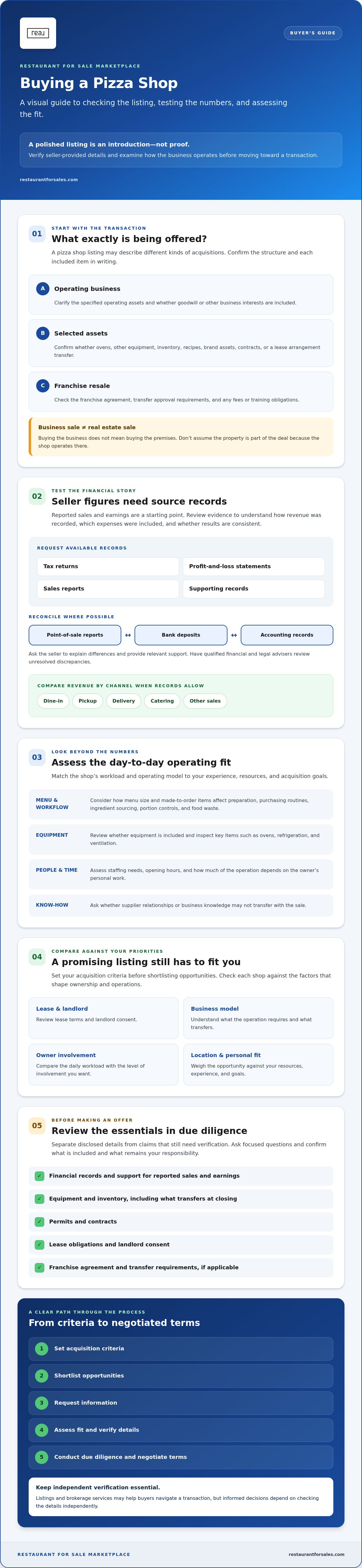
- Clarify whether a listing covers an operating business, selected assets, or a franchise resale. Separate disclosed details from claims that still need verification.
- For a pizza shop for sale, compare reported sales and earnings with source records, and review revenue by sales channel where records allow.
- Assess lease terms, landlord consent, business model, and owner involvement against your priorities and operating experience.
- Before making an offer, review financial records, equipment, inventory, permits, contracts, and lease obligations.
- Set your acquisition criteria first, then shortlist opportunities, request information, assess fit, conduct due diligence, and negotiate terms.
Pizza Shop for Sale: What Does a Listing Actually Include?
A pizza shop acquisition can mean buying an operating business, purchasing selected assets, or taking over a franchise through a resale. The listing should clarify which structure is being offered, but use it as an introduction to the opportunity, not proof that every detail is complete or verified.
Buying a business means acquiring specified operating assets and, where agreed, goodwill or other business interests. Buying the premises means acquiring the real estate itself. A transaction may include ovens and other equipment, inventory, recipes, brand assets, contracts, or a lease arrangement. Confirm each included item in writing. Don’t assume the shop’s premises are part of the sale just because the business operates there.
What information should a pizza shop listing provide?
Use the listing to build a first-pass picture of the operation. Look for its business model, operating history, sales channels, staffing, and seller-provided financial information. Check whether equipment, inventory, recipes, brand assets, or real estate are included, and note what is missing. A menu may also signal the shop’s identity, from familiar classics to regional styles. The history of pizza provides context on how varied the category can be.
Prepare focused questions for the seller or broker. Ask which equipment is included, whether inventory is counted at closing, and what records support the reported operating history and sales channels. Treat seller-provided figures as claims to compare with source documents, not as verified results.
Is the opportunity an independent shop or a franchise resale?
An independent shop and a franchise resale can involve different operating conditions. A franchise may have brand standards, an agreement that needs review, and transfer approval requirements. Ask whether franchise fees or training obligations apply, who must approve the transfer, and which documents explain the buyer’s ongoing obligations. Verify the answers against the relevant agreement and with the parties involved, rather than relying on a brief listing description.
For more detail on transaction considerations, see the franchise resale acquisition guide. Whether the listing describes an independent operation or a franchise, establish exactly what transfers and what remains your responsibility before assessing fit.
How to Evaluate a Pizza Shop’s Sales, Earnings, and Daily Operations
A listing can present sales and earnings, but those figures are a starting point for review, not a substitute for evidence. Reported earnings need supporting documentation because listing figures alone don’t show how revenue was recorded, which expenses were included, or whether results are consistent. For any pizza shop for sale, request records that let you test the seller’s claims and understand how the business runs.
Request available tax returns, profit-and-loss statements, sales reports, and supporting records. Where possible, reconcile point-of-sale reports with bank deposits and accounting records. Compare reported dine-in, pickup, delivery, catering, and other sales channels separately if records allow. Differences may have explanations, but ask the seller to clarify them and have qualified financial and legal advisers review unresolved discrepancies.
Sales and earnings also need operating context. A menu with many made-to-order items may require different preparation and purchasing routines from a smaller menu. Review ingredient sourcing, portion controls, and food waste practices alongside labor needs and opening hours. Consider how much of the operation depends on the owner’s personal work, supplier relationships, or knowledge that may not transfer with the sale.
Which financial records should a buyer request and review?
Start with records for the periods represented in the listing, then check whether the figures tell a consistent story across documents. If sales reports, deposits, and accounting entries don’t align, ask what explains the difference and request relevant support. The guide to buying a business from the U.S. Small Business Administration offers broader guidance on evaluating an existing business. For restaurant transaction valuation concepts, consult the restaurant valuation guide.
How do menu, equipment, and staffing affect operating fit?
Assess whether the daily workload matches your skills and the level of involvement you want. Observe the production workflow and ask how the menu affects preparation, purchasing, and waste. Inspect ovens, refrigeration, ventilation, and other key equipment, then verify ownership, condition, and any available maintenance records. Confirm which staff handle essential tasks, what procedures are documented, and what responsibilities the seller currently performs.
These checks help distinguish attractive reported results from an operation you can realistically take over. As you compare opportunities, you can also explore restaurant listings and note which details you’ll need to verify before moving forward.
Compare Pizza Shop Listings by Lease, Location Fit, and Business Model
Assess a pizza shop for sale against your acquisition criteria, not just its advertised features. Consider your restaurant experience, available resources, preferred level of owner involvement, and the service model you can operate. A dine-in business, a takeaway-focused shop, and a delivery-led operation can place different demands on staffing, workflow, and premises.
First establish what the transaction includes: business assets, a lease assignment, real estate, or a combination. A business purchase doesn’t automatically transfer the premises, and a lease or property doesn’t necessarily transfer with the business. Review the lease term, assignment conditions, occupancy obligations, and any required landlord consent. Have qualified professionals review the agreements before relying on them.
How should you compare a leased shop with a property-included opportunity?
For a leased shop, examine whether the lease can be assigned and what conditions or approvals apply. For a property-included opportunity, confirm that the real estate is explicitly part of the transaction. In either case, assess whether the premises suit the operation, including equipment layout and continued access to essential facilities. The FDA’s overview of food business regulations is a useful reference, but verify which requirements apply to the specific business and location.
For lease transfer considerations, see the restaurant lease assignment guide. Don’t assume an existing arrangement will carry over unchanged.
Which business model best matches your buyer profile?
Independent shops and franchise resales may differ in brand control, operating requirements, and transfer conditions. Service format matters, too. Consider whether dine-in, takeaway, delivery, or a mix aligns with your capabilities and desired level of involvement. Use a comparison table to separate documented facts from open questions and your own assessment of fit.
| Comparison point | Verified facts | Questions to resolve | Buyer fit |
|---|---|---|---|
| Transaction scope | Assets, lease, or real estate expressly included | What transfers, and what approvals are needed? | Does the scope match your plans? |
| Operating model | Service format and brand arrangement disclosed | What owner role or brand conditions continue? | Can you meet the operating demands? |
| Premises | Layout and occupancy terms provided | What obligations affect continuity? | Does the space support the model? |
Fill in the table from source documents, not assumptions. To compare listing details with your criteria, refer to restaurant listings.
Is Buying a Pizza Shop Risky? Verify These Issues Before an Offer
Buying a pizza shop carries risk. The level depends on the evidence available, the transaction terms, how well the operation fits your capabilities, and whether important obligations remain unresolved. Due diligence helps you identify questions and make informed decisions. It can’t guarantee future performance or remove all transaction risk.
Treat seller statements as claims to investigate, and as facts only after you’ve independently checked them against reliable records or other evidence. Before making an offer, organize your review around the items that support the shop’s reported performance and continued operation.
- Financial records: Compare available tax returns, profit-and-loss statements, sales reports, and supporting documents for consistency.
- Equipment and assets: Confirm ownership, condition, and inclusion of listed equipment and other assets. Ask about repairs, maintenance, and any claimed liens or restrictions.
- Inventory and suppliers: Clarify how inventory is documented and whether supplier arrangements or terms are expected to continue.
- Staffing and obligations: Review available staffing information, contracts, and other commitments that may affect the operation after closing.
- Permits and lease: Identify applicable permits and confirm their status with qualified advisers. Review lease terms, assignment conditions, landlord consent, and any outstanding occupancy obligations.
What should buyers verify during due diligence?
Match each important listing statement to a document, inspection, or third-party confirmation where possible. Ask qualified financial and legal advisers to review the records and identify accounting, contractual, lease, and regulatory questions. For broader context on the purchase process, consult this restaurant acquisition guide. Professional support can help you examine a transaction, but it doesn’t replace your own careful review.
What warning signs should prompt follow-up or expert review?
Inconsistent financial records, unexplained changes in sales, and gaps in documentation call for clear answers and supporting evidence. Ask for details about undisclosed repairs, equipment liens, contract restrictions, and uncertainty around lease transfer. A missing document doesn’t automatically mean a deal is unsuitable, but it leaves a question unresolved. Pause before committing if a key claim can’t be documented or independently checked.
Use your review to decide what needs clarification, professional assessment, or a change in proposed terms. If you’re evaluating a pizza shop for sale, you can review restaurant opportunities and use this checklist to guide your initial questions.
Buying a Pizza Shop: Your Next Confident Step
Before contacting a seller or broker, define what a suitable acquisition looks like for you. Set a working budget, outline your restaurant experience, choose a preferred business model, and decide how involved you want to be in daily operations. Clear criteria help you focus on opportunities that fit your capabilities rather than pursuing every appealing listing.
Then move through the process methodically: shortlist potential businesses, request available information, assess fit, conduct due diligence, and negotiate terms. Keep your findings organized so you can distinguish confirmed details from open questions and decide what needs further professional review before proceeding.
What should a buyer prepare before contacting a seller or broker?
Summarize your acquisition goals, relevant operating experience, preferred service format, and anticipated timing. Prepare focused questions about financial records, included assets, lease terms, and transition arrangements. Be ready to discuss your funding readiness, but don’t assume financing will be available or that an application will be approved. Review any financing tools separately for current availability, eligibility, and terms.
How can a marketplace or broker support the search?
A marketplace can help you discover restaurant opportunities and organize an initial shortlist. Brokerage support may help buyers navigate a transaction and understand the steps involved, but it doesn’t replace independent financial, legal, or operational verification. Confirm whether a listing is current and whether its stated details still apply before relying on it.
For a prospective pizza shop for sale, use your criteria to screen listings, then request information that addresses the questions most relevant to your intended operation. If the opportunity appears suitable, proceed to a structured review and negotiate only after you understand the material terms and unresolved issues. The right next step may be to gather more evidence, seek professional advice, or decide the business isn’t the right fit.
Once your acquisition criteria and initial questions are ready, explore restaurant listings and buyer resources. Treat each listing as a starting point for evaluation, not a conclusion about the business’s performance or suitability.
Take the Next Step with a Clear Acquisition Plan
A strong purchase decision starts with clear criteria and careful verification. Define the business model, level of involvement, and resources that fit your goals. Compare what each listing includes, check seller-provided financial information against supporting records, and review the lease, equipment, staffing, and other obligations before moving toward an offer.
Finding a pizza shop for sale is only the beginning. Restaurant For Sale Marketplace connects buyers and sellers through restaurant listings and brokerage services. It also offers valuation and financing tools. Confirm their scope before relying on them. Brokerage support may help you navigate the transaction, while independent professional review remains important.
When you’re ready to put your criteria into practice, explore restaurant listings and buyer resources. Take the process one step at a time, ask focused questions, and advance when the opportunity’s documented details align with your plans. A disciplined search can help you move forward with greater clarity.
Frequently Asked Questions
What should I check first when considering a pizza shop for sale?
Start by confirming exactly what the listing includes and what evidence supports its financial claims. Identify whether the transaction covers an operating business, selected assets, a lease arrangement, real estate, or a combination. Then review available financial records, sales channels, equipment, staffing, and lease status. Compare the documented details with your experience and acquisition criteria. Treat listing information as preliminary until you or your advisers verify it against source documents.
How do I know if a pizza shop is profitable?
Review supporting records rather than relying on a seller’s summary. Request available tax returns, profit-and-loss statements, and point-of-sale reports, then compare sales with accounting records and deposits where possible. Ask how labor, food costs, operating hours, and the owner’s duties affect earnings. Reported figures don’t establish independently verified profitability. Have qualified financial advisers examine the records and explain discrepancies before using the figures to assess the opportunity.
Can I buy a pizza shop without buying the building?
Yes. A buyer may acquire the operating business and enter into or take an assignment of a lease without purchasing the premises. Confirm which business assets are included and whether the lease permits assignment or requires landlord approval. Don’t assume the lease transfers automatically with the business. Have qualified legal or commercial real estate professionals review the lease and transaction documents, since transfer conditions depend on the specific agreements.
What is the difference between buying an independent pizza shop and a franchise resale?
An independent shop may give the buyer greater control over branding and operating decisions, while a franchise resale may involve brand standards, transfer approvals, and contractual obligations. The exact terms depend on the business and its agreements. Ask which requirements would apply after a sale, what approvals are needed, and whether the buyer must meet specific conditions. Review the relevant documents and consult qualified advisers before comparing opportunities.
How much due diligence should I do before making an offer on a pizza shop?
Do enough preliminary review to understand the opportunity and identify material unanswered questions, then plan a more detailed due diligence process with qualified advisers. Review available financial records, business assets, staffing information, contracts, and lease terms. The appropriate scope depends on the transaction and the documents available. Don’t base an offer solely on a listing or informal assurances. Resolve important questions before committing to transaction terms.
What happens if the restaurant lease cannot be transferred to me?
If the lease can’t be transferred, the transaction may need to be renegotiated, delayed, or reconsidered, depending on the agreement and landlord’s requirements. Confirm assignment conditions and any required approvals early in the process. Don’t assume that buying the business gives you the right to occupy its premises. Ask a qualified legal or commercial real estate professional to review the lease and explain your options before making commitments.
Can a restaurant broker help me find a pizza shop for sale?
A restaurant brokerage marketplace can help buyers discover listings, and brokerage support may help them navigate parts of a transaction. Ask what services are available, how the broker represents each party, and what listing information can be shared. Confirm whether a specific opportunity is currently available, and verify its details independently. Use qualified financial and legal advisers for due diligence, and confirm the broker’s services directly.


