

Will a restaurant sale preserve the jobs behind the counter, or reset them? The answer to what happens to employees when a restaurant is sold isn’t automatic. Some staff may continue with the buyer, while others may receive new offers, face changed terms, or lose their jobs. For employees, uncertainty about pay, benefits, accrued leave, and continuity can be as pressing as the sale itself.
A change in ownership can affect the employer, the operating plan, and the timing of employment decisions. The transaction structure and applicable law help determine what follows. An asset sale and a stock sale can lead to different outcomes, and the buyer’s staffing plans matter too.
This 2026 guide explains the main employee outcomes and the deal and employment details that influence them. It also outlines what buyers and sellers should plan for, including communication, transition timing, payroll and benefits questions, and accrued leave. Because requirements vary by location and circumstances, the goal is to identify issues to assess rather than assume one rule applies to every sale. Thoughtful transaction coordination can help owners share information in an orderly way as employment decisions are addressed.
Key Takeaways
- What happens to employees when a restaurant is sold depends on the deal structure, the buyer’s plans, and applicable requirements. A sale doesn’t guarantee that every employee keeps the same job.
- Compare asset and stock purchases to understand how the employer’s legal entity and transaction documents can shape employment continuity.
- Clarify what employees need to know under each possible outcome, including their employer, role, schedule, pay, and start date.
- Plan the transition in sequence: review employment records, align decisions, confirm applicable requirements, and communicate clearly.
- A restaurant broker can coordinate sale milestones and buyer-seller information flow. Employment decisions remain with the parties, and legal questions require qualified counsel.
What Happens to Employees When a Restaurant Is Sold?
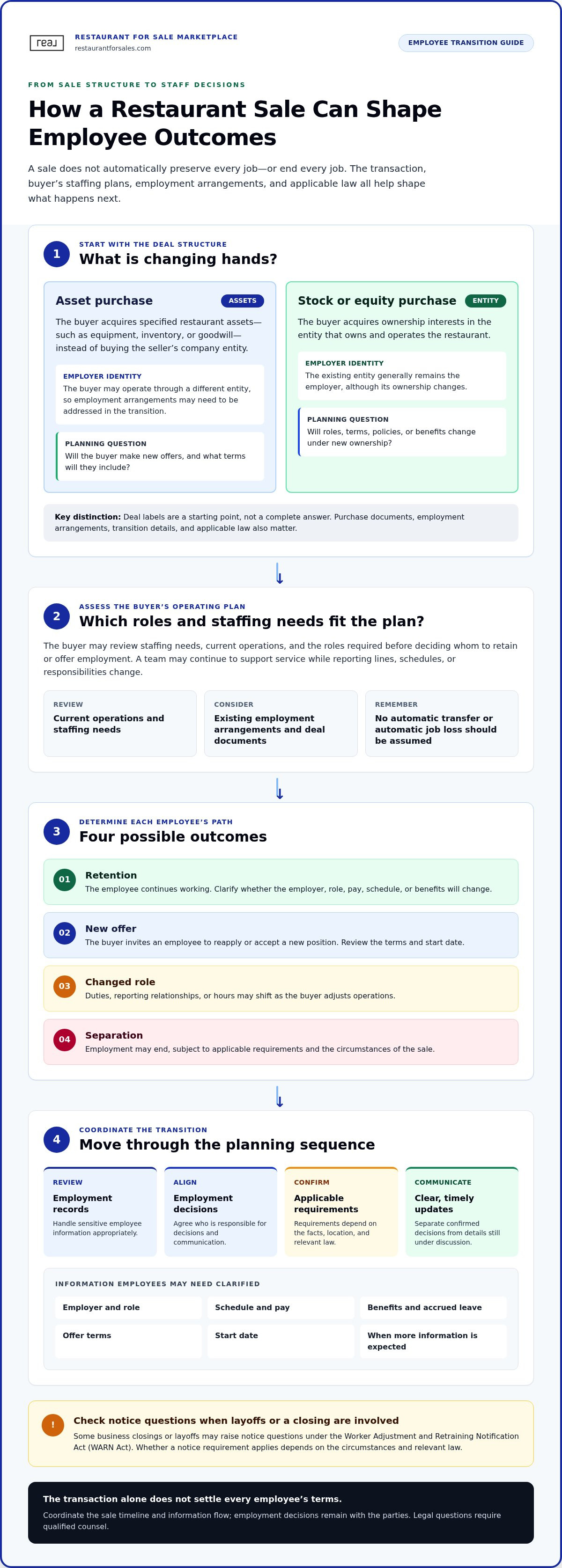
A restaurant sale does not guarantee that every employee keeps the same job. Staff may stay on with the buyer, receive an offer to reapply, move into a different role, or be separated from employment. The answer to what happens to employees when a restaurant is sold depends on the transaction, the buyer’s staffing plans, existing employment arrangements, and applicable law.
A sale transfers or changes ownership of a business, but it doesn’t automatically settle each person’s employment terms. A buyer might want the existing team to keep service steady while changing reporting lines, schedules, or responsibilities. The restaurant’s name and location can remain the same even as individual job arrangements change.
Why a change of ownership does not mean one automatic outcome
The buyer may review staffing needs, current operations, and the roles required under its plan before deciding whom to retain or offer employment. The seller’s employment arrangements and the transaction documents can also affect how the transition is handled. Applicable requirements vary with the facts and location, so neither automatic transfer nor automatic job loss is a safe assumption.
For example, a buyer may offer a current cook a similar position with a different schedule, while asking a manager to take on new responsibilities. Another employee may not receive an offer. These are possible paths, not predictions. The specific terms and timing should be communicated clearly.
- Retention: An employee continues working, but should clarify whether the employer, role, pay, schedule, or benefits will change.
- New offer: The buyer invites an employee to reapply or accept a new position, with terms and a start date to review.
- Changed role: Duties, reporting relationships, or hours may shift as the buyer adjusts operations.
- Separation: Employment may end, subject to applicable requirements and the circumstances of the sale.
Who needs a clear answer during the sale
Employees need timely, specific information to plan around job continuity, pay, schedules, and benefits. If details aren’t settled, distinguish what’s decided from what remains under discussion and explain when further information is expected. Don’t present a possible role or offer as final until the responsible party has confirmed it.
Sellers must balance transition planning with protecting confidential employee information. Buyers need relevant staffing information to assess operating needs before taking over, while handling sensitive records appropriately. Both parties should agree on who will communicate decisions and when, rather than leaving employees to rely on informal speculation.
Some business closings or layoffs may raise notice questions under the Worker Adjustment and Retraining Notification Act (WARN Act). Whether a notice requirement applies depends on the circumstances and relevant law. Start by identifying which employment decisions are being made, who is responsible for them, and what employees need to understand their next steps.
How Asset and Stock Sales Can Affect Restaurant Employees
The structure of a restaurant sale can shape how employment continues, but it doesn’t determine every employee’s outcome. In an asset purchase, the buyer acquires specified business assets, such as equipment, inventory, or goodwill, rather than buying the seller’s company entity. In a stock or equity purchase, the buyer acquires ownership interests in the entity that owns and operates the restaurant.
This distinction matters because the employer’s legal identity may change in an asset deal but generally remains the same entity in a stock deal. Still, “asset sale” and “stock sale” are starting points, not complete answers. The purchase agreement, employment arrangements, benefits, transition details, and applicable law can all affect the result. Employee outcomes depend on the transaction and applicable law, not labels alone.
| Consideration | Asset purchase | Stock or equity purchase |
|---|---|---|
| What changes hands | Specified restaurant assets and any other rights included in the agreement. | Ownership of the existing company or other legal entity. |
| Employer identity | The buyer may operate through a different entity, so employment arrangements may need to be addressed as part of the transition. | The existing entity generally remains the employer, although its ownership changes. |
| Employee planning question | Will the buyer make new offers, and what terms will those offers include? | Will roles, terms, policies, or benefits change under the new ownership? |
| What to review | Asset purchase terms, employment offers, and applicable requirements. | Equity transfer documents, existing employment arrangements, and applicable requirements. |
What an asset purchase may mean for existing staff
Buying the restaurant’s assets doesn’t, by itself, decide which employees will work for the buyer. The buyer may make new employment offers to some or all of the existing team, setting out each person’s role, compensation, schedule, and start date. The seller’s agreements, the buyer’s plans, the transaction documents, and applicable requirements all matter. Transferring equipment, inventory, or a lease is separate from deciding individual job arrangements.
What a stock or equity sale may mean for employees
In a stock or equity sale, ownership of the operating entity changes while that entity generally continues to employ its staff. This can mean different continuity from an asset purchase, but it doesn’t promise unchanged jobs, terms, or benefits. The purchase agreement may address employee-related responsibilities, while employment contracts and applicable law can raise separate questions. Qualified counsel should review those issues in light of the transaction and its facts.
Layoffs or a closure connected with a sale can also raise advance-notice questions. The U.S. Department of Labor's WARN Act guidance explains federal requirements. Whether they apply depends on the employer and circumstances, and other rules may also be relevant. Buyers and sellers should identify these questions early rather than assume deal structure resolves them.
Clear transaction planning helps keep the commercial handoff organized while the parties address employment decisions separately. Owners preparing a sale can use restaurant sale resources to understand the process from buyer-seller discussions through closing.
Restaurant Employee Outcomes: Retention, Re-Hiring, or Separation
A sale can lead to continued employment, a new offer, a changed role, or separation. None is guaranteed. The buyer’s operating plan helps shape staffing decisions. A restaurant keeping its menu and service model may need many existing roles, while a concept change or revised hours may call for a different mix of skills and shifts. The practical answer to what happens to employees when a restaurant is sold depends on the buyer’s needs and the terms communicated to each employee.
Employees should focus on specifics rather than assumptions about the sale. A familiar workplace or job title doesn’t necessarily mean every existing term will remain the same. Ask for proposed arrangements in writing and clarify:
- Employer: Which person or entity will employ you after the transition?
- Role: Will your title, duties, or reporting relationship change?
- Schedule: Which shifts and hours are expected?
- Pay: What compensation and pay practices will apply?
- Start date: When does the new or continuing arrangement begin?
When the buyer keeps some or all of the team
A buyer may retain employees in familiar positions to support service continuity and preserve knowledge of the menu, customers, and daily routines. But staying with the restaurant doesn’t necessarily preserve every prior benefit, policy, or employment term. The buyer should communicate proposed changes clearly, and employees should review the details before relying on an informal promise. Even a similar role can come with different hours or responsibilities.
For example, a server may continue in the same dining room but be offered a different schedule, while a kitchen employee’s duties may shift if the buyer changes the menu. These examples illustrate possible changes, not standard outcomes. Confirm the employer, role, schedule, pay, and effective date for each arrangement.
When employees receive new offers or are not retained
A buyer may invite selected employees to apply for or accept new positions. An offer may describe a different role or set of terms, so employees should compare the written details with their expectations and clarify open questions before accepting. Other employees may not receive an offer. Separation is possible, but it isn’t inevitable when a restaurant is sold.
If employment ends, the parties may need to address final pay, accrued leave, benefits, and any applicable notice. Requirements depend on jurisdiction and circumstances, so don’t assume one timeline or rule applies everywhere. Sellers and buyers should determine who is responsible for communications and coordinate timing before sharing decisions. Employees should receive direct information about their status and next steps instead of having to interpret rumors or a change in ownership.
Clear communication matters on every path. A written offer, retention notice, or separation communication should make the employee’s next step understandable, while unresolved legal questions should go to qualified counsel.
How Buyers and Sellers Can Plan an Employee Transition
A clear transition plan gives buyers and sellers a shared process for handling staffing decisions without treating employee information casually or making promises too early. It also helps answer practical questions about what happens to employees when a restaurant is sold. Keep the sequence straightforward: review records, align decisions, confirm applicable requirements, then communicate.
What the buyer and seller should coordinate before closing
Before closing, compare staffing assumptions, assign responsibility for decisions, and map the transition timeline. The seller can organize employment records, while the buyer identifies operational roles and expected staffing needs. Share sensitive information only with people who need it for the transaction, using appropriate safeguards. Qualified advisers can review employment agreements and records when legal or employment questions arise.
Relevant records may include role descriptions, compensation details, work schedules, and benefit information. Keep them organized and current, and distinguish verified facts from proposed changes. A buyer assessing operations, for example, may need to understand which positions support opening hours and service requirements. That review informs planning, but doesn’t determine an individual employee’s outcome.
Use this sequence to coordinate the work:
- Review records. Assemble relevant role descriptions, compensation information, schedules, benefit materials, and employment agreements. Limit access to sensitive employee data to appropriate participants.
- Align decisions. Identify the buyer’s staffing assumptions, who has authority to make employment decisions, and which decisions remain open. Set a transition timeline that works with the expected closing process.
- Confirm requirements. Have qualified advisers assess applicable rules and agreements, including issues involving notice, final pay, benefits, or leave. Requirements can vary by jurisdiction and circumstances.
- Communicate. Once decisions and timing are clear, prepare consistent messages that explain what employees need to know and where to direct questions.
How to communicate changes clearly and responsibly
Timing matters. Sharing information too early can create confusion if terms or staffing decisions change; waiting too long can leave employees little time to understand confirmed changes. Agree on who will deliver each message and when, while protecting confidential information during the sale process. Don’t promise continued employment before the responsible decision-maker confirms the plan and relevant requirements have been reviewed.
For each communication, state what is known, what remains undecided, and when employees can expect an update. If a reporting line, work schedule, or start date is changing, explain the confirmed details in plain language. Verify applicable rules on notice, final pay, and benefits before communicating a separation or transition decision. A coordinated timeline helps prevent inconsistent messages from buyer and seller.
Employee planning is one part of an orderly restaurant transaction. A broker can help coordinate commercial sale milestones and information flow between buyer and seller, while employment decisions remain with the parties. Explore restaurant brokerage services as part of planning an orderly sale.
How a Restaurant Broker Supports a Better-Planned Sale
A restaurant sale involves coordinated commercial steps, from preparing the business for buyers through negotiations and closing. A broker can help organize those milestones and the flow of information between seller and buyer. That structure gives the parties a clearer view of when transaction decisions are needed, including when to plan employee communications. It doesn’t determine who keeps a job or replace professional advice on employment matters.
Questions about what happens to employees when a restaurant is sold can overlap with deal timing, but they remain employment decisions for the buyer and seller. A broker facilitates the commercial process, not staffing outcomes or interpretations of employment law. Legal questions about agreements, notice, pay, or benefits should be reviewed with qualified counsel familiar with the circumstances.
Where brokerage coordination fits into employee planning
Transaction milestones help the parties work back from an anticipated closing and identify when information or decisions may be needed. For example, a buyer may need a clear picture of restaurant operations to develop a transition plan, while the seller must coordinate when information is shared with staff. An organized process can make buyer evaluation and planning more orderly without promising retention, legal compliance, or any particular employee outcome.
A broker can coordinate discussions, document requests, and deadlines tied to the commercial sale. This helps the buyer and seller track open transaction items and distinguish confirmed deal information from matters that still require a decision. For broader context, see the role of a restaurant broker.
What to prepare when considering a restaurant sale
Accurate operating information supports productive transaction discussions. Owners can prepare current records that describe how the restaurant runs and identify employment questions for separate review. Share sensitive material through appropriate channels and only with people who need it for the transaction. Organizing information early can help the seller and buyer identify gaps before they affect planning.
- Operating details: Current hours, service model, key processes, and role descriptions that help explain how the restaurant functions.
- Staffing information: Relevant schedules, compensation records, and benefit information, handled with appropriate confidentiality.
- Open questions: Employment agreements, proposed staffing changes, and questions about notice, final pay, or benefits for review by qualified advisers.
- Communication planning: The decision owner, timing, and next steps for messages to employees once the parties have confirmed what can be shared.
Use transaction discussions to surface questions and assign them to the right decision-maker. A broker can help coordinate the sale timeline and buyer-seller information flow, while the parties and their advisers address employment matters. To discuss the commercial steps involved in a restaurant transaction, discuss your restaurant sale with the marketplace. Before closing, organize outstanding transaction questions and set a clear plan for employee communications.
Plan the Next Step With Confidence
Address what happens to employees when a restaurant is sold through a deliberate transaction plan, not at the last minute. Before moving forward, list the staffing decisions that remain open, identify who owns each decision, and set a point in the sale timeline to prepare clear employee communications. Keep employment-law questions separate from commercial negotiations so each can be handled by the right people.
A well-organized sale process can help buyers and sellers keep responsibilities and milestones visible as they work toward a transition. Restaurant For Sale Marketplace connects restaurant and bar buyers and sellers, with brokerage support spanning the sale process from listing to closing. That coordination helps keep the commercial transaction moving while the parties address staffing matters with appropriate care.
If you’re preparing to sell or evaluating a restaurant purchase, take the next step by discussing your transaction and its planning needs. Discuss your restaurant sale with Restaurant For Sale Marketplace. With clear priorities and a structured process, you can move toward closing with greater confidence.
Frequently Asked Questions
Can a buyer require restaurant employees to reapply after a sale?
A buyer may ask some employees to apply for or accept new positions, particularly when the purchase involves restaurant assets rather than ownership of the existing employer entity. Whether reapplying is appropriate or required depends on the transaction documents, employment arrangements, and applicable law. Employees should clarify who the proposed employer will be, whether prior service is recognized, and what terms apply before accepting an offer or assuming their job continues.
Is a restaurant buyer required to keep the existing employees?
Not automatically. A sale alone doesn’t establish that every employee must be retained, but the buyer’s obligations can depend on the deal structure, agreements, and applicable law. In some situations, a buyer may be treated as a successor employer for specific legal purposes. For example, FMLA successor-in-interest rules can affect eligibility and leave. The parties should get advice on how those rules apply to their transaction and workforce.
What happens to accrued paid time off when a restaurant is sold?
Accrued PTO treatment depends on the location, the employer’s policies, and the transaction structure. In many jurisdictions, an asset sale ends the seller’s employment of staff at closing, which can trigger requirements for the immediate payment of earned wages, including accrued and unused vacation or PTO. A buyer’s offer to rehire an employee doesn’t automatically remove the seller’s obligation. Employees and owners should verify the rules that apply where the restaurant operates.
Can a new restaurant owner change employees' pay or schedules?
A new owner may propose different pay, hours, or schedules, but whether and how those changes can be made depends on the employee’s agreement, the transaction, and applicable requirements. For instance, an employee offered a new position should compare the written rate and expected shifts with the previous arrangement rather than assume the old terms carry over. Ask for proposed changes in writing and have unresolved contract or legal questions reviewed by qualified counsel.
Do restaurant employees get severance when the business is sold?
Severance isn’t guaranteed simply because a restaurant changes ownership or an employee loses a job. An employee’s eligibility may depend on an employment agreement, a company policy, the purchase documents, or applicable law. Review any written severance terms and the separation notice for eligibility conditions, payment timing, and required steps. If the documents are unclear, qualified counsel can help assess the specific arrangement without assuming every sale carries the same severance obligation.
Can employees collect unemployment if they lose their jobs after a restaurant sale?
Employees who lose their jobs because of a business sale are generally eligible to apply for unemployment benefits, but eligibility isn’t automatic. The state agency assesses the circumstances under its program rules. An employee who receives a new offer but declines it may face different eligibility questions than someone whose position ends without an offer. Apply through the appropriate state agency and provide accurate information about the separation and any employment offer.


