

What if the deli for sale with the most appealing asking price isn’t the best fit for your goals? A listing is a useful starting point, but it may not explain exactly what the price includes or whether the reported performance and operating conditions support the opportunity.
That uncertainty is understandable. A deli’s value depends on more than its menu and location. Buyers also need to assess financial records, included equipment and inventory, lease terms, permits, supplier relationships, staffing, and the seller’s transition plan. Missing details can make it hard to compare listings or decide whether to move forward.
This guide explains how to assess deli listings, compare deal structures, and check operational and financial fit before making an offer. You’ll learn which records and terms to review, what questions to raise during due diligence, and how to narrow your search to opportunities that match your priorities. The goal is a practical process for moving from an initial listing review to an informed next step.
Key Takeaways
- Clarify whether a listing covers an operating business, selected assets, lease rights, real estate, or a combination before comparing asking terms.
- Evaluate a deli for sale using supporting financial and operating records, not the listing description alone.
- Compare opportunities side by side, separating documented details from seller representations and unanswered questions.
- Follow an ordered due diligence process to review records, inspect operations, verify transaction terms, and consult qualified advisors.
- Filter active listings by your preferred format, operating role, and deal structure, then prepare focused questions before requesting more information.
Deli for sale: understand what the listing actually includes
A deli acquisition can mean purchasing an operating business, selected business assets, or both. The terms vary by transaction, so treat the listing as a starting point rather than a complete inventory of what transfers. A business sale may include equipment, inventory, goodwill, and rights connected to the operation. Buying the property is a separate matter and should be clearly identified in the transaction documents.
The word “deli” can describe businesses with different menus and service models. For background on what is a delicatessen, consider how products and traditions may differ from one operation to another. For a buyer, the practical question is which assets and rights are part of this specific deal.
What might be included in a deli business sale?
Look for an itemized schedule of assets in the listing documents. Don’t assume equipment shown in photos transfers with the business. Confirm the status of kitchen equipment, refrigeration, furniture, fixtures, and point-of-sale systems, including whether each item is owned, leased, or excluded.
- Inventory: Ask how food and other stock will be counted, valued, and handled at closing. Make sure the process is set out in the written terms.
- Business assets: Check whether the sale includes the brand, recipes, customer records, or other materials. Clarify any limits on transferring or using them.
- Goodwill: Ask what the seller means by goodwill and which business value or relationships the term represents.
Make a record of every included and excluded item. If the listing is unclear, request clarification before comparing its asking terms with another opportunity.
Is the deli business-only, leased, or sold with real estate?
A business-only purchase transfers an operating company or specified assets. It doesn’t automatically include ownership of the building. If the deli occupies leased premises, determine whether the proposed deal includes a lease assignment or another arrangement that would let you continue using the space. Review the lease terms and confirm whether landlord approval is required for the proposed transfer.
If real estate is included, verify that the transaction documents identify the property and explain how it relates to the business purchase. Keep business assets, lease rights, and property interests distinct as you review the deal. For additional context, see this guide to restaurant lease assignments.
Before making an offer on a deli for sale, reconcile the listing with its supporting documents. Ask the seller or broker to confirm in writing what transfers, what remains with the seller, and which lease or property conditions still need to be resolved.
How to evaluate a deli for sale beyond the listing description
A listing can describe an appealing concept, but the seller’s records and the work required to operate the business help you test whether it fits. Compare reported sales with supporting documents, then ask how revenue breaks down across products and channels, such as counter sales, takeout, or catering. If results changed significantly between periods, ask for an explanation instead of assuming a strong period will continue.
Which financial and operating records should a deli buyer request?
Request relevant tax returns, profit-and-loss statements, point-of-sale reports, bank deposit records, and supporting sales documentation. Compare matching reporting periods across documents. If sales reports and deposits don’t align, ask the seller to explain the difference and provide records that clarify it.
Review expenses just as carefully. Check supplier invoices, payroll information, inventory treatment, owner compensation, and any one-time expenses included in the statements. Supplier invoices covering 12 to 24 months can help you assess food costs over time. Confirm that figures are presented consistently, and note which results are seller-reported versus independently supported. The SBA guide to buying an existing business offers broader context on evaluating and purchasing a business.
How can you assess a deli’s day-to-day operating fit?
Financial performance is only part of the decision. Review the menu, supplier arrangements, staffing patterns, opening hours, and preparation requirements. A broad menu, for example, may call for different sourcing and prep routines than a focused sandwich operation. Ask for schedules and operating procedures, and clarify which tasks the owner currently handles.
Inspect equipment in person where possible and compare its condition with maintenance records. Note repairs or replacements that may be needed, and confirm whether each item is included in the proposed transaction. Consider whether the workflow and owner responsibilities match your experience, available time, and intended operating model. For wider context on how business performance informs value, see this restaurant valuation guide.
Summarize each opportunity in a fact-focused review: reported sales and supporting records, major expenses, staffing and hours, equipment condition, owner duties, and unresolved questions. Label each point as documented, seller-reported, or unverified. This gives you a clearer basis for comparing a deli for sale with other opportunities and deciding what needs further diligence. Buyers seeking transaction guidance can also explore restaurant brokerage services.
Compare deli listings by deal structure, lease, and growth potential
Comparing a deli for sale with other opportunities takes more than lining up asking prices. One transaction may include business assets and inventory, while another may depend on a lease assignment or include the property. Build a side-by-side comparison so differences in terms, operating demands, and supporting evidence are clear before deciding which listings merit further review.
What should buyers compare across deli listings?
Use the same template for every opportunity. Mark each detail as confirmed when supported by documents, seller-reported when it still needs verification, or unanswered when information is missing. This helps prevent estimates and claims from being mistaken for established facts.
| Comparison item | What to record |
|---|---|
| Assets and inventory | Included equipment and other assets, inventory treatment, exclusions, and any real estate component. |
| Lease and property | Lease status, remaining term, renewal options, assignment conditions, and whether property ownership is part of the deal. |
| Financial support | Reported performance, documents received, reporting periods, and items still requiring verification. |
| Staffing and hours | Current staffing pattern, operating hours, owner responsibilities, and expected transition support. |
| Operations | Menu scope, supplier arrangements, preparation demands, and unresolved questions about day-to-day work. |
Next, assess the operating complexity against your experience, schedule, and priorities. A business that depends on specialized preparation or substantial owner involvement may be a poor fit even if its headline figures look attractive. Treat growth potential as something to investigate, not a promised outcome. Identify what might support future performance and which assumptions would need to hold true.
Asking price alone can’t establish value. Consider documented financial performance, assets, lease position, and operating demands together, using a consistent basis to compare opportunities. For broader context on evaluating a restaurant’s value, review this restaurant valuation guide.
How do lease terms and property ownership affect the decision?
Review the lease itself, not just its summary in the listing. Check the remaining term, renewal options, permitted use, assignment conditions, and any required landlord approvals. A proposed lease assignment is not the same as buying the underlying property. If real estate is included, confirm how ownership is addressed in the transaction documents. Have qualified legal and real estate professionals review contractual details before relying on a listing summary or making commitments.
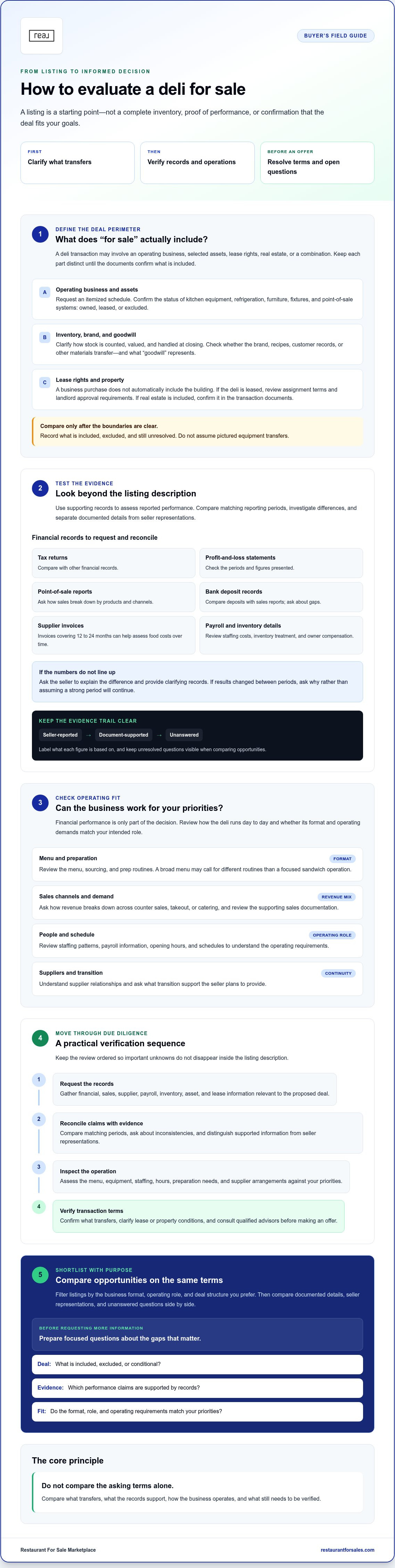
Deli acquisition checklist: verify the details before making an offer
Use a consistent sequence to move from initial interest to an informed offer. Treat a listing statement as a claim to investigate, not proof. Keep a record of what you’ve reviewed, what the seller has represented, and what remains unresolved.
- Screen the listing: Check that the format, operating role, deal structure, and stated assets align with your acquisition criteria.
- Request records: Ask for relevant financial statements, sales reports, equipment documents, and lease materials. Note gaps and request explanations.
- Inspect operations: Observe the workflow and equipment condition. Ask about staffing, suppliers, training, and open operational issues.
- Verify terms: Compare the proposed purchase terms with supporting documents. Confirm what transfers and what remains excluded.
- Consult advisors: Have qualified legal, accounting, and other relevant professionals review the records and transaction terms before you commit.
Also confirm which food-service permits, registrations, and transfer requirements may apply to the specific business. Requirements can vary by location and transaction, so check with the relevant authorities and qualified advisors rather than assuming existing approvals will automatically transfer.
What questions should you ask the seller or broker?
Ask why the owner is selling and what they expect to transfer. Request a clear list of available financial records, equipment documentation, and lease materials. Ask whether any documents are incomplete or still pending. Clarify proposed transition arrangements, including who will introduce suppliers, support employee continuity or training, and communicate with customers. Ask about unresolved operating issues as well. Direct answers can show where additional documentation or follow-up is needed.
How should you prepare to make an informed offer?
Before proposing terms, define your acquisition criteria, intended day-to-day role, funding plan, and acceptable deal structure. Decide which facts need to be verified and which open questions could change your decision. Review the guide to buying a restaurant for more on the broader transaction process.
For a deli for sale, base your next step on records and written terms, not verbal assurances alone. If an opportunity remains a fit after initial screening, ask the appropriate advisors to review the documents before making a commitment. You can also explore restaurant listings and apply your criteria to available opportunities.
Find a deli for sale and move from shortlist to next steps
A focused search starts with clear buying criteria. Decide what type of deli operation you want, how involved you want to be day to day, and which deal structures could work for you. Use those priorities to filter active restaurant listings, then shortlist opportunities that appear to match. Not every restaurant listing will be a deli, so confirm the business format before requesting more information.
How can you narrow down deli listings efficiently?
Set must-have criteria before comparing options. Consider the business format, included assets, lease status, staffing needs, and expected owner involvement. For each potential match, note what the listing confirms and what remains unclear. A focused inquiry can ask whether equipment transfers, what lease arrangement is proposed, and which financial or operating records are available.
Keep your shortlist flexible. If documents differ from the listing description, update your assessment rather than relying on the initial summary. You may also need to revisit your priorities if an opportunity calls for a different operating role or deal structure than you first expected.
When can a restaurant broker help with a deli purchase?
Restaurant brokerage support may help if you want guidance coordinating listing discussions and transaction steps. A broker can help clarify the process and keep questions organized, but you should still review supporting documents and consult your own qualified advisors. Learn more about the role of a restaurant broker.
Before requesting further details, prepare a concise set of questions for each opportunity. Ask what information is available, which transaction terms are still under discussion, and what needs to be confirmed with the seller, landlord, or relevant authority. This keeps follow-up focused on decision-critical gaps rather than general inquiries.
Ready to take the next step? Explore restaurant listings and compare available opportunities against your preferred format, operating role, and deal structure. Confirm whether an interesting listing is a deli and whether its details fit your criteria before proceeding.
Take your deli search from review to action
A promising deli for sale should fit your goals beyond its asking terms. Confirm what transfers, compare seller-reported performance with supporting records, and assess whether the lease, staffing, and daily operating demands suit your plans. Keep verified facts separate from open questions so you can decide which opportunities deserve further review.
A disciplined process can’t guarantee a successful purchase, but it can help you make a more informed decision before committing. Use your shortlist and due diligence findings to focus conversations on the details that matter to your acquisition goals.
Restaurant For Sale Marketplace offers active restaurant listings for buyers to explore, along with restaurant brokerage and valuation services and tools for valuation and financing. Listing availability can change, so review current opportunities and confirm their details. Explore restaurant listings and discuss your acquisition goals as you plan your next step. With clear criteria and careful review, you can move forward with greater confidence.
Frequently Asked Questions
What should I check before buying a deli?
Confirm what the sale includes, then review the seller’s financial and operating records. Inspect equipment and ask about staffing, supplier arrangements, and the owner’s current responsibilities. Review the lease or property terms, too. Identify which food-service permits or registrations may apply, and confirm transfer requirements with relevant authorities and qualified advisors. Treat listing descriptions as preliminary until you’ve reviewed supporting documents and proposed transaction terms.
How do I know if a deli for sale is profitable?
Compare financial statements, tax returns, and sales records for consistent reporting periods, then check them against supporting documents. Ask how revenue and expenses are recorded, and investigate major changes, unusual items, or gaps between records. Consider inventory, staffing, operating hours, and owner responsibilities when assessing whether reported results reflect the work required. A listing’s performance claims aren’t proof on their own. Ask an accounting professional to assess the records.
What is usually included when buying a deli?
Included assets depend on the specific transaction. A sale may cover equipment, furniture, fixtures, inventory, goodwill, or selected operating assets, while real estate may be separate. Request a written schedule that identifies what transfers and what’s excluded. Clarify how inventory will be counted and handled at closing, and confirm which documents govern the sale. Don’t assume an item transfers simply because it appears in listing photos or is present at the deli.
Is it better to buy an existing deli or open a new one?
Buying an existing deli may provide an established operation, equipment, and customer relationships, but verify those assets and business claims before assigning them value. Starting from scratch gives you more control over the concept, but you’ll need to build the business and arrange premises and equipment. Compare the actual purchase opportunity with your experience, resources, and operating plans. Review the records and terms before deciding which route is a better fit.
Can I take over the lease when I buy a deli?
Possibly, but the existing lease and the landlord’s requirements determine whether an assignment or another transfer can proceed. Review the assignment provisions, renewal options, permitted use, and approval conditions with a qualified professional. Confirm the proposed arrangement in writing before relying on it. Buying the business doesn’t automatically transfer the premises or guarantee that you can continue under the same lease terms.
What permits do I need to operate a deli?
Permit and registration requirements depend on the business’s activities, premises, and the authorities responsible for oversight. Before committing, identify which food-service, business, and other approvals may apply. Ask the relevant authorities and qualified advisors about application and transfer requirements for the specific operation. Don’t assume the seller’s existing approvals will automatically transfer to a new owner. Confirm applicable requirements before finalizing your plans or purchase.
Should I use a broker to buy a deli?
A restaurant broker may help you understand listings, coordinate discussions, and navigate transaction steps. Ask what support is included, how the broker is compensated, and whether engagement terms apply before proceeding. Brokerage support doesn’t replace independent legal, accounting, or operational advice. Consider your transaction experience and the deal’s complexity when deciding what guidance you need and which parts of the acquisition process you’ll manage yourself.


