

A restaurant’s headline rent may look manageable while the obligations behind it put pressure on cash flow or limit how the business can operate. The most important restaurant lease red flags often involve who pays for repairs, how shared expenses are calculated, and what happens when the lease changes hands. Before committing to an acquisition, look beyond the monthly rent and compare the lease with the restaurant’s operating needs.
Lease terms can affect day-to-day costs, permitted use, and a buyer’s ability to complete the purchase. Landlord approval requirements, personal guarantees, rent increases, and unclear maintenance duties can all change a deal’s risk profile.
This guide explains how to spot lease terms that deserve closer review, assess their potential business impact, and identify issues to address before signing. It also explains how lease assignment fits into a restaurant acquisition, including why approval and transfer conditions matter. Reviewing the lease alongside the business helps buyers make more informed decisions before moving forward.
Key Takeaways
- Look beyond headline rent: unclear repair duties, shared expenses, and rent adjustments can change a lease’s financial impact.
- Spot restaurant lease red flags by reviewing renewal deadlines, assignment terms, permitted use, and conditions requiring landlord consent.
- Compare concerning provisions with relevant lease documents and business records to assess their potential effect and decide what to address first.
- Build a complete lease file, including amendments, renewal notices, assignment documents, disclosures, and landlord communications.
- Document unresolved issues and add them to the transaction timeline so lease assignment and consent are addressed before they become closing obstacles.
Restaurant Lease Red Flags: Why the Headline Rent Is Only the Starting Point
A restaurant can look like a strong acquisition on paper, yet its lease may carry obligations that affect costs, operations, or the ability to remain in the space. A buyer comparing only the listed rent may miss provisions about repairs, shared expenses, permitted use, or landlord approval for a transfer.
A restaurant lease red flag is a provision that needs clarification, financial analysis, or transaction planning before a buyer can understand its effect. It signals a need to investigate, not automatic proof that a deal should be rejected. The right response depends on the lease wording, the provision’s effect on the business, and whether the parties can address it.
Base rent shows only one part of the cost of occupying a restaurant. The full lease obligations determine how the space affects the business.
What makes a restaurant lease different from a simple rent comparison?
A restaurant depends on more than four walls. The premises may need to support kitchen equipment, food preparation, customer service, deliveries, and customer access. Lease language can assign responsibility for maintaining or repairing parts of that setup, while other provisions allocate shared expenses or limit how the space can be used.
Rent is only one component of occupancy obligations. The lease term and renewal rights matter, too. If the buyer’s plans depend on remaining in the space, review the length of the current term, renewal deadlines, and conditions for extending it. A renewal right with unclear requirements can create uncertainty about future operations, even when the current rent appears workable.
How to use this red-flag checklist
Read the lease alongside the seller’s disclosures and transaction documents. Compare the stated rent, responsibilities, renewal terms, and transfer conditions with the written record. Separate confirmed obligations supported by documents from unclear wording that needs follow-up. A missing detail or ambiguous phrase is a reason to seek clarification, not evidence by itself of misconduct.
Record each issue, the document that raises it, and its potential effect on the acquisition. For example, if a clause assigns equipment repairs to the tenant, check which equipment is included in the sale and whether that responsibility fits the buyer’s operating plans. A consent requirement may also affect the transfer timeline. The restaurant lease assignment guide explains how lease transfer considerations connect to a restaurant transaction.
This approach helps buyers distinguish a provision they can understand and plan for from one that may require clarification or negotiation before committing. Keep the lease review connected to the broader acquisition instead of treating it as a separate paperwork task.
Restaurant Lease Terms That Deserve a Closer Look Before You Sign
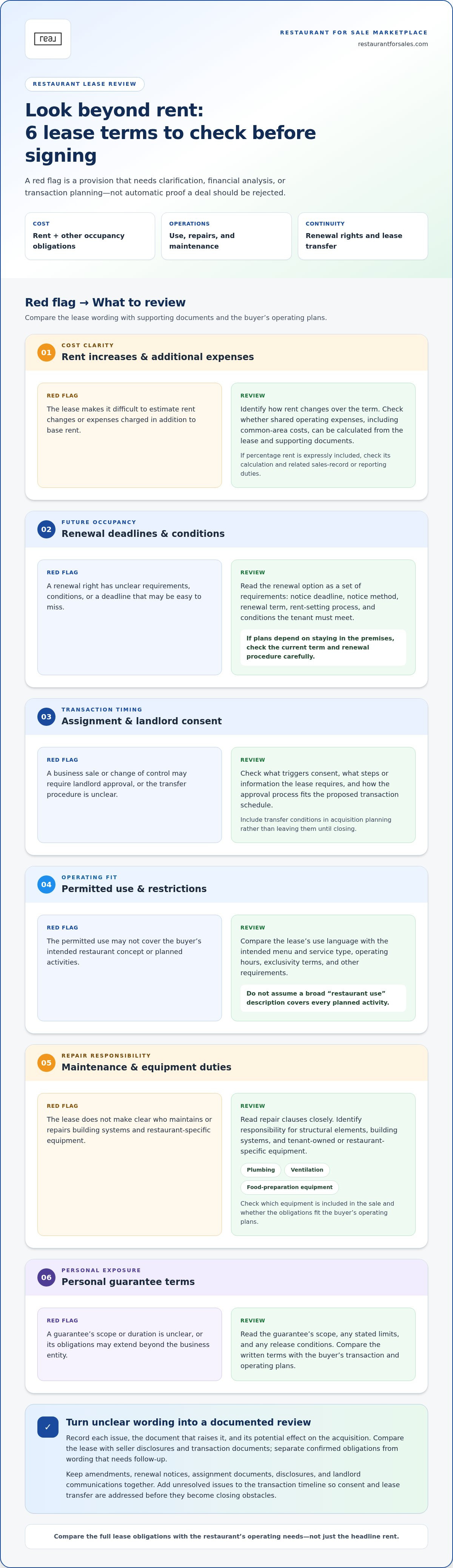
Some lease provisions affect more than the rent due this month. They can determine how long a buyer can operate in the premises, whether the lease can transfer with the business, and who pays when building systems or restaurant equipment need attention. Review each provision in context and note what the obligation could mean for the acquisition.
Renewals, rent changes, and additional occupancy obligations
Review renewal options as a set of connected requirements. Note the deadline, required notice method, renewal term, rent-setting process, and any conditions the tenant must meet to exercise the option. A right to renew may offer less certainty if its procedure or conditions are unclear, or if a deadline is easy to miss.
Next, identify how rent changes over the lease term and which expenses are charged in addition to base rent. Shared operating expenses, such as common-area costs, should be clear enough to calculate from the lease and supporting documents. If the lease expressly includes percentage rent, determine how it is calculated and what sales records or reporting duties apply. These restaurant lease red flags warrant follow-up when the wording prevents a buyer from estimating obligations or planning around deadlines.
Assignment, permitted use, repairs, and guarantees
A lease assignment or business sale may require landlord consent. Read the assignment and change-of-control provisions to understand what triggers approval, what steps or information the lease requires, and how the process fits the proposed transaction schedule. Consent requirements can affect whether and when a buyer can take over the lease, so include them in acquisition planning rather than leaving them until closing.
Check that the permitted use fits the buyer’s intended restaurant concept and operations. Restrictions on menu or service type, exclusivity, operating hours, or other requirements may affect the business plan. Don’t assume that a broad description of restaurant use covers every planned activity.
Read repair and maintenance clauses closely. A lease may treat structural elements and building systems differently from tenant-owned or restaurant-specific equipment. Identify who is responsible for each item covered by the lease, including plumbing, ventilation, and food-preparation equipment. Also review personal guarantee terms, including their scope and any stated limits or release conditions, because they can create obligations beyond the business entity. Restaurant lease assignment planning is one part of evaluating the overall transaction. Explore restaurant acquisition opportunities as you assess the fit.
How to Measure the Business Impact of Restaurant Lease Red Flags
A lease provision matters because of what it could mean for a specific restaurant, not simply because it sounds unfavorable. Trace each concern through the buyer’s financial assumptions, intended concept, equipment needs, and transaction schedule. This turns restaurant lease red flags into questions that can be assessed and prioritized.
Which lease risks can affect cash flow or continuity?
Compare rent adjustments and shared charges with the lease, expense records, and the buyer’s documented operating assumptions. If an amount or calculation method is unclear, identify what information is missing before estimating the effect. Repair duties also deserve practical analysis: responsibility for a key system or piece of kitchen equipment could mean an unplanned expense or operational disruption if it needs work.
Renewal uncertainty is another planning issue. If the buyer expects to operate beyond the current lease term, unclear renewal conditions or timing may complicate continuity planning. The effect depends on the actual option language and the buyer’s ownership horizon, so don’t assume that uncertainty automatically means the restaurant must leave.
| Lease provision | Possible business effect | Documents to review | Follow-up priority |
|---|---|---|---|
| Rent adjustments and shared charges | May change occupancy assumptions and cash-flow planning. | Lease, amendments, expense statements, and relevant financial records. | Quantify the obligation and its timing. |
| Repair and maintenance duties | Could create unplanned work, expense, or operational interruption. | Lease, equipment records, maintenance history, and seller disclosures. | Clarify responsibility; assess any known condition. |
| Renewal option and deadlines | May affect plans to operate beyond the current term. | Lease, amendments, renewal notices, and landlord communications. | Resolve before closing if continuity depends on the option. |
| Permitted use or operating restrictions | Could constrain the buyer’s concept, service model, or planned operations. | Lease, transaction documents, and the buyer’s operating plan. | Negotiate or clarify if the planned use may not fit. |
How to prioritize a concern without overreacting
Assign each finding a next step: clarify ambiguous wording, quantify a financial obligation, negotiate a term that conflicts with the plan, or resolve before closing an issue that could prevent the transaction from proceeding as structured. Match the priority to the purchase structure, intended use, and time needed to address it.
A negotiable concern may be manageable with clear terms, while a risk threatens transaction feasibility when it cannot be resolved in time or conflicts with a core requirement of the deal. Review the actual language and relevant records before treating any provision as a deal-breaker.
A Practical Restaurant Lease Review Checklist for Buyers
A consistent review process helps buyers turn scattered paperwork into clear transaction questions. Assemble the full record, compare it with the seller’s description, and track what still needs attention. Use this checklist to organize findings, not to treat an unclear clause as a confirmed obligation.
Documents and facts to assemble before evaluating the lease
- Collect the complete lease file. Gather the executed lease, every amendment and exhibit, available assignment documents, renewal notices, disclosures, and relevant communications with the landlord. Missing pages or later agreements can change how a provision should be understood.
- Compare the written terms with the seller’s account. Check the seller’s description of rent, shared expenses, permitted use, repair duties, renewal rights, and transfer conditions against the lease documents. Record discrepancies without assuming why they exist.
- Build a deadline and obligation tracker. List rent adjustments, renewal windows, notice dates and methods, consent requirements, and conditions tied to exercising an option. Note the document supporting each entry and flag missing or inconsistent information.
- Keep unresolved questions visible. Record the clause or document involved, the information needed, and who is responsible for addressing it within the transaction process. This makes restaurant lease red flags easier to assess before deadlines or closing decisions become urgent.
How to turn findings into transaction questions
For each concern, write down three things: the relevant lease language, its possible effect on the buyer’s operating plan, and the evidence or explanation still needed. For example, if the seller describes a repair obligation differently from the lease, identify the provision and the records or clarification needed to understand the discrepancy.
Then assign a practical next step: clarify wording, quantify an expense using available records, negotiate a change, or make a transaction decision. Consider each issue against the purchase structure, intended restaurant use, and timeline for landlord consent or lease transfer. The restaurant lease transfer process is part of acquisition planning, not an administrative detail to leave until the end.
This checklist supports due diligence and transaction planning; it doesn’t determine the legal meaning of a clause. Requirements can vary by jurisdiction, so jurisdiction-specific legal questions call for appropriate review. Restaurant For Sale Marketplace provides restaurant brokerage and lease assignment support to connect lease transfer considerations with an acquisition. Explore restaurant brokerage and lease assignment support.
What to Do When a Restaurant Lease Red Flag Appears
Finding a concerning clause doesn’t automatically mean the restaurant purchase should stop. It means the issue needs a clear record, a practical assessment, and a place in the transaction timeline. Outcomes depend on the lease language, the parties, the facts, and applicable law, so don’t assume that a concern can be resolved or that it makes the deal unworkable.
Decide whether to clarify, negotiate, or reconsider
Start by documenting the exact provision and the question it raises. Identify what information is missing, who can provide it, and when the answer is needed to keep the transaction moving. If a repair obligation is unclear, for example, clarify which item and responsibility the clause covers before estimating its effect on operations or the buyer’s financial assumptions.
Once the facts are clearer, compare the term with the buyer’s intended use of the premises and the acquisition’s financial assumptions. A proposed change may address the concern, but its wording and practical effect matter. Classify the next step:
- Clarify ambiguous language or conflicting records.
- Quantify a cost or obligation using available documents and financial assumptions.
- Negotiate a provision that does not fit the buyer’s plans.
- Reconsider the transaction if a material issue remains unresolved or conflicts with a core requirement.
Keep the decision proportionate. A concern may be manageable once clarified, while a term that prevents the buyer from operating as planned may require a more fundamental review.
Connect lease review to the restaurant acquisition
Lease assignment and landlord consent belong in acquisition planning because they can affect the steps and timing involved in transferring the business. Review the lease’s transfer provisions alongside the purchase structure, required approvals, and target closing schedule. Track outstanding requests and decisions so the transfer process is not left until the rest of the transaction is ready to close.
Lease review is one part of evaluating the full opportunity. For a broader view of the purchase process, read this restaurant acquisition guide. Restaurant For Sale Marketplace provides restaurant lease assignment services as part of transaction planning. Addressing restaurant lease red flags early gives buyers a clearer basis for deciding whether to clarify terms, negotiate, or reassess the fit.
Explore restaurant listings and brokerage services to connect lease considerations with your restaurant acquisition plans.
Move Forward With a Clearer Lease and Acquisition Plan
A careful lease review helps buyers see beyond base rent and understand how renewal terms, operating obligations, and transfer conditions fit the restaurant they plan to acquire. Treat restaurant lease red flags as prompts to clarify, quantify, or negotiate, not automatic reasons to abandon a promising deal. Keep unresolved questions visible and address timing-sensitive assignment or landlord consent issues as part of the transaction plan.
The lease is one piece of the acquisition decision. Assess it alongside the business’s financial picture, intended use, and overall fit. Restaurant For Sale Marketplace provides restaurant brokerage, restaurant valuation, and restaurant lease assignment services to connect these considerations as buyers evaluate a purchase and its lease transfer.
Explore restaurant listings and brokerage services as you consider your next acquisition. With the right questions and an organized process, you can move toward a decision with greater clarity and confidence.
Frequently Asked Questions
What are the biggest red flags in a restaurant lease?
The biggest warning signs are unclear costs, broad repair duties, restrictive permitted-use terms, difficult renewal conditions, personal guarantees, and limits on assigning the lease. Review how each provision could affect the restaurant’s cash flow, operations, and transfer to a buyer. These restaurant lease red flags aren’t automatic deal-breakers, but they call for clarification, financial analysis, or transaction planning before you commit.
Can a landlord prevent the sale or transfer of a restaurant lease?
A landlord’s ability to affect a lease transfer depends on the lease’s assignment and change-of-control language, the transaction structure, and applicable law. Some leases require landlord consent before an assignment or certain ownership changes. Review the exact trigger, approval process, and timing requirements early. A sale of the restaurant business and a transfer of the lease are related but distinct parts of a transaction.
Is a personal guarantee required in a restaurant lease?
No single rule makes a personal guarantee necessary in every restaurant lease. Whether one is required depends on the lease negotiations and the landlord’s requirements. If the lease includes a guarantee, review who signs, which obligations it covers, how long it lasts, and whether the document states limits or release conditions. Consider its potential effect on the buyer’s personal exposure before agreeing to assume or provide one.
What happens if a restaurant lease does not allow the buyer’s intended use?
If the permitted-use clause doesn’t cover the buyer’s planned concept or operations, the lease may not support the business as envisioned. Compare the clause with the menu, service model, operating hours, and other planned activities. Don’t assume a general restaurant-use description covers every use. Clarify the issue and consider whether a written change is possible before proceeding, since the outcome depends on the lease and the parties.
How can I tell whether restaurant lease expenses go beyond base rent?
Read the full lease and amendments for charges in addition to base rent. Look for provisions covering shared operating expenses, common-area maintenance, taxes, insurance, utilities, repairs, or percentage rent if expressly included. Check how each charge is calculated, billed, and adjusted, then compare the terms with available statements and financial records. If the method or amount is unclear, record the question rather than relying only on the seller’s description.
Can I negotiate restaurant lease terms before buying the business?
Lease terms may be negotiable, but changes depend on the landlord, seller, buyer, transaction structure, and relevant lease provisions. Identify the clauses that conflict with your financial assumptions or intended use, then raise specific proposed changes as part of acquisition planning. Don’t treat a proposed revision as effective until it’s documented appropriately. Include timing in the deal plan, especially if the transfer or landlord consent affects closing.
What should I review before agreeing to a restaurant lease assignment?
Review the complete lease, amendments, assignment language, landlord consent requirements, renewal rights, permitted use, rent and additional charges, repair duties, and any guarantee terms. Confirm which documents or steps the lease requires for the transfer and align them with the purchase timeline. Also compare the proposed assignment with the buyer’s operating plan. Restaurant lease assignment review is an important part of evaluating how the lease fits the acquisition.


