

What if the news that your restaurant is for sale is the exact trigger that causes your head chef or floor manager to walk out? It's a legitimate concern that keeps many owners awake at night. You've built a successful business and deserve a clean exit with maximum profit, yet the uncertainty of valuation and the complexity of lease transfers can make the process feel overwhelming. These selling a restaurant tips provide the professional strategies you need to maintain total confidentiality while positioning your business for a high-value closing.
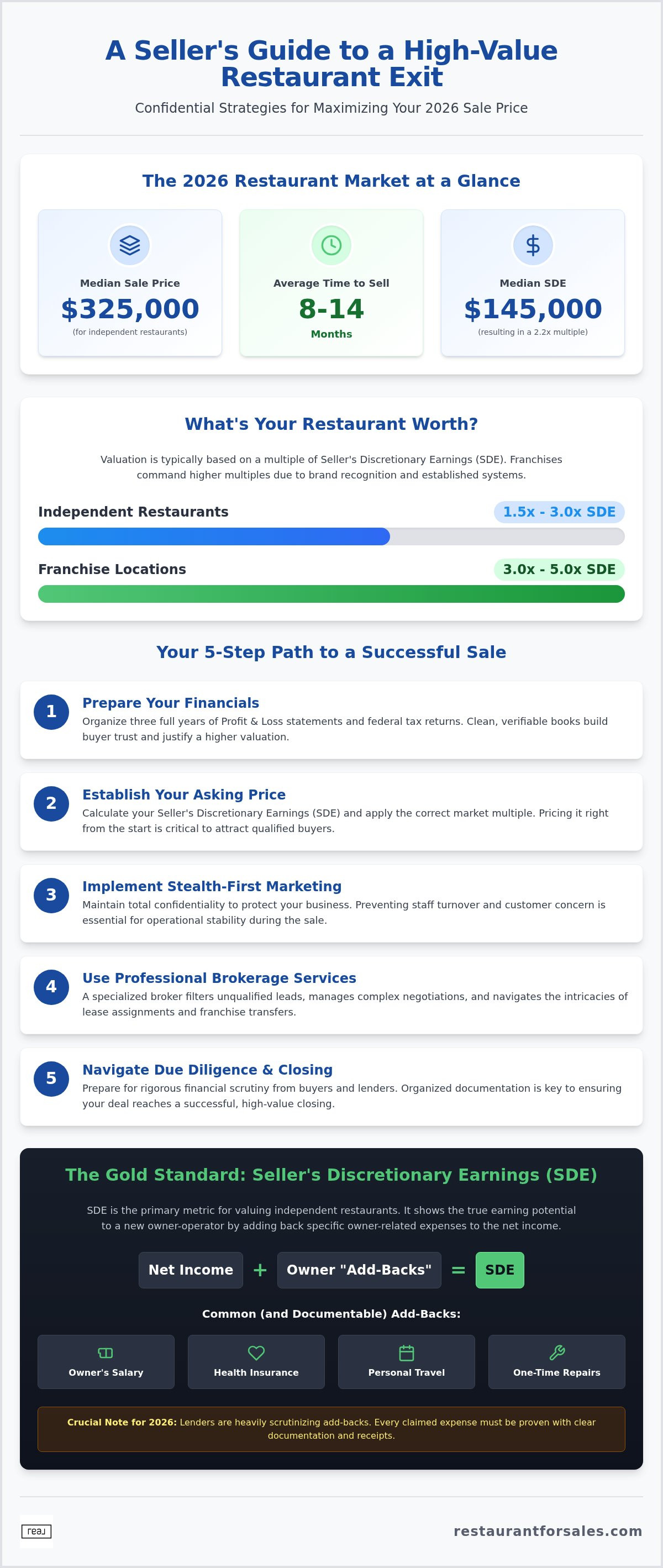
The 2026 market is nuanced. With independent restaurants currently seeing a median sale price of $325,000 and an average time to sell of 8 to 14 months, your preparation must be precise. We'll help you master the intricacies of the 2026 market, including how to defend your asking price against increased scrutiny on financial add-backs. This guide covers everything from professional valuation methods to navigating the new SBA loan limits that took effect in July 2026. You'll gain a clear roadmap for finding a qualified buyer quickly while ensuring your daily operations remain completely undisturbed.
Key Takeaways
- Organize three years of profit and loss statements and tax returns to build buyer trust and justify higher valuation multiples.
- Apply these professional selling a restaurant tips to establish an asking price based on current 2026 market multiples for independent and franchised concepts.
- Implement a stealth-first marketing strategy to protect your business from staff turnover and maintain operational stability during the sale.
- Leverage specialized brokerage services to filter unqualified leads and navigate the complexities of lease assignments and franchise resales.
- Prepare for the rigorous due diligence process and lender requirements to ensure your deal reaches a successful high-value closing.
Preparing Your Financials for a 2026 Market
Clean financials are the single most important factor in securing a high-value exit. In a market where SBA 7(a) interest rates can reach 9.75%, buyers are scrutinizing every line item to ensure the cash flow covers debt service. You must present three full years of federal tax returns and year-to-date profit and loss statements. These documents prove your business is stable and profitable. One of the most effective selling a restaurant tips is to separate personal expenses from your business accounts at least 12 to 24 months before listing. Co-mingled funds create "noise" that scares off sophisticated investors and complicates the due diligence process.
Standardizing your reporting to match 2026 industry expectations is mandatory. Buyers look for clean categorization of labor costs, COGS, and fixed overhead. If your books are messy, you'll likely face a lower valuation multiple or a deal that collapses during the bank's review. A professional Business Broker will use these records to build a prospectus that justifies your asking price. Implementing these selling a restaurant tips early ensures you don't leave money on the table when it's time to negotiate.
The Importance of Seller Discretionary Earnings (SDE)
SDE represents the total financial benefit available to a single owner-operator after all essential business expenses are paid. It's the primary metric used to value independent restaurants. To calculate SDE, you start with your net income and "add back" non-essential or owner-specific costs. These add-backs include your salary, health insurance, personal travel, and one-time capital improvements like a new walk-in cooler. SDE is the gold standard for restaurant valuation because it allows buyers to compare the true earning potential of different businesses regardless of how the current owner manages taxes.
However, 2026 buyers and lenders are performing much deeper audits on these add-backs. You must have receipts and clear documentation for every dollar you claim as a benefit. If you can't prove an expense was personal, a lender will likely exclude it from the cash flow analysis. For a detailed breakdown of how these figures impact your sale price, see our 2026 Restaurant Valuation Guide.
Organizing Your Inventory and Asset Lists
A precise asset list prevents disputes when you reach the closing table. Create a comprehensive spreadsheet that includes every piece of equipment, from the POS system to the reach-in freezers. For each item, record the age, current condition, and serial number. This level of detail builds buyer confidence and speeds up the appraisal process required by most lenders.
You must clearly distinguish between owned equipment and leased items. Dishwashers, soda fountains, and certain POS hardware are often leased, and these contracts must be transferable to the buyer. Additionally, perform a final inventory count of all food and beverage stock. This "work in progress" inventory is usually handled as a separate dollar-for-dollar adjustment at closing. Having these lists ready shows buyers that you are a disciplined operator, which creates the trust necessary to close a high-value transaction.
Determining Your Restaurant Value and Asking Price
Setting the correct asking price is a critical strategic decision. If you overprice the business, you risk falling into the "stale listing" trap where buyers assume something is wrong because it hasn't sold. Conversely, underpricing leaves significant money on the table. You must balance your emotional investment, the years of sweat equity, with hard market data. In 2026, the median sale price for an independent single-unit restaurant is approximately $325,000. This reflects a median SDE of $145,000, or a 2.2x multiple. These selling a restaurant tips focus on aligning your expectations with current buyer behavior and lender requirements. Your lease terms also play a massive role; a 10-year lease with fixed renewal options can significantly increase your multiple compared to a month-to-month agreement.
Market data shows that independent, owner-operated restaurants are currently valued between 1.5x and 3.0x of their Seller's Discretionary Earnings (SDE). Franchised single-unit locations command higher multiples, typically ranging from 3.0x to 5.0x SDE. These numbers provide a baseline, but your specific location longevity and historical performance will dictate where you fall on that spectrum. If you're unsure where your business fits in the current market, obtaining a professional restaurant valuation is the most reliable way to establish a defensible asking price.
SDE vs. EBITDA: Which Metric Should You Use?
SDE is the primary metric for owner-operated restaurants. It calculates the total cash flow available to one person. In contrast, EBITDA is used for larger, institutional acquisitions or multi-unit groups where the owner is not involved in daily operations. While small independents use SDE, multi-unit groups currently command multiples between 4.0x and 6.0x EBITDA. Understanding which metric applies to your situation is vital. Professional restaurant valuation methods ensure you use the correct financial framework to defend your price during negotiations.
The Impact of Tangible vs. Intangible Assets
Value isn't just about the bottom line. Intangible assets, often called "Goodwill," include your brand reputation, proprietary recipes, and a loyal customer base. These elements make the business a "going concern" rather than just a collection of used equipment. However, you must also assess tangible assets. Kitchen equipment should be valued at fair market value, not original cost. Specialized permits and liquor licenses also add substantial value, as they are often difficult or time-consuming to obtain. Organizations like the Georgia Restaurant Association emphasize that having these assets clearly documented is essential for a smooth transfer and buyer confidence.
Maintaining Confidentiality During the Sale Process
Confidentiality isn't just a preference; it's a financial necessity. A premature leak can decrease your valuation by creating a sense of instability. If your head chef or key managers hear rumors of a sale, they'll likely start looking for new roles immediately. This disruption can sink a deal before it even reaches the letter of intent stage. Controlling the narrative ensures you protect your brand's reputation and keep daily operations running smoothly. One of the most vital selling a restaurant tips is to keep the transaction private until the final signatures are dry. Competitors are often the first to use news of a sale to poach your loyal customer base or spread uncertainty about your business's future.
Maintaining a "business as usual" environment is your top priority. You've worked hard to build a stable operation, and any hint of a transition can cause vendors to tighten credit terms or landlords to become defensive. By working with a professional who acts as a shield, you can field inquiries without ever revealing your identity to the general public. This protective layer is what allows you to continue generating the strong SDE and EBITDA figures that attracted buyers in the first place.
Vetting Buyers and Enforcing NDAs
You must require a signed Non-Disclosure Agreement (NDA) before disclosing the business name or specific address. This legal document prevents potential buyers from discussing the sale with your employees, suppliers, or competitors. Beyond the NDA, you need to verify a buyer's "Proof of Funds" immediately. This step filters out "tire-kickers" and unqualified individuals who lack the capital or credit score to complete the purchase. Lenders in 2026 typically look for a FICO score of 680 or better for SBA financing. Meeting potential buyers should always happen off-site or during hours when staff aren't present. This proactive approach ensures that only serious, vetted candidates gain access to your sensitive operational data.
Creating a "Blind" Marketing Listing
A "blind" listing is a marketing advertisement that describes the business without identifying it. You'll focus on the concept type, such as "Profitable Quick-Service Franchise," and the general geographic area. Use stock photography or generic shots of the dining area that don't reveal unique branding or signage. These blind listing strategies are essential selling a restaurant tips for owners who want to maintain a competitive edge while searching for the right successor. The goal is to highlight the financial performance and the future potential of the location. This strategy allows you to test the market and gauge interest without alerting your landlord or local vendors. It keeps the power in your hands throughout the negotiation process.
The Role of Professional Brokerage Services
Selling a restaurant is essentially a second full-time job. A specialized broker acts as a professional buffer, protecting your time and your business's confidentiality. They screen every inquiry to ensure potential buyers possess the necessary credit profile and liquid capital before you ever engage in a conversation. This is one of the most practical selling a restaurant tips for owners who must remain focused on daily operations. Brokers maintain proprietary databases of thousands of active buyers, many of whom are specifically seeking certain concepts or geographic footprints. By managing a structured, competitive bidding environment, a professional broker often secures a higher net price that more than offsets the cost of their services. For a deeper look at these benefits, explore the 5 Reasons to Hire a Professional Restaurant Broker.
The negotiation phase is where a broker's expertise becomes most evident. They represent your interests during high-stress discussions, ensuring that emotional factors don't compromise the deal's financial integrity. Because they understand the current 2026 market multiples, they can effectively defend your asking price against low-ball offers. This professional representation provides a sense of stability to both parties, making it more likely that the transaction will proceed to a successful closing without unnecessary friction.
Why General Business Brokers Often Fail Restaurants
General business brokers often lack the industry-specific knowledge required to close a complex hospitality deal. A restaurant specialist understands the nuances of food cost percentages, labor ratios, and local health department codes. They know how to evaluate the efficiency of a kitchen’s "hot line" and can explain the value of a high-capacity grease trap to a prospective buyer. This expertise is vital during the due diligence phase when buyers look for reasons to negotiate the price down. Specialist brokers are also experts in restaurant lease assignments. They know exactly how to present a buyer's operational experience and financial strength to a landlord, ensuring the lease transfer doesn't become a roadblock to the sale.
Understanding Success-Based Commission Models
Reputable restaurant brokers operate on a success-based commission model. This structure ensures that the broker is only compensated when the transaction actually closes. It aligns their interests with yours, as they are motivated to find the most qualified buyer who can meet your asking price and pass the landlord's scrutiny. The commission covers end-to-end management, including professional valuation, the creation of a detailed confidential information memorandum, and the coordination of the closing process with lenders and attorneys. This comprehensive support allows you to exit your business with confidence. If you are ready to discuss your exit strategy, our team provides expert Restaurant Brokerage Services to help you achieve a high-value closing.
Navigating the Closing Process and Lease Transfers
Reaching a verbal agreement on price is only the midpoint of the transaction. The final hurdle involves securing landlord approval and surviving a rigorous due diligence period. This is a high-stress phase where buyers look for any discrepancy to justify backing out or renegotiating. One of the most critical selling a restaurant tips is to keep your business running at 100% capacity until the moment of the hand-off. Any decline in service, food quality, or cleanliness during this period can give a buyer cold feet and jeopardize the entire closing.
Operational continuity is vital for maintaining the business value you've worked hard to establish. Buyers often visit the restaurant unannounced during this phase to ensure the staff is performing and the customer base is stable. If you let standards slip because you're focused on the exit, you provide the buyer with leverage to ask for a price reduction. Discipline during these final weeks is what separates a successful closing from a failed deal.
Managing the Landlord and Lease Assignment
Landlords act as the ultimate gatekeepers in every restaurant sale. You must determine early whether your current lease allows for a straight assignment or if the landlord will require a completely new agreement with the buyer. Most landlords will not even consider a transfer until they review a comprehensive financial package from the prospective owner. This package typically includes a professional resume, a personal financial statement, and a detailed business plan. For tactical advice on managing this delicate relationship, consult our Guide to Restaurant Lease Assignments. Early preparation of these documents prevents the landlord from becoming a bottleneck that kills the momentum of the sale.
Surviving the Due Diligence Phase
Due diligence is an invasive process that requires total transparency. Buyers will perform a deep dive into your POS records, vendor invoices, and payroll data to verify the cash flow figures presented during the valuation. You should have these records organized and ready for immediate inspection to maintain trust. These selling a restaurant tips can help you prepare for the scrutiny:
- Confirm all health department permits and liquor licenses are current and transferable.
- Address "deferred maintenance" issues, such as leaky faucets or faulty refrigeration gaskets, before the buyer’s professional inspection.
- Ensure your sales tax filings and unemployment insurance records are up to date and fully documented.
A smooth transition also requires a clearly defined training period. Most sellers agree to stay on for two to four weeks post-closing to introduce the buyer to vendors, key customers, and the nuances of the kitchen flow. This period ensures the new owner feels confident in their investment, which significantly reduces the likelihood of post-sale disputes. By following these professional protocols, you ensure that your exit is as disciplined and profitable as the business you built.
Securing Your Exit Strategy for 2026
A successful restaurant sale in 2026 requires a disciplined approach to financial reporting and a commitment to total confidentiality. You've seen how clean records and a documented SDE calculation are essential for defending your asking price against lender scrutiny. By maintaining a stealth-first marketing strategy, you protect your staff and daily operations from the uncertainty that often accompanies a business transition. These selling a restaurant tips provide the framework you need to navigate complex lease assignments and the rigorous due diligence phase with professional poise.
Our brokerage combines national reach with deep local expertise to serve as your proactive partner in this journey. We utilize a confidential listing platform to shield your identity and operate strictly on success-based commissions, ensuring we are fully invested in your success. This methodical process bridges the gap between your hard work and a high-value closing, providing the stability you need during a high-stakes transaction.
Get a Professional Valuation for Your Restaurant Today to understand your business's true market standing. You've spent years building a successful brand; now is the time to ensure you receive the maximum return on your investment. We look forward to helping you achieve a clean, profitable exit and a smooth transition to your next chapter.
Frequently Asked Questions
How long does it typically take to sell a restaurant in 2026?
The average time to sell an independent restaurant in the current market is between 8 and 14 months. This timeline includes the initial valuation, marketing phase, buyer vetting, and the exhaustive due diligence period. Factors such as your concept's profitability and lease terms heavily influence the speed of the transaction. Utilizing professional selling a restaurant tips, such as preparing clean financials early, can help compress this timeline by reducing friction during the lender's review.
Can I sell my restaurant without my employees knowing?
You can maintain total confidentiality by using "blind" listings that describe your concept and general area without revealing the business name. All prospective buyers must sign a Non-Disclosure Agreement and provide proof of funds before receiving sensitive data. Conduct meetings off-site or after hours to ensure your staff remains focused on daily operations. This stealth approach prevents premature turnover and protects your brand reputation until the transaction is finalized and the deal is funded.
What is the average commission for a restaurant broker?
Business brokers specializing in the hospitality industry typically charge a commission ranging from 10% to 12% of the final sale price. Most reputable firms also implement a minimum fee, often between $15,000 and $25,000, depending on the complexity of the deal. These fees cover professional valuation, marketing, and coordination with landlords and lenders. This success-based model ensures your broker is motivated to secure the highest possible closing price for your business.
How do I determine the value of my restaurant’s equipment?
Equipment is valued based on its current fair market value rather than the original purchase price. This involves assessing the age, condition, and functionality of every item from your walk-in coolers to the POS system. You should create a detailed asset list including serial numbers and distinguish between owned and leased items. Professional valuation services often use industry-standard depreciation schedules to provide a defensible figure that buyers and SBA lenders will accept during due diligence.
What happens to my liquor license when I sell the business?
Liquor license transfers vary by jurisdiction but generally follow the structure of the business sale. In an asset sale, the buyer typically applies for a transfer of the existing license, which requires approval from the local liquor board. If you are conducting a stock sale, the license often stays with the corporate entity. You must ensure all taxes are paid and the license is in good standing to avoid delaying the closing process.
Should I sell my restaurant as an asset sale or a stock sale?
Most restaurant transactions are structured as asset sales because buyers want to avoid assuming your business's prior liabilities and benefit from new depreciation schedules. Sellers often prefer stock sales to potentially qualify for lower long-term capital gains tax rates, which currently top out at 20% plus the 3.8% Net Investment Income Tax. You should consult with a tax professional to understand how depreciation recapture might impact your net proceeds in an asset-based transaction.
How much training should I provide to the new owner after the sale?
A standard training period typically lasts between two and four weeks following the close of escrow. During this time, you introduce the new owner to key vendors, explain proprietary recipes, and demonstrate the nuances of your kitchen flow. Providing structured transition support is one of the most effective selling a restaurant tips for ensuring the buyer's long-term success. This period helps stabilize the staff and reassures loyal customers that the quality will remain consistent.
What are the most common reasons restaurant sales fall through?
Sales most frequently collapse due to landlord rejection of the buyer’s lease assignment or discrepancies found during financial due diligence. If your POS records don't match your tax returns or if the debt service coverage ratio falls below the lender’s required 1.25x, the deal is at risk. Other common hurdles include buyers who lack sufficient capital or sellers who fail to address deferred maintenance issues that surface during the final professional equipment inspection.


