

What if the most valuable asset in your business transition isn't the kitchen equipment or the menu, but the platform where you list it? In a 2026 industry projected to reach $1.55 trillion in sales, the difference between a failed listing and a profitable exit often comes down to the quality of your network. Finding a reliable restaurant marketplace is the first step toward avoiding the common trap of overpaying for a failing business or losing a deal to complex lease transfer issues.
We understand that maintaining confidentiality during a sale is just as critical as securing a fair market valuation. You want a process that's efficient and legally sound, rather than one that drags on for the typical 178-day market average. This guide provides the professional framework you need to manage acquisitions and sales through specialized digital platforms. You'll learn how to identify profitable turnkey opportunities, manage lease assignments, and move through the closing process with the confidence of a seasoned industry expert. We'll outline the exact steps required to bridge the gap between opportunity and a successful execution.
Key Takeaways
- Understand the fundamental differences between generic listing sites and a specialized restaurant marketplace to ensure your business reaches a targeted audience of qualified buyers.
- Learn how professional platforms protect sensitive business data through structured Non-Disclosure Agreements while facilitating a transparent discovery phase.
- Utilize professional valuation services to establish an accurate market price and avoid the common mistake of overpaying for a hospitality entity.
- Navigate the complexities of commercial lease assignments and real estate transfers with specialized support to prevent legal delays during the closing process.
- Align your goals with a success-based brokerage model that prioritizes results and professional accountability throughout the entire sale journey.
What is a Restaurant Marketplace for Business Acquisition?
A professional restaurant marketplace serves as a centralized hub for the transfer of hospitality entities. It's distinct from a supply marketplace, which focuses on equipment and inventory. An acquisition marketplace facilitates the sale of the business itself, including its cash flow, branding, and leasehold interests. In 2026, as the U.S. restaurant industry reaches a projected $1.55 trillion in sales, these platforms provide the specialized infrastructure needed to manage high-value transactions safely.
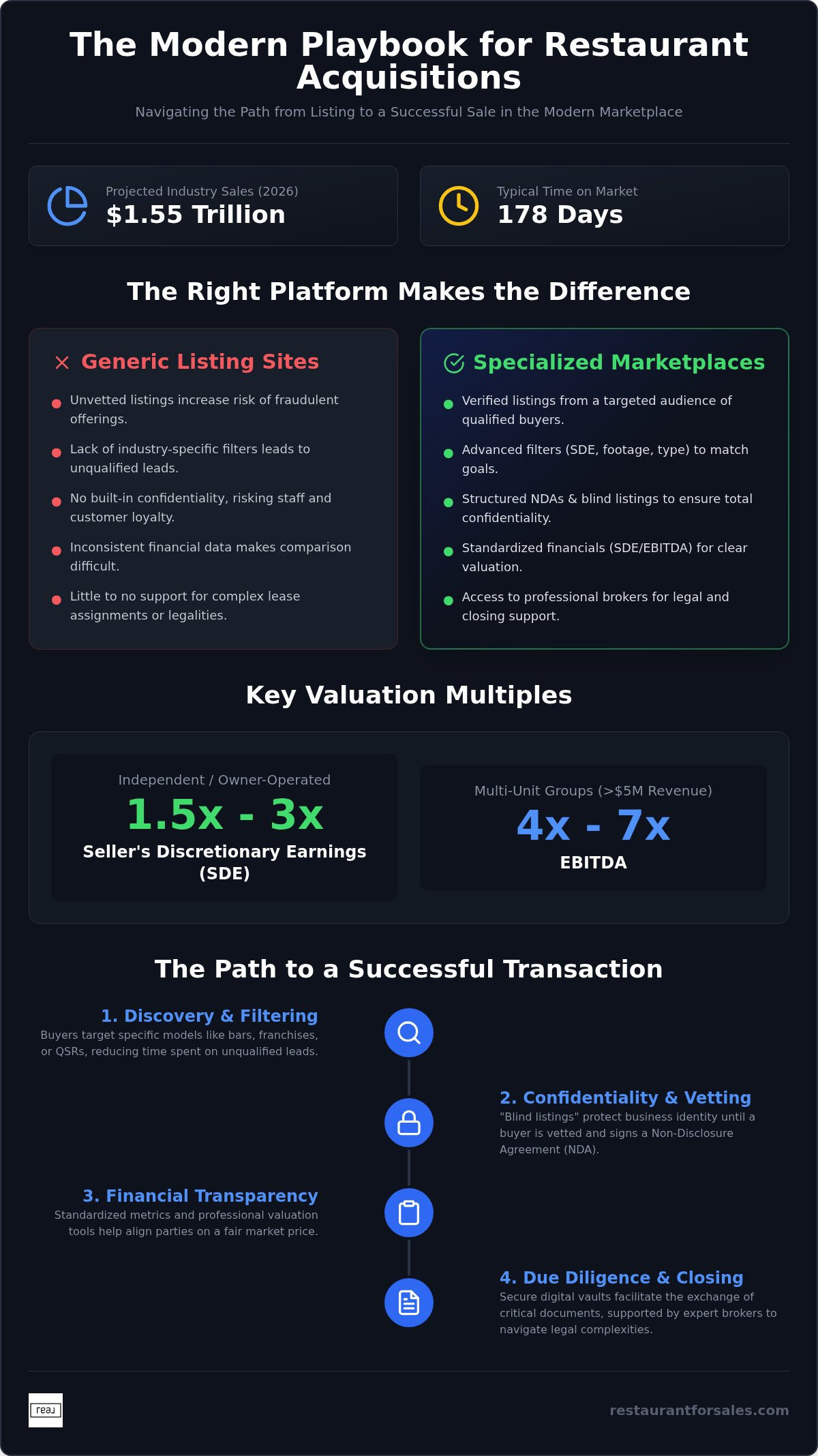
Generic listing sites often lack the filters required for the food service industry. A specialized platform aggregates diverse opportunities, such as independent bars, quick-service restaurants, and franchise resales. This categorization allows users to sort by critical metrics like Seller's Discretionary Earnings (SDE) or square footage. It bridges the gap between a seller's exit strategy and a buyer's investment goals.
The Core Components of a Professional Marketplace
Success in hospitality brokerage depends on data integrity. Professional marketplaces prioritize verified listings over unvetted advertisements to reduce the risk of fraudulent offerings. These platforms often provide integrated tools for restaurant valuation, helping both parties align on a fair market price based on current multiples. Beyond software, they offer access to professional brokerage services. This ensures that expert consultants are available to manage the paperwork, from initial inquiries to the final closing documents.
Who Benefits from a Specialized Platform?
Different stakeholders utilize these marketplaces for specific outcomes. First-time buyers often look for turnkey operations that allow them to bypass the high failure rates of new startups. For existing owners, the platform provides a confidential way to market their business without alerting staff or competitors. Institutional investors also rely on these hubs to identify multi-unit opportunities. Understanding the Franchise Model is essential here, as many marketplace listings involve franchise resales that come with established systems and brand recognition. By using a dedicated platform, all parties gain a level of security that generic sites simply cannot match.
How Modern Marketplaces Facilitate Restaurant Sales
A professional restaurant marketplace functions as a sophisticated filter during the discovery phase. Instead of sifting through generic business listings, buyers can target specific operational models, from high-volume bars to fast-casual franchises. This structure reduces the time spent on unqualified leads and ensures that the initial connection between buyer and seller is based on compatible goals. It serves as the primary engine for moving a transaction from a simple inquiry toward the start of formal due diligence.
Confidentiality and Vetting
Protecting the integrity of a business during a sale is paramount. If news of a potential transfer leaks, it can lead to immediate staff turnover and a decline in customer loyalty. To prevent this, marketplaces utilize "blind listings." These advertisements highlight the profitability and location profile without disclosing the specific name or address. Access to sensitive operational data is restricted until a prospective buyer has been vetted for financial capability. Once a Non-Disclosure Agreement (NDA) is signed, the platform facilitates the secure exchange of proprietary information, ensuring the transition remains private until the deal is finalized.
Standardizing Financial Transparency
Modern platforms create a common language for financial reporting. In 2026, most independent, owner-operated restaurants are valued at 1.5x to 3x Seller's Discretionary Earnings (SDE). Multi-unit groups with revenues over $5 million often see multiples between 4x and 7x EBITDA. By standardizing these metrics, a marketplace allows buyers to conduct a side-by-side analysis of different investment opportunities. This transparency is vital for those seeking SBA financing to buy a restaurant, as lenders require clear, verified profit and loss statements to approve 7(a) or 504 loans.
The marketplace also acts as a secure digital vault for critical documents. This organization is essential because the transition from a signed Letter of Intent to the closing table requires a thorough review of health inspection histories, equipment conditions, and lease assignability. By centralizing these records, the platform minimizes the friction often found in unmanaged sales. If you're ready to explore current opportunities, you can view active restaurant listings that meet these professional standards.
Generic Listing Sites vs. Specialized Restaurant Marketplaces
While general marketplaces boast millions of visitors, those numbers rarely translate to qualified hospitality buyers. A specialized restaurant marketplace prioritizes lead quality over simple traffic volume. This distinction is critical for sellers who need to maintain operational stability while seeking an exit. General platforms often attract "tire kickers" who lack the necessary capital or industry experience, leading to months of wasted time and increased risk of confidentiality breaches. By using a niche platform, you ensure your business is seen by individuals who understand the specific demands of the food service industry.
The Problem with Generic Platforms
General listing sites treat every business the same, whether it's a dry cleaner or a fine-dining establishment. This lack of specialization means they rarely provide the tools needed for comprehensive hospitality due diligence. Buyers on these sites often miss critical red flags, such as aging grease traps or non-transferable permits. The risk of public exposure is also significantly higher on these platforms. Without a managed process for Non-Disclosure Agreements, sensitive financial data can easily leak to competitors or staff, causing irreparable harm to the business's goodwill before a deal is even reached.
Why Niche Expertise Matters in 2026
Operating in 2026 requires navigating a patchwork of new regulations and economic pressures. For instance, the U.S. restaurant industry is currently adapting to a $1.55 trillion market where consumer spending has tightened. Specialized brokers understand how these macro trends affect local valuations. They can articulate the value of a business's off-premise revenue streams or its technology integration, which now accounts for 30-40% of revenue in top-performing concepts. This insight helps sellers justify higher multiples and helps buyers identify truly profitable opportunities that generalists might overlook.
Niche expertise is especially valuable when handling restaurant lease assignments. A generalist broker might not understand the nuances of "exclusive use" clauses or how to negotiate the release of a seller's personal guarantee. Specialized brokerage services streamline these interactions, ensuring that the closing process isn't derailed by a landlord's last-minute demands. While the median restaurant stays on the market for 178 days, a targeted approach can significantly reduce this timeline by connecting with motivated, pre-vetted buyers immediately. By choosing a success-based model, you ensure your broker is fully incentivized to navigate these legal and operational hurdles, securing a fair market valuation and a clean exit.
Navigating the Marketplace: Tips for Buyers and Sellers
Transitioning from a casual browser to a successful owner or seller within a restaurant marketplace requires a disciplined, step-by-step strategy. The process begins by defining clear investment criteria or exit goals. Buyers should determine their preferred concept type and geographic focus, while sellers must establish a target price based on current market conditions. Once these objectives are set, the next phase involves securing an accurate appraisal. You should utilize professional valuation services to ensure the asking price reflects the 2026 industry standard of 1.5x to 3x Seller's Discretionary Earnings for owner-operated businesses.
The middle stages of the transaction are often the most complex. It's highly effective to engage a restaurant broker to manage the listing and facilitate communication between parties. A broker acts as a buffer, protecting the seller's time and the buyer's interests. As the deal progresses, both parties must prepare for due diligence. This includes assembling a comprehensive package of tax returns, health inspection reports, and equipment maintenance logs. Finally, you'll move into the closing and transition process, which focuses on the legal transfer of assets and leasehold interests.
Advice for Prospective Buyers
Successful acquisitions start with a critical eye. When reviewing listings in a restaurant marketplace, look for red flags such as declining year-over-year revenue or a lease that expires in less than five years without renewal options. You should also evaluate the local competitive landscape and the physical condition of the kitchen infrastructure. Most importantly, ensure you know how to buy a restaurant by understanding the specific financial requirements, such as the 10-20% down payment typically required for SBA 7(a) loans.
Advice for Sellers Preparing to List
Preparation is the key to a high-value exit. Start by cleaning up your financial statements; remove personal expenses and ensure all records are current and reconciled. A marketplace listing is a marketing tool, so invest in professional photography and write a detailed description that highlights unique selling points like exclusive recipes or a loyal customer base. Set a realistic timeline, keeping in mind that the median restaurant sale takes approximately 178 days to close. If you're ready to start the process, contact our brokerage team for a professional valuation today.
Maximizing Value with Restaurant For Sale Marketplace
Choosing the right platform is the most influential decision you'll make in your acquisition or exit strategy. Restaurant For Sale Marketplace provides a specialized environment that generic listing sites cannot replicate. By combining national reach with deep industry expertise, we ensure that every listing receives maximum exposure to a pre-vetted audience of serious investors. This targeted approach is essential in a 2026 market where accuracy and speed are paramount for maintaining business continuity during a transition.
Our success-based brokerage commission model is a core pillar of our service. This structure directly aligns our interests with yours; we only succeed when you reach the closing table. Unlike platforms that charge upfront fees regardless of the outcome, our model ensures that our brokers are fully incentivized to navigate the complexities of your transaction. We provide comprehensive support through every phase, including professional Restaurant Valuation Services and Restaurant Lease Assignments, to ensure that no technical detail derails your progress. This alignment of goals is what makes us a leader in the restaurant marketplace.
Our focus on the hospitality sector leads to higher closing rates than general business sites. We understand that a restaurant is more than just real estate; it's a complex ecosystem of equipment, staff, and brand equity. While generic sites often leave sellers to manage unqualified "tire kickers," our platform filters for financial capability and industry experience. This professional vetting process protects your time and your business's confidentiality, allowing you to focus on daily operations while we manage the sale.
A Partner in Your Professional Journey
We act as a proactive facilitator, bridging the gap between a promising opportunity and a successful execution. Our team consists of seasoned hospitality insiders who understand the nuances of liquor license transfers, health department requirements, and franchise resale protocols. We provide a grounded, reassuring presence throughout the process, offering the stability needed for high-value commercial transactions. You aren't just using a tool; you're engaging a partner dedicated to your professional standing and financial success.
Next Steps for Your Restaurant Transaction
Taking the next step toward your goals is a straightforward process designed for maximum efficiency. Depending on your current objectives, you can immediately access our professional resources:
- Browse Active Listings: Explore our national inventory of independent restaurants, bars, and Franchise Resale Listings to find your next profitable investment.
- Request a Valuation: Utilize our Restaurant Valuation Services to establish a data-driven asking price that reflects current 2026 market multiples.
- Start a Confidential Sale: Contact our brokerage team to discuss a customized exit strategy that prioritizes your privacy and maximizes your final sale price.
Our methodical approach ensures that every piece of information serves a functional purpose, moving you closer to a successful closing without unnecessary delays. Whether you're entering the market for the first time or planning a complex multi-unit exit, our platform provides the professional infrastructure required for a secure transaction.
Securing Your Future in the Hospitality Industry
Successfully transitioning a business in 2026 requires more than a simple listing. It demands a professional environment where confidentiality and financial transparency are prioritized. You've learned that a specialized restaurant marketplace offers a distinct advantage over generic sites by providing targeted access to pre-vetted buyers and industry-specific due diligence tools. By focusing on accurate valuations and managed lease assignments, you reduce the risks of public exposure and deal fatigue.
Our platform acts as your proactive partner throughout this journey. We combine a national network of qualified buyers with expert restaurant valuation services to ensure you secure a fair market price. Our success-based brokerage commissions mean our interests are always aligned with your successful closing. Whether you're ready to acquire a new turnkey operation or exit your current business with confidence, the right professional support makes all the difference.
Browse our current restaurant listings or start your valuation today. We look forward to helping you execute your next professional milestone with precision and stability.
Frequently Asked Questions
What is a restaurant marketplace?
A restaurant marketplace is a specialized digital platform designed to connect buyers and sellers within the hospitality industry. It functions as a centralized hub for the transfer of business entities, including independent eateries, bars, and franchise resales. Unlike generic business-for-sale sites, these platforms provide industry-specific data and tools tailored to food service operations. This structure ensures that listings reach a targeted audience of qualified investors who understand the unique demands of the hospitality sector.
How much does it cost to list a restaurant for sale?
Costs vary depending on the platform and the level of professional support you require. Some listing sites charge flat monthly fees for exposure, while a professional brokerage often utilizes a success-based commission model. This arrangement ensures that fees are only paid upon a successful closing, aligning the interests of the broker and the seller. You should also account for potential costs related to professional valuation and legal document preparation during the listing phase.
How do I know if a restaurant listing is profitable?
Profitability is verified through a thorough review of financial documents, specifically the Seller's Discretionary Earnings (SDE). A professional listing should provide a clear picture of cash flow, adjusted for one-time expenses or owner perks. During due diligence, you must examine at least three years of tax returns and year-to-date profit and loss statements. Verified platforms often require these documents to be organized and accessible to pre-vetted buyers before an offer is made.
Can I buy a restaurant without prior experience?
You can buy a restaurant without prior experience, though it may influence your financing options. Lenders for SBA 7(a) loans often prefer buyers with a background in management or hospitality. For first-time owners, purchasing a turnkey operation or a franchise resale through a restaurant marketplace is often the safest path. These opportunities provide established systems and brand recognition, which significantly reduces the steep learning curve associated with starting a new concept from scratch.
How is a restaurant business valued in 2026?
In 2026, valuation is primarily based on earnings multiples tailored to the business's scale. Most independent, owner-operated restaurants are valued between 1.5x and 3x Seller's Discretionary Earnings (SDE). Larger multi-unit groups or high-volume franchises with revenues exceeding $5 million typically see higher multiples, ranging from 4x to 7x EBITDA. Other factors, such as the condition of the equipment and the remaining term on the commercial lease, also play a critical role in the final appraisal.
Is the sale of my restaurant kept confidential on a marketplace?
Confidentiality is a cornerstone of professional hospitality sales. Marketplaces utilize "blind listings" that omit the business name and specific address to protect staff and customer relationships. Detailed operational data is only released after a prospective buyer has been vetted and has signed a legally binding Non-Disclosure Agreement (NDA). This managed process ensures that your competitors and employees don't learn about the potential transfer until you are ready to make a formal announcement.
What is a lease assignment in a restaurant sale?
A lease assignment is the legal transfer of an existing commercial lease from the current tenant to the new business owner. Since location and rent costs are vital to a restaurant's success, securing the landlord's consent is a critical step in the closing process. This transition often involves a review of the buyer's financial standing and may require negotiations regarding the release of the seller's personal guarantee or the extension of renewal options.
How long does it typically take to sell a restaurant through a marketplace?
The timeline for a sale depends on the complexity of the deal and the accuracy of the initial valuation. In the current market, the median time for a restaurant to remain on the market is approximately 178 days. While some turnkey opportunities move faster, others may take longer if they involve complex liquor license transfers or SBA financing. Utilizing a specialized brokerage service can often shorten this duration by connecting you with a pre-vetted network of motivated buyers.


