

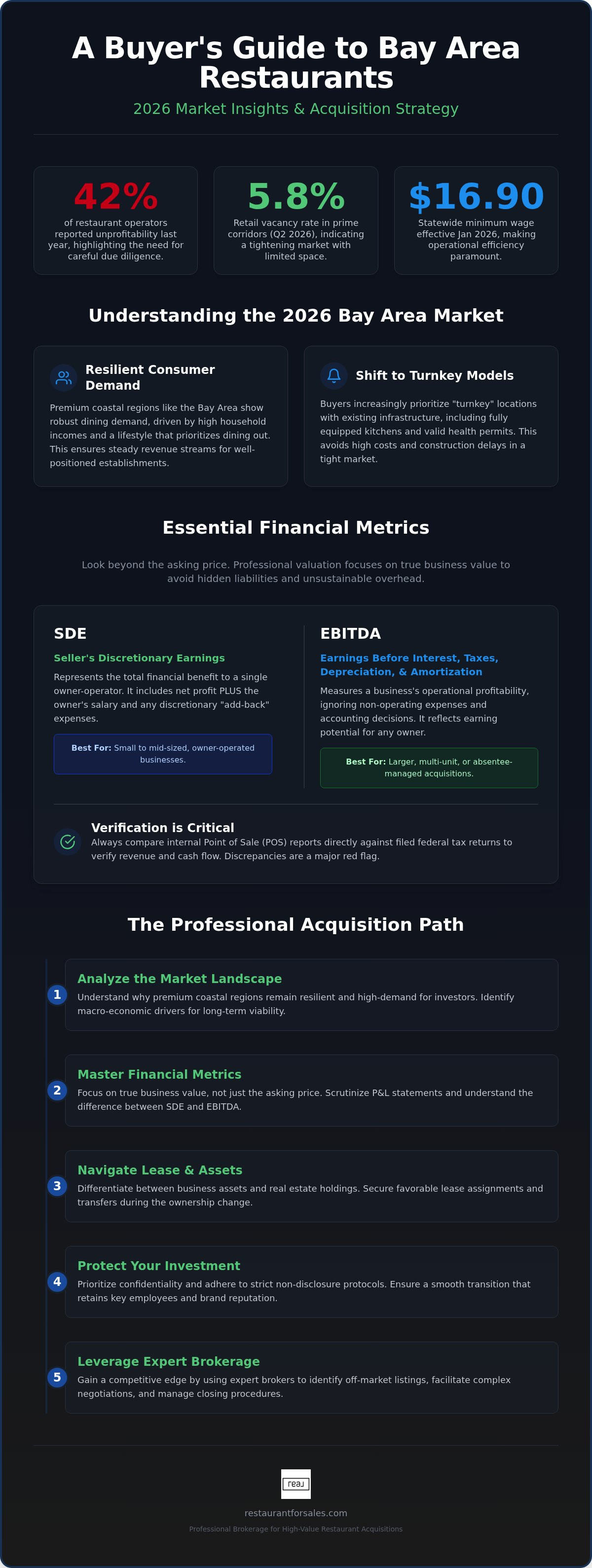
Did you know that 42% of restaurant operators reported their businesses were unprofitable just last year? In a high-demand market, it's natural to feel uneasy about hidden financial liabilities or the stress of securing a complex lease assignment. You want a turnkey opportunity that delivers a strong ROI, not a collection of undisclosed debts. Finding the right restaurants for sale Bay Area requires more than just browsing listings; it demands a rigorous approach to due diligence and professional market analysis.
This 2026 guide provides the brokerage insights and valuation frameworks you need to identify high-value acquisitions while protecting your capital. We'll help you bridge the gap between simple listing data and the actual business value of a commercial establishment. You'll learn how to execute a confidential acquisition, navigate the latest 2026 regulatory changes like the $16.90 statewide minimum wage, and secure a favorable lease transfer. We also outline strategies for employee retention to ensure your ownership transfer doesn't disrupt the service that built the brand's reputation in the first place. This structured approach ensures you move forward with the confidence of a market leader.
Key Takeaways
- Analyze the 2026 market landscape to understand why premium coastal regions remain resilient and high-demand for restaurant investors.
- Master the financial metrics required to evaluate restaurants for sale Bay Area, focusing on true business value rather than just the initial asking price.
- Differentiate between business assets and real estate holdings to ensure you secure favorable lease assignments during the ownership transfer.
- Protect your investment by following a professional acquisition path that prioritizes confidentiality and strict adherence to non-disclosure protocols.
- Gain a competitive edge by leveraging expert brokerage insights to identify off-market listings and facilitate complex closing procedures.
Understanding the Bay Area Restaurant Market
The 2026 restaurant landscape is defined by a shift toward high-efficiency models and resilient consumer spending. Despite broader economic fluctuations, premium coastal regions continue to see robust dining demand. This stability is largely driven by the San Francisco Bay Area economy, where high household incomes support a wide variety of dining formats. Investors looking for restaurants for sale Bay Area will find diverse opportunities. These range from quick-service restaurants (QSR), which saw a 1.4% year-over-year sales increase in mid-2026, to established fine-dining institutions that cater to a sophisticated clientele.
Success in this market depends on recognizing the specific drivers of local demand. High-density areas benefit from a mix of professional workers and residents who prioritize dining out as a primary lifestyle activity. This ensures that well-positioned establishments maintain steady revenue streams even during periods of price sensitivity. Understanding these macro-economic factors is the first step in identifying a location that offers long-term viability.
Market Dynamics in High-Traffic Coastal Regions
High foot traffic in these areas is often anchored by consistent tourism and large student populations. These demographics provide a reliable base of customers for both casual eateries and specialized concepts. We're seeing a notable transition in ownership structures. While the owner-operator model remains common, there's a growing preference for absentee-managed investments. Professional buyers often look for scalable systems that don't require their daily presence on the floor. Turnkey status is now a critical factor in competitive bidding. Buyers prioritize locations with existing infrastructure to avoid the high costs and delays of new construction. A fully equipped kitchen and a valid health permit are major assets in the 2026 market.
Investment Potential in 2026
Acquiring an existing eatery offers a significantly lower risk profile than launching a new concept from scratch. In Q2 2026, retail vacancy rates in prime corridors dropped to 5.8%, indicating a tightening market with limited available space. Buying an established business secures immediate brand equity and local goodwill. It also bypasses the initial hurdles of permitting and build-outs, which are increasingly complex. With the statewide minimum wage reaching $16.90 in January 2026, operational efficiency is paramount. Existing businesses with proven labor models and established vendor relationships allow new owners to focus on optimization rather than survival. This established foundation is particularly valuable when seeking SBA financing, as lenders favor businesses with a documented history of cash flow.
Essential Financial Metrics for Evaluating Restaurant Listings
Evaluating an asking price is only the first step in a high-value acquisition. To identify a truly profitable opportunity among restaurants for sale Bay Area, you must look deeper than the listing headline. Professional valuation services bridge the gap between a seller's expectations and the actual market reality. This analysis prevents you from inheriting a business that looks successful on paper but suffers from unsustainable overhead or hidden liabilities. Relying on a broker's summary isn't enough; you need to scrutinize Profit and Loss (P&L) statements to understand where the capital is actually flowing.
SDE vs. EBITDA: Which Metric Matters?
Most small to mid-sized listings use Seller’s Discretionary Earnings (SDE) to demonstrate value. Seller’s Discretionary Earnings (SDE) represents the total financial benefit to a single owner. This figure includes the net profit, the owner’s salary, and discretionary items like personal travel or health insurance. For larger, multi-unit acquisitions, EBITDA is the preferred standard. It measures the business’s earnings before interest, taxes, depreciation, and amortization. Understanding which metric a broker is using is vital for making accurate comparisons between different listings.
Verifying Revenue and Cash Flow
Documentation is the only way to prove a business’s worth. You must compare internal POS reports directly against filed federal tax returns. Discrepancies often signal poor record-keeping or undisclosed debts. It's also important to understand the local regulatory environment, as detailed in official restaurant opening guides. This helps you account for the true cost of doing business in 2026. Be cautious with "add-backs." These are expenses the seller claims won't exist for a new owner. While some are legitimate, others can artificially inflate the bottom line. Consult our 2026 restaurant valuation guide to learn how to spot these inflations. If you want an expert to manage this financial scrutiny, consider contacting Restaurant For Sale Marketplace for professional guidance.
Watch for red flags like declining year-over-year margins. If revenue is growing but profit is stagnant, it usually indicates rising labor or ingredient costs that haven't been managed. In 2026, with the statewide minimum wage at $16.90, labor efficiency is a top priority for any serious buyer. Businesses that can't demonstrate a clear path to profitability under these conditions represent a significantly higher risk. Always prioritize listings with clean, verifiable financial trails that match their asking price.
Navigating Lease Assignments and Real Estate Assets
Acquiring a restaurant involves more than just purchasing equipment and a brand name. You're often entering into a complex legal relationship with a commercial landlord. In the current market, the lease is frequently the most critical asset in the transaction. If the lease terms are unfavorable or the remaining term is too short, the business’s long-term viability is compromised. When evaluating restaurants for sale Bay Area, you must distinguish between the value of the operations and the value of the location. Securing your footprint for the next 10 to 15 years is essential for protecting your investment and ensuring you can eventually exit the business with a profit.
Lease Assignment vs. New Lease Negotiation
A lease assignment allows you to take over the existing contract from the seller. Most commercial leases include an assignment clause that gives the landlord the right to vet the new owner. It’s common for landlords to request personal guarantees, especially if the new owner has a different credit profile than the seller. Following essential tips for buying a business in California, you should prepare a professional package for the landlord including your business plan and financial history. This process can be a significant hurdle. Landlords may use the transfer as an opportunity to update lease terms to current 2026 market rates, which average around $42 per square foot annually across the region. For more strategic advice, consult our guide on understanding restaurant lease assignments.
Purchasing Restaurants with Real Estate
Purchasing the property alongside the business provides a level of stability that a lease simply cannot offer. You gain total control over the facility and build equity that can be leveraged for future expansion. These transactions typically involve different financing paths. For instance, the SBA 504 loan program is a popular choice for owner-users in 2026. The effective fixed rates for the CDC portion of these loans currently range between 6.19% and 6.27% for 10 to 25 year terms. While the down payment is often higher than a business-only purchase, owning the real estate eliminates the risk of displacement and allows you to capture the full appreciation of the asset over time. Identifying listings where the property is a value-add component can turn a standard acquisition into a high-growth investment. This path is ideal for experienced operators who want to insulate themselves from the rising costs of the commercial rental market.
The Professional Acquisition Path: From Inquiry to Closing
Moving from browsing listings to executing a formal acquisition requires a disciplined, step-by-step framework. Unlike residential real estate, commercial transactions for restaurants for sale Bay Area rely heavily on discretion. Any breach of secrecy can destabilize the business you're trying to buy. A professional acquisition path ensures that the transfer of assets occurs smoothly while maintaining the integrity of the operation's daily workflow. This process bridges the gap between identifying an opportunity and taking over the keys as a new owner.
Confidentiality and the Initial Inquiry
The first step in any serious inquiry is executing a Non-Disclosure Agreement (NDA). This legal document protects the seller's proprietary information and ensures that sensitive data, such as tax returns and employee rosters, remains private. You should never visit a listing as a "buyer" without a pre-arranged appointment facilitated by a broker. Arriving unannounced or asking staff pointed questions can trigger panic among the workforce. Maintaining strict confidentiality prevents employee turnover during a transition. If the staff or regular customers suspect a sale is imminent before the deal is finalized, the resulting instability can erode the very goodwill you're paying to acquire. Professional buyers conduct "secret shopper" visits to observe the operation as a standard customer before requesting a formal back-of-house tour.
Due Diligence and the Purchase Agreement
Once an initial offer is accepted, the due diligence period begins. This phase goes beyond the financial audits discussed earlier to include a physical and regulatory inspection of the assets. You must verify the condition of all kitchen equipment and ensure that health permits are current and transferable. For establishments with alcohol service, pay close attention to the status of the liquor license. In 2026, the application fee for a new original on-sale general liquor license is $19,840, while an intercounty transfer is $7,515. The application window for new licenses in California is scheduled for September 14, 2026, through September 25, 2026. Missing these regulatory deadlines can delay your opening by months.
Structuring the purchase agreement correctly is the final hurdle. This document should clearly outline the amount of earnest money held in escrow and specify contingency periods for lease approval and financing. A comprehensive bill of sale must detail every physical asset included in the transaction. A structured closing process managed through a neutral escrow agent ensures that all liens are cleared and assets are legally transferred. To begin exploring vetted opportunities with a professional brokerage team, visit the Restaurant For Sale Marketplace to view current listings. This methodical approach minimizes risk and prepares you for a successful first day of operations.
Leveraging Expert Brokerage to Secure High-Value Establishments
Professional brokers act as the essential bridge between listed data and a successful closing. In a market as competitive as the one for restaurants for sale Bay Area, having a seasoned intermediary is often the difference between a stalled negotiation and a signed bill of sale. Brokers provide access to off-market opportunities that never reach public listing sites. These confidential listings represent some of the highest-value establishments in the region, often sold quietly to protect staff morale and customer loyalty. By working with a professional firm, you gain entry into this inner circle of high-quality inventory.
The success-based commission model ensures that your broker's interests are perfectly aligned with your own. They're incentivized to not only find the right business but to manage the complex logistics of lease and license transfers. This alignment of goals provides a layer of security for the buyer, knowing that their facilitator is committed to a clean and efficient asset transfer. Expert brokers understand the nuances of the 2026 market, where operational efficiency is the primary driver of business value.
The Broker as a Strategic Partner
Negotiations in the food service industry are frequently emotional. Sellers are often moving on from a business they've built over decades, while buyers are risking significant capital. A broker acts as a professional buffer, managing these interpersonal dynamics to keep the deal focused on objective value. They also supervise the rigorous timeline of a commercial transaction, ensuring that escrow, inspections, and landlord approvals happen in the correct sequence. To understand the full scope of these responsibilities, review our detailed post on the role of a restaurant broker. This partnership allows you to focus on your operational plan while the broker handles the procedural hurdles.
Accessing Professional Valuation and Financing
Accurate appraisals are the foundation of a fair deal. Professional valuation services use broker-led data to justify the purchase price, protecting you from overpaying in a high-demand environment. This data is also vital when securing third-party financing. For instance, SBA 7(a) loans in August 2026 typically carry variable interest rates ranging from 9.75% to 13.25% APR for qualified borrowers. Brokers assist in preparing the dense documentation packages these lenders require, from historical cash flow analysis to 2026 projections. This support is crucial for meeting the strict criteria of modern commercial lenders.
Taking the next step in your professional journey requires proactive engagement. Registering for marketplace alerts ensures you receive immediate notification of new restaurants for sale Bay Area that match your specific criteria. This allows you to review opportunities before they're saturated with inquiries, giving you the lead time needed to perform initial due diligence. Partnering with a dedicated brokerage firm transforms a complex acquisition into a manageable, results-driven process.
Securing Your Future in the 2026 Restaurant Market
Success in a high-demand environment requires more than just capital; it demands a structured approach to due diligence and a deep understanding of asset valuation. We've explored how mastering financial metrics like SDE and navigating the complexities of lease assignments can protect your investment from hidden liabilities. Professional market analysis is the only way to ensure that the business you acquire today remains profitable through the regulatory shifts of the coming years. Finding the right restaurants for sale Bay Area is a process of bridging the gap between raw listing data and actual business potential.
Our team of professional business valuation experts specializes in high-value restaurant and bar sales, providing the end-to-end management needed for a clean ownership transfer. With success-based brokerage commissions, our goals are directly aligned with your long-term success as an operator. The right opportunity is waiting for those who prioritize preparation and professional guidance. Browse professional restaurant listings and start your acquisition journey today.
Frequently Asked Questions
How do I know if a restaurant for sale is actually profitable?
You verify profitability by cross-referencing federal tax returns with internal point-of-sale reports for the last three years. Discrepancies often indicate unrecorded liabilities or inflated revenue claims. Engaging professional valuation services ensures you're paying a fair market price based on standardized earnings metrics. This formal analysis identifies whether the cash flow is sustainable or if the establishment is suffering from rising labor costs that impact the bottom line.
What is a restaurant lease assignment and why does it matter?
A restaurant lease assignment is the legal transfer of an existing rental contract from the current tenant to a new business owner. This matters because it allows you to secure the location and its infrastructure under the previous terms. Without a valid assignment, you don't have the legal right to operate in the space. It's often the most valuable part of the transaction when looking at restaurants for sale Bay Area.
Can I buy a restaurant without the landlord’s approval?
No, you cannot legally take over a business location without the landlord's written consent. Most commercial leases contain strict assignment clauses that give the landlord the right to review your financial history and business experience. If you attempt to buy the business without this approval, you risk immediate eviction or lease termination. A broker facilitates this introduction to ensure the landlord views you as a qualified and stable replacement for the current tenant.
What are the most important documents to review during due diligence?
You must review at least three years of federal tax returns, year-to-date profit and loss statements, and the full commercial lease agreement. Additionally, inspect current health permits, liquor licenses, and equipment maintenance logs to identify potential capital expenditures. Verifying these documents during the due diligence period protects you from inheriting undisclosed debts or regulatory violations. Professional brokerage services help organize these records to ensure no critical data is missed before the final closing date.
Is it better to buy a turnkey restaurant or a closed location?
Buying a turnkey restaurant is generally the lower-risk option because it offers immediate cash flow and existing staff. You avoid the significant delays and high costs associated with new construction or permitting in 2026. While closed locations might have a lower entry price, they lack brand equity and require a larger capital investment to restart operations. Most investors prioritize turnkey restaurants for sale Bay Area to capture a faster return on investment and bypass initial startup hurdles.
How long does the typical restaurant acquisition process take?
The typical acquisition process takes between 60 and 90 days from the initial inquiry to the final closing. This timeline accounts for the due diligence period, lease assignment negotiations, and the transfer of various operating permits. If the deal involves a liquor license transfer, the process can extend depending on the specific state requirements and application windows. Using a structured brokerage framework helps keep all parties on schedule and prevents unnecessary delays during the escrow period.
Why should I use a broker instead of buying directly from an owner?
Brokers act as professional facilitators who manage the end-to-end complexities of the sale process. They provide access to off-market listings and ensure that the transaction remains confidential to prevent employee turnover. Since brokers work on a success-based commission model, their interests align with yours in reaching a clean closing. They also handle the emotional aspects of negotiation and assist with the heavy documentation required for third-party financing and lease approvals.


