

Submitting an offer on an operating restaurant is an exciting milestone, but an unvetted agreement can easily put your earnest money deposit at immediate risk. Understanding the common contingencies in a restaurant purchase offer is the single most reliable way to protect your capital before committing to a high-stakes transaction.
You already know that buying an established food business involves complications that standard commercial transactions never face. You don't want to inherit undisclosed health code violations, absorb costly equipment repair liabilities, or lose your deposit simply because a landlord stalls on reviewing a lease assignment. That vigilance is completely justified.
Protective contingencies preserve your deposit, while precise contractual milestones preserve the deal. In this guide, you'll discover the vital contingencies needed to protect your deposit and acquire a restaurant safely, balancing rigorous protection with competitive terms. We break down the complete buyer checklist for managing financial due diligence, commercial lease transfers, and operational permits without derailing your closing timeline.
Key Takeaways
- Contingency clauses serve as critical legal safety nets, protecting your earnest money deposit if operational defects or unrecorded debts arise.
- Understanding the common contingencies in a restaurant purchase offer allows you to audit POS records, equipment functionality, and financial statements before releasing funds.
- Securing a dedicated lease assignment contingency prevents you from being contractually committed to purchase assets without confirmed rights to the physical premises.
- Conditioning completion on mandatory regulatory transfers ensures you don't inherit health violations or face operational shutdowns due to liquor licensing delays.
- Establishing structured timeline milestones helps you pace due diligence expenses and execute closing deliverables without derailing the transaction.
Why Purchase Offer Contingencies Are Critical in a Restaurant Acquisition
Submitting a purchase offer without protective conditions exposes your capital to severe operational liabilities. In business acquisitions, a contingency functions as a legal condition precedent: a specific benchmark that both parties must satisfy before the transaction closes. Structuring common contingencies in a restaurant purchase offer ensures your earnest money deposit remains protected if you uncover catastrophic flaws during the inspection period.
Unlike standard commercial properties, food service venues carry distinct operational risks. A restaurant relies on specialized physical infrastructure, landlord goodwill, health department compliance, and transferable operating permits. Without proper contractual safeguards, an unconditional agreement can force you to inherit outstanding vendor debts, unpermitted grease trap modifications, broken walk-in coolers, or a commercial lease that terminates upon transfer.
The Legal Function of Contract Conditions Precedent
At its legal core, a purchase agreement containing contingencies operates as a contingent contract where the obligation to complete the purchase depends directly on verified external facts. If an explicit condition is not met within the agreed timeframe, the buyer holds the legal authority to walk away without penalty.
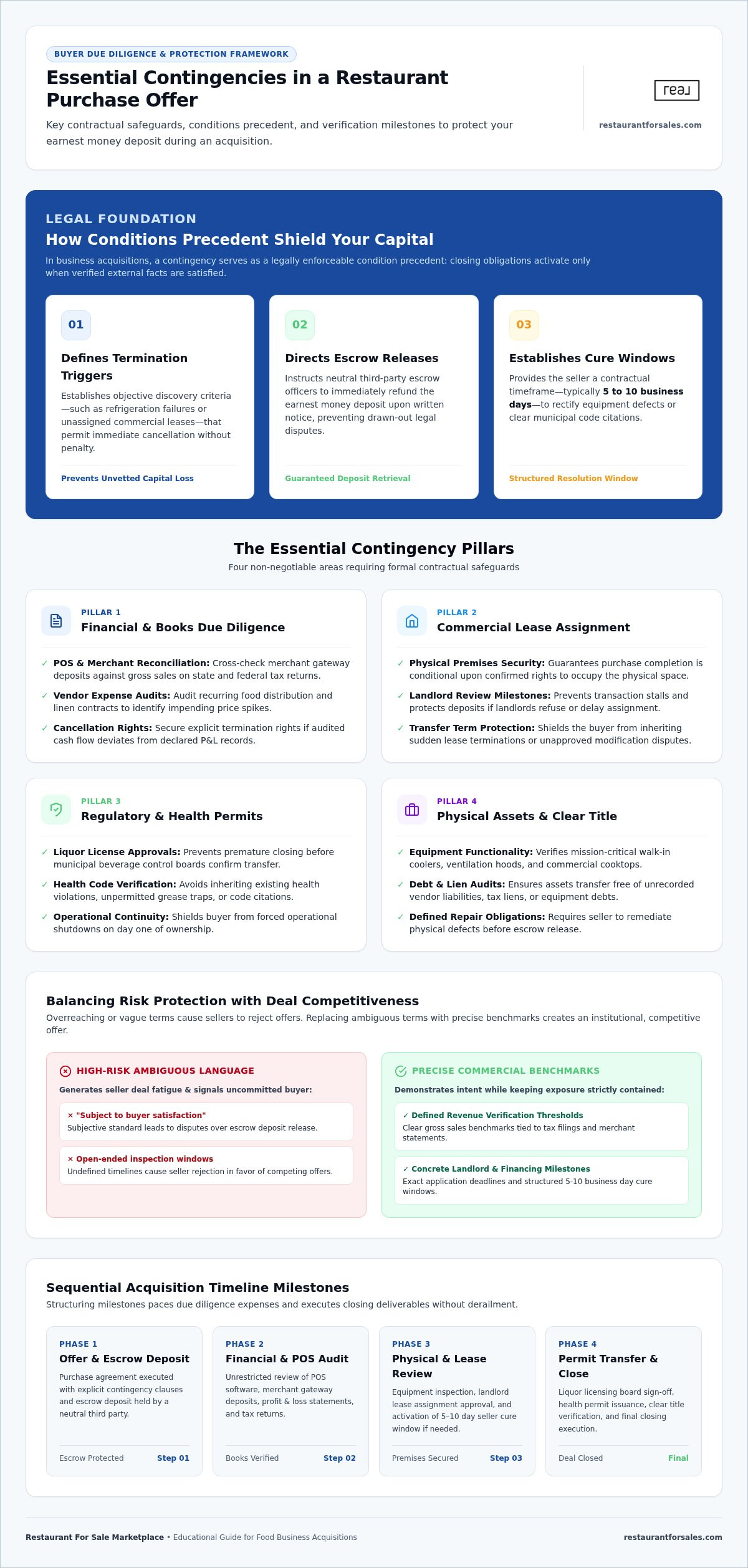
A properly drafted clause accomplishes three essential functions:
- Defines explicit termination triggers: Outlines objective discoveries, such as a major refrigeration failure or failure to secure lease assignment, that permit immediate cancellation.
- Directs escrow releases: Instructs the neutral third-party escrow officer to refund the earnest money deposit immediately upon formal notice, preventing protracted legal disputes.
- Establishes seller cure windows: Grants the seller a defined period, typically five to ten business days, to repair equipment defects or clear municipal code citations before cancellation rights activate.
Balancing Risk Protection with Deal Competitiveness
While shielding your capital is non-negotiable, overreaching terms will prompt sellers to reject your offer in favor of competing buyers. Sellers evaluate purchase proposals based on certainty of closing. Open-ended language or excessively long inspection windows create deal fatigue and signal an uncommitted purchaser.
The solution lies in precision. When negotiating common contingencies in a restaurant purchase offer, replace ambiguous phrases like "buyer satisfaction" with clear, measurable benchmarks. Set defined revenue verification thresholds, realistic financing application periods, and specific landlord approval milestones. This methodical approach demonstrates serious commercial intent while keeping your financial exposure strictly contained.
The Essential Restaurant Purchase Offer Contingency Checklist
Acquiring an operating food venue requires tailored legal protections that address physical assets, verified revenues, and debt exposure. Standard commercial boilerplates simply don't capture the complexities of a commercial kitchen or seasonal sales patterns. For a step-by-step overview of the broader acquisition lifecycle, review our detailed guide on how to buy a restaurant.
To avoid unvetted risks, institutional buyers rely on three foundational pillars among the common contingencies in a restaurant purchase offer:
Financial and Books Due Diligence Contingency
This provision grants you unrestricted access to point-of-sale (POS) software reports, merchant processing summaries, profit and loss statements, and federal tax returns. Relying on an attorney-approved due diligence checklist helps verify that declared cash flow matches reality.
- Cross-check filings: Match merchant gateway deposits against declared gross sales on state and federal tax returns.
- Audit operating expenses: Review recurring vendor agreements to uncover impending price spikes in food distribution or linen contracts.
- Enforce cancellation thresholds: Secure the legal right to terminate without penalty if gross revenue drops more than 5% below advertised figures during the review window.
Commercial Kitchen and Equipment Inspection Clause
Commercial equipment repairs can quickly exhaust your working capital reserves. This clause mandates independent inspections of every operational fixture before closing.
- Mechanical systems: Validate that walk-in compressors, refrigeration lines, cooking suites, and grease interceptors operate at peak capacity.
- Life-safety equipment: Confirm that type-1 ventilation hoods and ANSI fire suppression systems carry current compliance tags.
- Asset title verification: Require written seller representations stating that every asset on the equipment schedule transfers free of equipment leases, UCC liens, or encumbrances.
Financing and SBA Loan Approval Contingencies
Acquiring capital involves complex underwriting hurdles. A financing contingency protects your earnest money deposit if a lender denies your application through no fault of your own.
The contract clause should state explicit underwriting parameters: a maximum acceptable interest rate, fixed loan term lengths, and realistic debt service coverage requirements. Define hard deadlines for submitting your credit package, obtaining the commitment letter, and disbursing funds. If you want experienced guidance structuring these terms, connecting with licensed professionals through restaurant brokerage services can help keep your contract protected while maintaining seller confidence.
The Lease Assignment Contingency: Navigating Landlord Approval
Securing physical space is the single most vulnerable link in any food business transaction. You can negotiate pristine asset terms with the seller, but without property rights, the business cannot legally operate. Landlords hold unilateral control over retail spaces, and their review criteria often surprise first-time acquirers. Incorporating an airtight lease contingency within the common contingencies in a restaurant purchase offer ensures you never get trapped into buying operational assets without a secure roof over your head.
Standard transactional resources, such as Forbes's guide to buying a business, emphasize contract verification. However, foodservice spaces involve specialized occupancy terms that demand targeted protective language. For an in-depth breakdown of this approval process, explore our complete manual on restaurant lease assignments.
Securing Landlord Consent and Lease Transfer Terms
A well-structured lease assignment contingency conditions the closing on the landlord granting formal, unconditional consent to transfer the existing lease. It must also insulate the buyer from administrative liabilities.
- Assignment fees: Stipulate whether the buyer or seller pays the landlord's administrative and legal review fees, which frequently range from a few hundred to several thousand dollars.
- Release from prior defaults: Secure an estoppel certificate confirming the seller owes no back rent, common area maintenance (CAM) reconciliations, or uncompleted repair obligations.
- Permitted use alignment: Verify that the lease's specific use clause covers your intended menu, operating hours, and delivery models without triggering a default.
- Personal guarantee boundaries: Condition your deposit release on mutually acceptable personal guarantee terms, avoiding open-ended commitments that place personal assets at undue risk.
Negotiating Lease Extensions and Renewal Options
Lenders and smart buyers look beyond the immediate unexpired lease term. If a seller has only two years remaining on their primary term, buying the assets without secure renewal rights is commercial suicide.
Ensure your lease contingency requires a minimum cumulative occupancy duration, typically matching your loan amortization schedule of five to ten years. If the active lease lacks sufficient remaining option periods, condition the purchase upon the landlord executing a formal lease extension or a brand-new direct lease on comparable base rent and CAM terms. Setting clear parameters within common contingencies in a restaurant purchase offer keeps landlords from leveraging the ownership transfer to impose drastic rent escalations.
Regulatory Contingencies: Liquor Licenses, Health Permits, and Clear Title
Closing on an operating venue without confirmed municipal approvals invites instant shutdown orders from local code enforcement. Restaurant assets cannot produce revenue if the physical premise fails health standards or lacks valid authority to serve food and alcohol. Weaving regulatory approvals into your common contingencies in a restaurant purchase offer protects you against inherited fines and non-transferable permits.
Alcohol and Beverage Control Transfer Contingency
State liquor license transfers routinely present severe closing bottlenecks. Regulatory boards mandate extensive background reviews, fingerprint submissions, and public notice postings that frequently take months to process.
- Approval milestones: Condition closing directly on receiving written transfer approval from the governing alcohol control board, rather than merely submitting the application.
- Interim operating authority: Where local statutes allow, include terms authorizing a temporary operating permit or management agreement so the dining room continues beverage sales during review.
- Closing extensions: Insert automatic 30-day closing extensions if delays stem entirely from administrative backlog rather than buyer disqualification.
Health Department Approvals and Building Code Compliance
Municipal health departments inspect facilities thoroughly upon an ownership transfer. Operating conditions that grandfathered an existing owner rarely transfer to an incoming buyer automatically.
Your contract must condition escrow closing on securing a newly issued retail food operating permit. Require the seller to cure any municipal or fire marshal citations at their sole expense before funds release. This includes bringing plumbing hand-sinks, commercial grease interceptors, and dishwasher water heater capacities up to current statutory thresholds.
UCC Lien Searches and State Tax Clearance Certificates
Acquiring kitchen equipment doesn't guarantee you receive clear title. Unrecorded liabilities follow physical property unless explicitly cleared in the purchase agreement.
- UCC-1 public registry searches: Ensure your escrow agent conducts thorough searches to verify that ranges, refrigeration, and POS terminals aren't pledged as collateral for working capital loans.
- Successor liability protection: Demand official tax clearance certificates from state revenue agencies. In asset transfers, state taxing authorities can assess a prior owner's unpaid sales and employee withholding taxes against the buyer.
- Wage clearances: Require written certification that all prior payroll obligations, tips, and accrued benefits are settled in full before transfer.
Securing clean regulatory transfer requires rigorous oversight. You can browse turnkey restaurant listings with real estate that already feature vetted compliance documentation and clear title profiles.
Structuring Contingency Timelines and Partnering with a Restaurant Broker
An open-ended contract creates uncertainty that can easily derail an acquisition. Sellers rarely agree to indefinite diligence periods, while buyers cannot afford to risk capital without clear exit paths. Structuring common contingencies in a restaurant purchase offer requires establishing a disciplined, sequential calendar. Staggering your deadlines ensures you don't spend thousands of dollars on lease review or legal documentation before verifying the business's foundational numbers.
Establishing Sequential Milestones and Removal Deadlines
Coordinating contract conditions in distinct phases keeps the acquisition orderly and minimizes wasted expenses. Rather than tackling every inspection simultaneously, structure your timeline to validate key dependencies first.
- Phase 1: Initial operational diligence (Days 1 to 14): Focus exclusively on internal records and physical kitchen assets. Cross-reference POS summaries against tax returns and complete equipment checks. If fatal discrepancies arise here, cancel the contract before incurring outside professional costs.
- Phase 2: Landlord review and financing submission (Days 15 to 35): Once operations pass inspection, formally apply for the lease assignment and submit your completed loan application package to institutional lenders.
- Phase 3: Regulatory filings and title closing (Days 30 to 60+): Coordinate license transfers with municipal agencies while the escrow officer runs lien searches and secures tax clearances.
- Active written releases: Never rely on passive contingency expiration, where clauses lapse automatically if no objection is filed. Require formal, written contingency removal forms signed by both parties to certify that each milestone has been satisfied.
How Restaurant Brokers Streamline Deal Execution
Managing multiple deadlines across lenders, municipal boards, and commercial landlords can quickly overwhelm an independent buyer. To understand how professional intermediaries keep these moving parts synchronized, explore our guide on the role of a restaurant broker in business transactions.
Professional restaurant brokers understand the delicate balance required when drafting common contingencies in a restaurant purchase offer. They help you construct protective language that sellers respect, assemble comprehensive tenant packages that commercial landlords expect, and coordinate with neutral escrow holders. This transactional oversight ensures your earnest money deposit remains completely shielded until every operational condition is satisfied.
Secure Your Capital Before Submitting Your Restaurant Offer
Executing a successful acquisition isn't just about finding the right concept. It requires safeguarding your earnest money through disciplined contract structuring. Integrating common contingencies in a restaurant purchase offer gives you the legal authority to verify POS records, inspect mechanical systems, and secure space rights before releasing non-refundable funds.
Sequential milestones ensure you don't spend capital on legal reviews or licensing filings until the foundational business numbers check out. With specialized representation in commercial lease assignments and landlord approvals, you can navigate these complex hurdles with complete clarity.
You don't have to manage these high-stakes transaction phases alone. Explore turnkey hospitality opportunities and guidance with experienced commercial advisors managing complex restaurant asset acquisitions nationwide, and step into your next business venture with your capital fully protected.
Frequently Asked Questions
Can I get my earnest money deposit back if I cancel under a contingency?
Yes, you are legally entitled to a full refund of your earnest money deposit if you cancel within an active contingency window based on an unsatisfied condition. The purchase agreement instructs the neutral escrow holder to return funds upon receiving formal written notice of termination. However, you must deliver notice strictly before the agreed deadline expires, or you risk forfeiting the deposit as liquidated damages.
How long does a restaurant purchase due diligence period typically last?
A standard due diligence period for a restaurant purchase typically spans 14 to 30 days, depending on transaction complexity. Financial verification and physical kitchen equipment checks usually require 10 to 14 days. Third-party approvals like commercial lease assignments and lender underwriting often extend the complete contingency schedule to 45 or 60 days. Structuring sequential milestones prevents unnecessary delays while keeping your inspection rights intact.
What happens if the commercial landlord refuses to assign the restaurant lease?
If the landlord formally denies the lease assignment or demands unacceptable lease revisions, the transaction terminates, and your deposit is returned. Without property occupancy rights, acquired assets cannot operate. Including a dedicated lease transfer condition within the common contingencies in a restaurant purchase offer ensures you aren't legally bound to purchase kitchen equipment or goodwill if the landlord rejects your tenancy or demands unviable personal guarantees.
Can a seller reject an offer because it contains too many contingencies?
Yes, sellers frequently reject or counter offers loaded with open-ended, subjective, or excessively long contingency periods. Every contingency introduces closing uncertainty for the seller. If competing offers exist, a seller will favor terms with fewer escape hatches or tighter timelines. To maintain a strong negotiating position, focus on non-negotiable protections like lease assignment and financial audits while establishing clear, objective benchmarks rather than discretionary outs.
Is a liquor license transfer guaranteed when buying an existing bar or restaurant?
No, regulatory alcohol beverage control boards never guarantee the transfer or reissuance of an alcoholic beverage license. Governing boards evaluate incoming buyers independently, requiring background investigations, financial disclosures, and public notice periods. Past code violations tied to the physical premise can also trigger delays. Your purchase offer must explicitly condition closing upon formal regulatory approval or the issuance of a valid temporary operating permit.
What is the difference between active and passive contingency removal?
Active contingency removal requires you to sign a formal written release to waive a condition, whereas passive removal allows contingencies to lapse automatically when a calendar deadline passes. Active removal provides far greater buyer protection because funds aren't released without deliberate written sign-off. When negotiating common contingencies in a restaurant purchase offer, always specify active removal to maintain strict legal control over your escrow deposit.
Can I include a contingency for franchisor approval when buying a franchise restaurant?
Yes, franchisor approval should always be an explicit, non-negotiable contingency when purchasing a franchise resale. Franchise brands enforce strict net worth, operational experience, and training requirements before approving an incoming franchisee. They also retain rights of first refusal in most franchise agreements. Conditioning your transaction on formal corporate approval and execution of a franchise agreement ensures you don't acquire equipment without the brand operating rights.


