

The median restaurant on the market in 2025 took 181 days to sell, yet many owners still treat their listing like a simple classified ad rather than a high-stakes financial prospectus. When you decide to list restaurant for sale, you aren't just looking for a buyer; you're managing a complex transition where a single leak to staff or competitors can devalue your entire investment. It's a delicate balance between market exposure and private security.
We understand the uncertainty that comes with valuing your life's work and the anxiety of navigating commercial lease transfers. You deserve a process that rewards your years of hard work with a maximum ROI and a clean exit. This guide provides the ultimate 2026 seller checklist to ensure you master every step of the transaction. We'll walk you through professional valuation techniques based on Seller’s Discretionary Earnings, strategies for maintaining strict confidentiality, and the essential steps to secure a qualified buyer who won't waste your time.
Key Takeaways
- Learn how to normalize your financial statements to accurately reflect Seller’s Discretionary Earnings (SDE) using three years of tax returns and P&L statements.
- Discover how to list restaurant for sale using a "blind" marketing profile that protects your identity from staff and competitors while attracting serious investors.
- Identify the specific key performance indicators and untapped growth opportunities that turn a standard listing into a high-conversion financial prospectus.
- Implement a rigorous vetting process to verify buyer financial capability and professional experience before sharing sensitive business details.
- Understand the role of professional brokerage in managing complex lease assignments and the escrow process to ensure a secure, legally compliant closing.
Preparing Your Financial Foundation for a Successful Listing
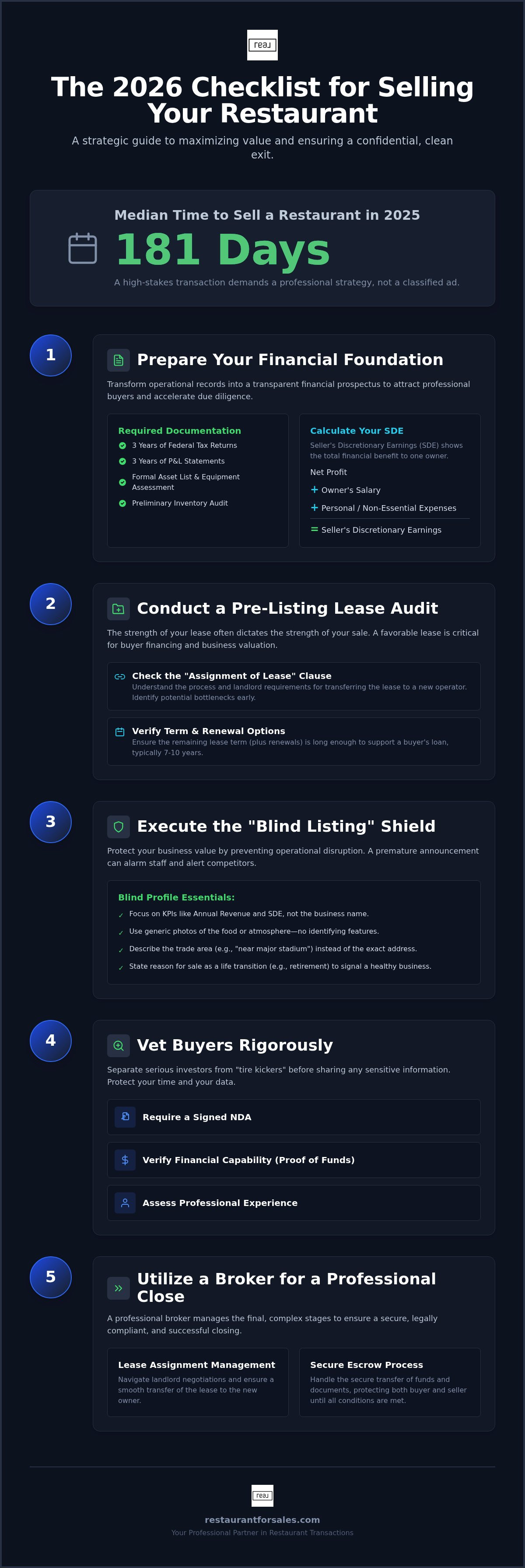
A successful transaction begins long before the public announcement. To list restaurant for sale effectively, you must transform your operational records into a transparent financial prospectus. Professional buyers rarely accept internal spreadsheets at face value; they require three years of federal tax returns and profit and loss (P&L) statements that align with your bank deposits. Clean documentation reduces perceived risk and speeds up the due diligence process.
Beyond high-level statements, you should conduct a preliminary inventory audit and a comprehensive equipment assessment. Determine the fair market value of your salable stock, excluding any expired or obsolete items. Ensure all kitchen equipment is in working order and documented on a formal asset list. This level of detail demonstrates professional management and prevents last-minute price renegotiations during the inspection phase. Understanding the role of a business broker is helpful here, as these experts often provide templates and oversight for this rigorous documentation phase.
Understanding SDE vs. EBITDA in Restaurant Appraisals
Most independent restaurants are valued using Seller’s Discretionary Earnings (SDE) rather than EBITDA. SDE represents the total financial benefit available to a single owner-operator. To arrive at this figure, you must "normalize" your statements by adding back non-essential expenses. Common add-backs include your own salary, personal travel charged to the business, and one-time repairs that won't recur for the next owner. For a deeper dive into these calculations, consult our 2026 Restaurant Valuation Guide.
The Pre-Listing Lease Audit
The strength of your lease often dictates the strength of your sale. A buyer cannot secure financing without a lease term that matches or exceeds the length of their loan. Review your current agreement to verify the remaining term and any existing options to renew. Pay close attention to the "Assignment of Lease" clause; this determines how easily you can transfer the space to a new operator. Landlords often require the incoming tenant to meet specific net worth or experience thresholds. Identifying these requirements early prevents the landlord from becoming a bottleneck in your closing timeline. If your lease is near its end, securing an extension before you list restaurant for sale is often the most effective way to protect your business value.
Executing the Confidentiality Shield: The Blind Listing
When you prepare to list restaurant for sale, your most valuable asset isn't just your equipment or your menu; it's your reputation. A premature public announcement can cause immediate operational damage. Staff members may start looking for new jobs, and competitors might use the news to poach your regular customers. Protecting your business requires a strategic "confidentiality shield" that keeps the transaction private until the final stages of the deal.
Professional brokers utilize "blind" marketing profiles to generate interest without revealing the business's identity. Use generic photography that captures the essence of the dining experience without showing recognizable signage or unique architectural features. A secure digital data room is also essential. This encrypted space hosts your sensitive financial records and lease documents, ensuring that only qualified, NDA-bound individuals can view them. This structure allows you to maintain control over who knows your business is on the market.
Drafting the Blind Profile
A blind profile shifts the buyer's focus from the "where" to the "how much." Lead with key performance indicators like annual revenue and Seller’s Discretionary Earnings (SDE). Categorize your business by its concept, such as "Fast-Casual Fusion" or "Upscale Bistro," rather than using its trade name. Instead of listing a specific city block, describe the trade area by its demographics or proximity to major anchors like stadiums or business districts. Frame the reason for sale as a standard life transition, such as "pursuing other interests" or "retirement," which signals a healthy business rather than a forced or distressed exit.
Managing the NDA Process
Never share proprietary data without a legally binding signature. "Confidentiality protects the business value by preventing operational disruption and maintaining competitive stability during the ownership transition." Use automated electronic signature platforms to manage this workflow efficiently. This creates a digital audit trail of everyone who has seen your Business Disclosure Statement. If you are unsure how to balance marketing reach with total privacy, consulting a professional can help you safely list restaurant for sale while keeping your daily operations running smoothly. For expert guidance on maintaining this balance, consider exploring the resources at restaurantforsales.com.
Crafting a High-Conversion Listing for the National Marketplace
To list restaurant for sale in a competitive market, your listing must function as a professional prospectus. Serious investors look past descriptive adjectives; they prioritize hard data and operational efficiency. High-conversion listings lead with key performance indicators like prime cost (the sum of labor and cost of goods sold) and rent-to-sales ratios. A prime cost under 60% or a rent-to-sales ratio below 10% signals a healthy, well-managed operation that commands a higher multiple from sophisticated buyers.
Your listing should also feature a comprehensive equipment list with estimated fair market values. This transparency builds trust and provides a clear picture of the physical assets included in the sale. Additionally, highlight the strength of your existing team. Staff longevity and a capable management layer suggest a turnkey operation, which is highly attractive to absentee owners or multi-unit operators looking to expand their portfolio without rebuilding the workforce from scratch.
The Power of "Value-Add" Propositions
Buyers aren't just purchasing your current cash flow; they're buying future potential. If you have an underutilized liquor license, explain how it could be leveraged for private events or late-night service. Identify untapped revenue streams like corporate catering or optimized third-party delivery routes that you haven't fully exploited. Emphasize the details of your restaurant lease assignment. If the agreement includes below-market rent or significant remaining options, these favorable terms become a major selling point that directly increases the business's valuation.
Visuals and Documentation
While confidentiality is paramount, you must still provide the visual context necessary to sell the brand concept. Use professional photography of your signature dishes to showcase the quality of the product. Include redacted floor plans and equipment layouts to help buyers visualize the operational flow without revealing the exact address. To streamline the inquiry process, prepare a "Frequently Asked Questions" sheet. This document should address common concerns regarding local competition, seasonal trends, and vendor relationships. By providing this information upfront, you filter for serious inquiries and reduce the time spent on repetitive administrative tasks. When you list restaurant for sale with this level of preparation, you position yourself as a professional seller and increase the likelihood of a swift, high-value closing.
Vetting Buyers: Separating "Tire Kickers" from Real Investors
When you list restaurant for sale, the volume of initial inquiries can be deceptively high. Many respondents are "tire kickers" who are curious about the market but lack the resources or intent to finalize a transaction. Protecting your time and your business's confidentiality requires a structured vetting process. You should never release a Business Disclosure Statement or host a site visit without first receiving a signed NDA and a detailed Buyer Profile. This profile acts as a professional resume, outlining the prospect's industry background and their specific motivations for buying.
Schedule initial discovery calls to filter these leads before they ever step foot in your kitchen. These conversations help you assess the buyer's personality and professional maturity. If a prospect isn't willing to share their background or financial standing during a 15-minute call, they aren't a serious candidate. By strictly limiting walk-throughs to qualified individuals, you minimize the risk of exposure when you list restaurant for sale.
The Proof of Funds Requirement
A buyer's interest is irrelevant without the capital to back it up. You must verify financial capability through a formal Proof of Funds (POF) or a lender pre-approval letter early in the process. This documentation must show enough liquidity for the down payment, closing costs, and at least six months of working capital. Distinguishing between mere interest and actual capability is essential for maintaining momentum in the sales cycle. For 2026, a Qualified Buyer is an investor who provides verifiable liquid assets exceeding 30% of the asking price and possesses a credit score that meets standard commercial lease requirements.
Experience and Operational Fit
Financial standing isn't the only metric that matters to stakeholders. Landlords and ABC boards often have the final say on whether a sale can proceed. They prioritize buyers with a proven track record in the food and beverage industry to ensure the business continues to meet its lease obligations. You should assess whether the buyer holds necessary certifications, such as ServSafe, or if they have a management team already in place. Corporate buyers often bring more stability but may require longer due diligence periods than individual owner-operators. If you want to ensure your listing reaches only the most capable investors, start your journey with the professional brokerage services at restaurantforsales.com.
The Broker Advantage: Closing the Deal with Professionalism
When you list restaurant for sale, finding a buyer is only half the battle. The path from an accepted offer to a funded closing is paved with technical requirements and legal hurdles. Professional brokers act as the central hub of this process, coordinating between attorneys, landlords, and state agencies like the ABC or liquor boards. They ensure that every contingency is met on schedule, preventing the deal from collapsing due to administrative delays.
Positioning your business for SBA financing is a strategic move that significantly expands your buyer pool. SBA-backed loans allow buyers to enter the market with lower down payments, which can lead to a higher final sale price for the seller. A broker prepares the specific financial packages required by lenders, ensuring the business's cash flow supports the proposed debt service. This preparation is a key reason why owners choose to list restaurant for sale through a specialized firm rather than attempting a private transaction.
Navigating the Escrow and Closing Period
The escrow period is a critical phase where the broker manages the Earnest Money deposit in a neutral account. This protection ensures both parties remain committed to the agreed-upon terms. Legal compliance during this stage involves drafting a precise Bill of Sale and adhering to Bulk Sale laws, which protect the buyer from the seller's existing creditors. Understanding The Role of a Restaurant Broker during this phase highlights how an intermediary mitigates risk for both parties.
Post-Sale Transition Planning
A smooth handoff is the final step in a successful exit. Most agreements include a training period, typically lasting 2-4 weeks, where the seller assists the buyer with operational nuances. This transition includes managing the transfer of utility accounts and introducing the new owner to key vendor contacts. If your business is part of a larger brand, you must also navigate franchise resale requirements, which often involve corporate approval and specialized training for the incoming operator. By handling these final details with professionalism, you protect your legacy and ensure the long-term success of the establishment you built.
Securing Your Legacy Through a Strategic Exit
Transitioning from daily operations to a successful business sale requires a fundamental shift in perspective. You've moved from managing a kitchen to presenting a high-value financial asset. By normalizing your earnings, maintaining strict confidentiality through blind listings, and rigorously vetting every prospect, you protect the business you've worked hard to build. These steps ensure that when you list restaurant for sale, the process remains disciplined and results-driven.
The technical hurdles of lease assignments and escrow compliance are best managed with professional oversight. We provide expert valuation services to ensure you don't leave money on the table, alongside a national reach that connects your listing to thousands of qualified buyers. Our success-based commissions mean we only get paid when your deal successfully closes. You've invested years into your establishment; let us help you secure the return you deserve.
Start Your Confidential Listing with Restaurant For Sale Marketplace and begin your journey toward a clean, profitable exit.
Frequently Asked Questions
How much does it cost to list a restaurant for sale?
Industry averages for brokerage commissions typically range between 10% and 12% of the final sale price. Many brokers also require a minimum fee between $15,000 and $25,000 to cover the administrative costs of the transaction. While some firms may charge upfront retainers, our model focuses on success-based commissions. You should also budget for professional valuation services and potential legal fees to ensure all closing documents are compliant with local regulations.
How can I sell my restaurant without my employees knowing?
Confidentiality is maintained through the use of "blind listings" that omit the business name and exact address. You should only share sensitive operational details after a prospect has signed a legally binding Non-Disclosure Agreement (NDA). Discovery calls and off-site meetings allow you to vet buyers without alerting staff. This approach prevents operational disruption and ensures that your team remains focused on their roles until the transaction is finalized and ready for announcement.
What is the average time it takes to sell a restaurant in 2026?
Based on market data from 2025, the median time a restaurant spends on the market before selling is 181 days. This six-month window allows for proper marketing, buyer vetting, and the complex due diligence period required for commercial transactions. When you list restaurant for sale, factors like financial transparency and lease terms heavily influence this timeline. Well-documented businesses with strong cash flows often move through the escrow phase more efficiently than those with disorganized records.
Do I need an attorney to list my restaurant for sale?
While you don't need an attorney to list your business, legal counsel is essential for reviewing the final purchase agreement and closing documents. A broker manages the marketing and negotiation phases, but an attorney ensures that the transfer of assets and lease obligations complies with state laws. Having a legal professional handle the Bill of Sale and Bulk Sale filings protects you from future liabilities and ensures a clean break from the business.
What documents do I need to provide to a potential buyer?
You must provide three years of federal tax returns and profit and loss (P&L) statements to any serious prospect. Additionally, buyers will require a copy of your current lease, a detailed equipment inventory, and any relevant health department or liquor license records. Providing these documents in a secure digital data room allows you to track access while giving qualified investors the transparency they need to complete their financial due diligence and secure lending.
How do I determine the asking price for my restaurant?
Most profitable independent restaurants are valued at 1.5 to 3 times their Seller's Discretionary Earnings (SDE). This multiple depends on factors like lease length, management structure, and revenue trends. If the business is not currently profitable, the valuation is often based on the fair market value of its assets, which typically ranges from $75,000 to $250,000. Professional valuation services are the most reliable way to establish a competitive price that attracts serious buyers.
Can I sell my restaurant if I don’t own the building?
Yes, most restaurant sales involve the transfer of a leasehold interest rather than real property. This process, known as a lease assignment, requires the landlord's consent to transfer the remaining term and renewal options to the new owner. When you list restaurant for sale, the strength and transferability of your lease are critical value drivers. You should verify your assignment clauses early to identify any net worth or experience requirements the landlord may impose on buyers.
What happens to my liquor license when I sell the business?
The transfer of a liquor license is a regulated process managed by state ABC or liquor boards. Depending on the jurisdiction, the buyer must apply for a transfer or a new license, which can take several months to complete. In quota states, the license itself holds significant market value and is often sold as a separate asset within the business transaction. A broker coordinates with the relevant boards to ensure the timing of the transfer aligns with the closing date.


