

What if your restaurant's most valuable ingredient wasn't on the menu, but in the foundation of the building itself? Many entrepreneurs struggle with the volatility of business-only loans, where variable SBA 7(a) rates can climb as high as 13.25% in the current 2026 market. It's exhausting to build a legacy on a landlord's timeline, constantly worrying about lease renewals or sudden rent hikes that eat into your margins. You likely want more than just a successful kitchen; you want the stability and equity that comes with owning the dirt beneath your feet.
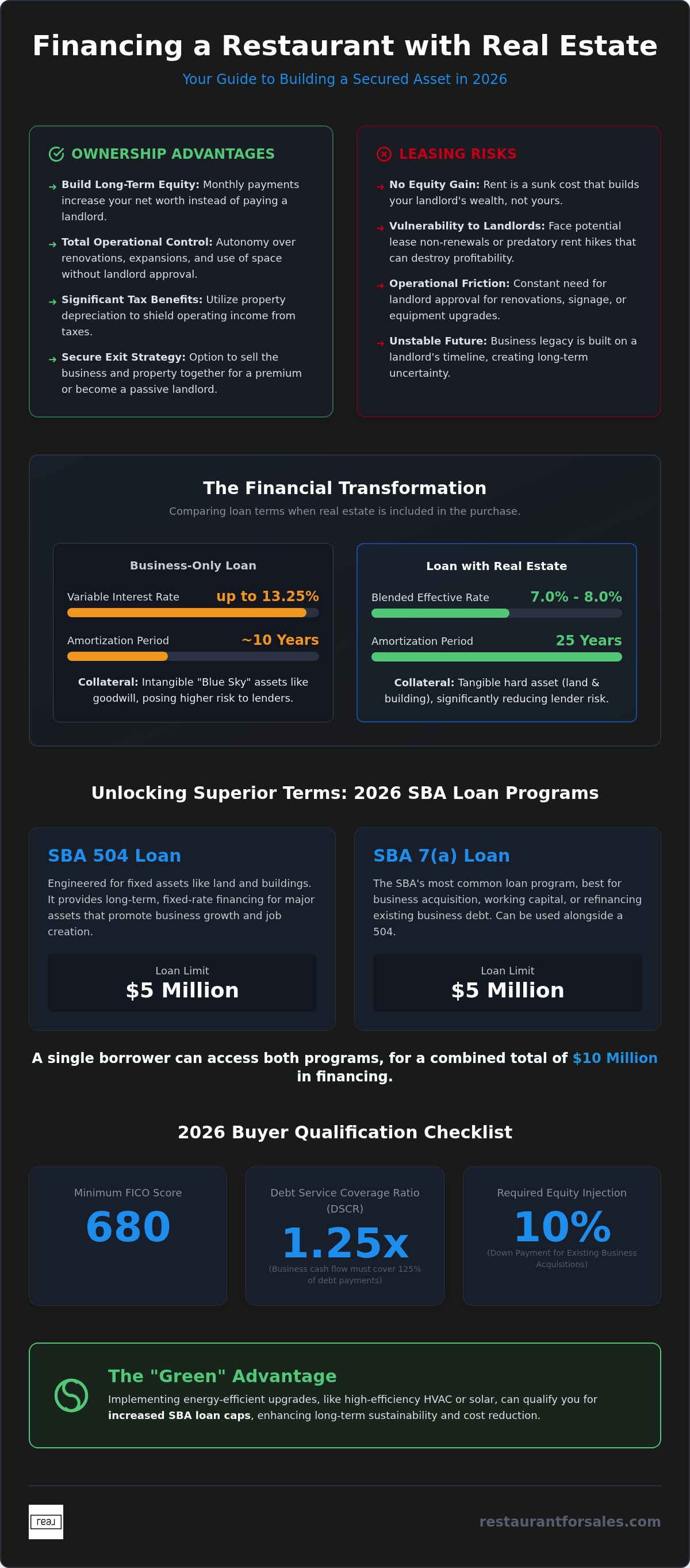
This guide will show you how financing a restaurant purchase with real estate transforms your acquisition from a high-risk business venture into a secured asset investment. By leveraging the physical property, you can unlock superior terms like 25-year amortization periods and blended effective rates that often sit between 7.0% and 8.0%. You'll learn the specific 2026 requirements for SBA 504 and 7(a) programs, including the reinstated 10% equity injection and the 1.25x debt service coverage ratio. We'll outline the exact path to securing lower interest rates and gaining total control over your location's future.
Key Takeaways
- Understand how property ownership eliminates the operational risks of lease non-renewals and predatory rent increases while building long-term equity.
- Discover how financing a restaurant purchase with real estate secures 25-year amortization periods and lower blended interest rates compared to business-only loans.
- Compare the 2026 requirements for SBA 504 and 7(a) programs, including new incentives for energy-efficient "green" property upgrades.
- Identify the critical qualification benchmarks for the current market, including the 680 minimum FICO score and 1.25x debt service coverage ratio.
- Learn the strategic importance of utilizing a specialized restaurant broker to navigate the complexities of a dual business and real estate closing.
Why Ownership Beats Leasing: The Strategic Value of Restaurant Real Estate
A "Restaurant with Real Estate" represents a combined asset purchase where the buyer acquires the operating business alongside the physical land and building. This structure is fundamentally different from a traditional lease-based acquisition. In the 2026 market, sophisticated buyers are increasingly prioritizing these deals to build recession-proof equity. While business value can be volatile, real estate serves as a hard asset that retains value even if the hospitality industry faces temporary headwinds.
Lenders significantly prefer these transactions over business-only deals. When financing a restaurant purchase with real estate, you're providing the bank with tangible collateral. This reduces their exposure compared to financing "blue sky" value, which consists of intangible assets like brand reputation and goodwill. By securing the property, you eliminate the catastrophic risk of lease non-renewal or predatory rent hikes that can destroy a restaurant's profitability overnight.
Building Equity vs. Paying Rent
Every rent check you sign is a sunk cost that builds the landlord's wealth instead of your own. When you own the property, your monthly payments function as a forced savings plan. A Commercial mortgage allows you to pay down principal each month, directly increasing your net worth. Beyond principal paydown, commercial property ownership offers significant tax advantages. You can often utilize depreciation to shield a portion of your restaurant's operating income from taxes, a benefit that isn't available to tenants.
Ownership also simplifies your long-term exit strategy. When it's time to retire, you have multiple options. You can sell the business and property as a package for a premium, or you can sell the brand and retain the building. This allows you to transition from an active operator to a passive landlord, securing a steady stream of rental income for your future.
Control Over the Physical Environment
Leasing often creates operational friction. Tenants must frequently seek landlord approval for basic renovations, signage changes, or equipment upgrades. When you own the building, you have total autonomy over the physical space. This freedom allows you to expand the footprint, remodel the dining room, or upgrade the kitchen on your own timeline. Owning the property often includes control over the parking lot and outdoor dining areas, which are critical components of the modern guest experience. To understand how this fits into the broader acquisition process, you should review our guide on how to buy a restaurant. Having full control over your location ensures that your business isn't vulnerable to the whims of a third-party property owner.
SBA 504 vs. SBA 7(a): Choosing the Right Loan for Property
The Small Business Administration (SBA) acts as a cornerstone for entrepreneurs seeking to own their locations. While the SBA doesn't issue loans directly, it provides guarantees that encourage lenders to offer better terms. In the 2026 lending environment, these SBA loan programs are essential for bridging the gap between high interest rates and sustainable cash flow. A major advantage of these programs is the low down payment requirement. While conventional commercial loans often demand 20% to 30% down, SBA programs typically allow for a 10% equity injection for existing business acquisitions. This lower entry cost preserves your working capital for operational needs.
Recent policy changes effective July 4, 2026, have made these programs even more powerful. The SBA now maintains separate lending limits for 7(a) and 504 loans. This means a single borrower can potentially access up to $5 million from each program, totaling $10 million in financing. Additionally, buyers can leverage "Green" incentives. If you implement energy-efficient upgrades, such as high-efficiency HVAC systems or solar installations, you may qualify for increased loan caps. This is a critical strategy when financing a restaurant purchase with real estate in a market focused on sustainability and long-term cost reduction.
The SBA 504: Low Rates for Long-Term Assets
The SBA 504 loan is specifically engineered for fixed assets like land and buildings. Its structure involves three parties: a private lender providing 50% of the project cost, a Certified Development Company (CDC) covering 40%, and the buyer contributing the final 10%. This program is favored for its stability. The CDC portion offers fixed interest rates for 20 or 25 years, which protects you from future rate hikes. As of August 2026, the effective interest rate for the CDC portion sits between 6.19% and 6.27%. When blended with the bank's portion, most 504 projects see an effective rate between 7.0% and 8.0%. It's the ideal choice if your primary goal is predictable monthly payments over several decades.
The SBA 7(a): The Versatile Choice
The 7(a) program is the SBA's most popular offering because of its flexibility. Unlike the 504, which is restricted to fixed assets, the 7(a) can fund real estate, equipment, furniture, and even intangible "goodwill" in a single package. This makes it perfect for a turnkey restaurant for sale where you're buying the brand and the building simultaneously. However, 7(a) loans often carry variable interest rates. In September 2026, loans over $350,000 are capped at a 9.75% variable APR. While higher than the 504, the 7(a) requires less complex coordination between multiple lenders, often leading to a faster closing process. If you need help determining which path fits your specific acquisition, you can explore our current listings for restaurants with real estate to see real-world examples of these deals in action.
Financial Advantages: How Real Estate Lowers Your Interest Rates
Lenders apply a risk premium to every loan they issue based on the likelihood of recouping their capital if the business fails. In a business-only transaction, the collateral often consists of used kitchen equipment and intangible goodwill, which have limited resale value. When you're financing a restaurant purchase with real estate, you're providing the bank with a Tier 1 commercial asset. This tangible security allows lenders to offer much lower interest rates because they can foreclose on the physical property to satisfy the debt. Banks view the building as a safety net that bridges the "collateral gap" often found in high-value restaurant acquisitions.
The amortization schedule is another critical financial lever. Business-only loans are typically restricted to 10-year terms, which creates a heavy monthly repayment burden. Real estate loans allow for 25-year amortization periods. This longer timeline significantly reduces your monthly debt service, which improves your cash flow and makes the acquisition more sustainable in the long run. By spreading the principal repayment over two and a half decades, you keep more capital inside the business for growth and operations.
Interest Rate Compression
In the 2026 financial climate, Commercial real estate loans feature significantly narrower spreads than unsecured business lines. For instance, while variable SBA 7(a) rates for business acquisitions can reach as high as 13.25%, secured real estate financing through the SBA 504 program often results in a blended effective rate between 7.0% and 8.0%. This interest rate compression isn't just a minor saving; it can represent hundreds of thousands of dollars in interest expense avoided over the life of the loan. Lenders are more willing to compete for your business when a deed is involved, giving you more leverage during negotiations.
DSCR and Cash Flow Flexibility
Lenders evaluate your ability to repay through the Debt Service Coverage Ratio (DSCR). This is calculated by taking your Net Operating Income (NOI) and dividing it by your total annual debt service. Most lenders in 2026 require a DSCR of 1.25x or higher. Because ownership allows for longer amortization and lower interest rates, your total debt service decreases, which naturally raises your DSCR. This makes it easier to qualify for the loan even if the restaurant's margins are tight. To accurately project these numbers, it's vital to understand the latest restaurant valuation methods used to determine NOI. Replacing a volatile rent payment with a stable, lower mortgage payment directly strengthens your bottom line and provides the financial flexibility needed to navigate seasonal shifts in the industry.
Qualifying for a Combined Acquisition: Credit, Cash Flow, and DSCR
Lenders in 2026 apply stringent criteria when you're financing a restaurant purchase with real estate. A personal FICO score of 680 is currently the benchmark for most SBA and commercial lenders. While some institutions may consider scores as low as 650 with compensating factors, a 680+ score ensures access to the most competitive interest rates. Lenders also perform a "Global Cash Flow Analysis," which evaluates your personal income alongside the restaurant's profits. This comprehensive review ensures you can support the debt service even if the business faces a temporary downturn.
Lenders typically require a minimum of two years of profitable tax history for the target restaurant. They're looking for a Debt Service Coverage Ratio (DSCR) of at least 1.25x, meaning the business's cash flow must be 1.25 times the total debt obligations. Beyond the down payment, post-closing liquidity is a major factor. Banks want to see "cash in the bank" after the deal closes, usually enough to cover three to six months of operating expenses. This safety net protects the lender's interest and ensures you have the working capital to manage the transition effectively.
Seller’s Financials: Due Diligence
Verifying a seller's financial claims is a critical component of due diligence. You must compare internal Profit and Loss (P&L) statements against filed tax returns to ensure consistency. Many owners utilize Section 179 deductions to accelerate depreciation, which can make a profitable business appear less successful on paper. A specialized broker plays a vital role here by identifying legitimate "add-backs" to calculate the true Seller's Discretionary Earnings (SDE). These add-backs might include one-time equipment repairs or non-essential owner perks that won't be part of your future operating costs. Lenders will only accept these adjustments if they're clearly documented and verifiable.
The Appraisal Gap
The appraisal gap is a common challenge when the bank's valuation of the building is lower than the purchase price. Since restaurants are classified as special-purpose properties, their appraisals can be conservative. If a gap occurs, you may need to negotiate a price reduction, increase your down payment, or utilize seller financing to bridge the difference. Securing a professional restaurant valuation before making an offer provides a realistic baseline and helps prevent these surprises during the underwriting process. If you're ready to find a property that meets these qualification standards, you can browse our current listings for restaurants with real estate to see available opportunities.
Navigating the Closing: How a Specialized Broker Secures the Deal
A generic real estate agent understands square footage and zoning, but they often lack the technical expertise required for a hospitality transaction. A specialized restaurant broker understands the synergy between a building's physical layout and its operational profitability. When you're financing a restaurant purchase with real estate, the lender requires a cohesive package that justifies the loan for both the tangible property and the operating entity. Your broker acts as a vital "Lender Liaison," organizing financial records and proactively addressing underwriter concerns before they become deal-breakers.
Managing a "Dual Closing" is one of the most complex aspects of these transactions. You aren't just transferring a deed; you're simultaneously transferring a liquor license, health department permits, and vendor accounts. The broker coordinates these moving parts to ensure the business remains operational during the transition. In cases where the property includes additional rental units or shared spaces, the broker also manages restaurant lease assignments to protect those secondary income streams. This level of oversight prevents the administrative errors that frequently delay commercial closings.
Structuring the Purchase Agreement
The purchase agreement must be meticulously structured to protect your interests during the 2026 due diligence period. Essential contingencies include Phase I environmental studies to ensure the land is free of contamination and professional appraisals to satisfy lender requirements. A critical step is the allocation of the purchase price. Your broker will help you divide the total cost between the real estate, the Furniture, Fixtures, and Equipment (FF&E), and the business's goodwill. This allocation has significant implications for your future tax depreciation and loan-to-value ratios. By utilizing a success-based brokerage model, you ensure your facilitator is fully committed to pushing the deal through to a successful transfer of ownership.
Next Steps for Buyers
If you're ready to transition from tenant to owner, start by reviewing active restaurant listings to understand current market pricing. You should prepare a comprehensive "Buyer Profile" that includes your professional resume, a personal financial statement, and proof of funds. Presenting this package early shows lenders and brokers that you're a serious investor capable of executing a high-value transaction. Once your profile is ready, you can view our Restaurants with Real Estate listings to identify properties that align with your strategic goals for 2026 and beyond.
Securing Your Legacy in the 2026 Restaurant Market
Transitioning from a tenant to a property owner is the most effective way to stabilize your long-term operating costs. By financing a restaurant purchase with real estate, you replace the uncertainty of lease renewals with a predictable, equity-building mortgage. This strategy allows you to leverage the physical property as collateral, unlocking the 25-year amortization periods and compressed interest rates that business-only loans simply can't match. You aren't just buying a kitchen; you're acquiring a secured asset that protects your bottom line against future market volatility in 2026 and beyond.
Success in this complex landscape requires more than just a great menu. It demands a disciplined approach to financials and lender requirements. Our specialized restaurant brokerage provides the expert valuation services needed to bridge appraisal gaps and ensure your offer is grounded in market reality. With our success-based commissions, our interests remain perfectly aligned with your professional journey. Ready to build real equity? Browse National Restaurant Listings with Real Estate today and take the first step toward controlling your business's physical future. The right location is waiting for an owner who understands the value of the dirt beneath the dining room.
Frequently Asked Questions
Can I use an SBA loan to buy a restaurant if I don’t own the real estate?
Yes, you can use the SBA 7(a) program for business-only acquisitions. However, these loans are typically limited to a 10-year amortization period and carry higher variable interest rates. Without the building as collateral, the lender's risk is higher, which often results in more stringent personal guarantee requirements. You won't build property equity, but you can still finance goodwill, equipment, and working capital through this versatile program.
What is the typical down payment for a restaurant with real estate in 2026?
In the 2026 lending market, the typical down payment for an existing restaurant with real estate is 15%. While the SBA reinstated a 10% minimum equity injection in 2025, the "special-purpose" classification of restaurant buildings often prompts lenders to require an additional 5% to mitigate risk. If you are financing a new construction or a startup location, you should expect the down payment requirement to reach 20% or more.
How long does the financing process take for a restaurant property purchase?
Expect the financing process to take between 60 and 90 days from the signed letter of intent to the final closing. Real estate deals require more time than business-only loans because they involve commercial appraisals, Phase I environmental studies, and title searches. Since the SBA eliminated automated SBSS scoring in 2026, lenders now conduct manual credit analyses, which can further extend the underwriting timeline for complex hospitality acquisitions.
Can I refinance my existing restaurant lease into a property purchase?
You cannot technically refinance a lease, but you can use an SBA loan to purchase the building you currently occupy if the owner is willing to sell. This is an excellent method of financing a restaurant purchase with real estate because you already have a proven track record of profitability at that location. Lenders often view these "tenant-to-owner" transactions favorably because the operational risks are already well-documented and stable.
What is the difference between an SBA 7(a) and an SBA 504 loan for restaurants?
The SBA 7(a) is a flexible loan that can cover business value, equipment, and real estate in a single package, usually with variable rates. The SBA 504 is specifically for fixed assets like land and buildings. The 504 program offers long-term fixed rates on the CDC portion, which reached between 6.19% and 6.27% in August 2026. It's the better choice for buyers prioritizing low, predictable monthly payments over 25 years.
Does the restaurant need to be profitable for me to get a real estate loan?
Lenders generally require at least two years of profitable tax history for a combined business and property acquisition. You must demonstrate a Debt Service Coverage Ratio (DSCR) of at least 1.25x, meaning the restaurant's cash flow is 25% higher than the total annual debt payments. If the business is currently unprofitable, you will likely need a significantly higher down payment or additional outside collateral to secure the necessary financing.
What is a Phase I Environmental Site Assessment and do I need one?
A Phase I Environmental Site Assessment is a report that identifies potential or existing environmental contamination liabilities at a property. Lenders require this for almost all commercial real estate transactions to ensure the land isn't contaminated by previous uses. If the Phase I report reveals concerns, a more intensive Phase II study may be required. This step is mandatory when financing a restaurant purchase with real estate to protect your investment.
Can I include equipment and renovations in my real estate loan?
You can include equipment and renovations if you utilize the SBA 7(a) program, which allows for a comprehensive "turnkey" financing package. The SBA 504 program also permits the inclusion of equipment with a useful life of at least 10 years and significant building improvements. This allows you to roll your remodeling costs into a single, long-term loan with a 25-year amortization, which helps preserve your business's initial working capital.


