

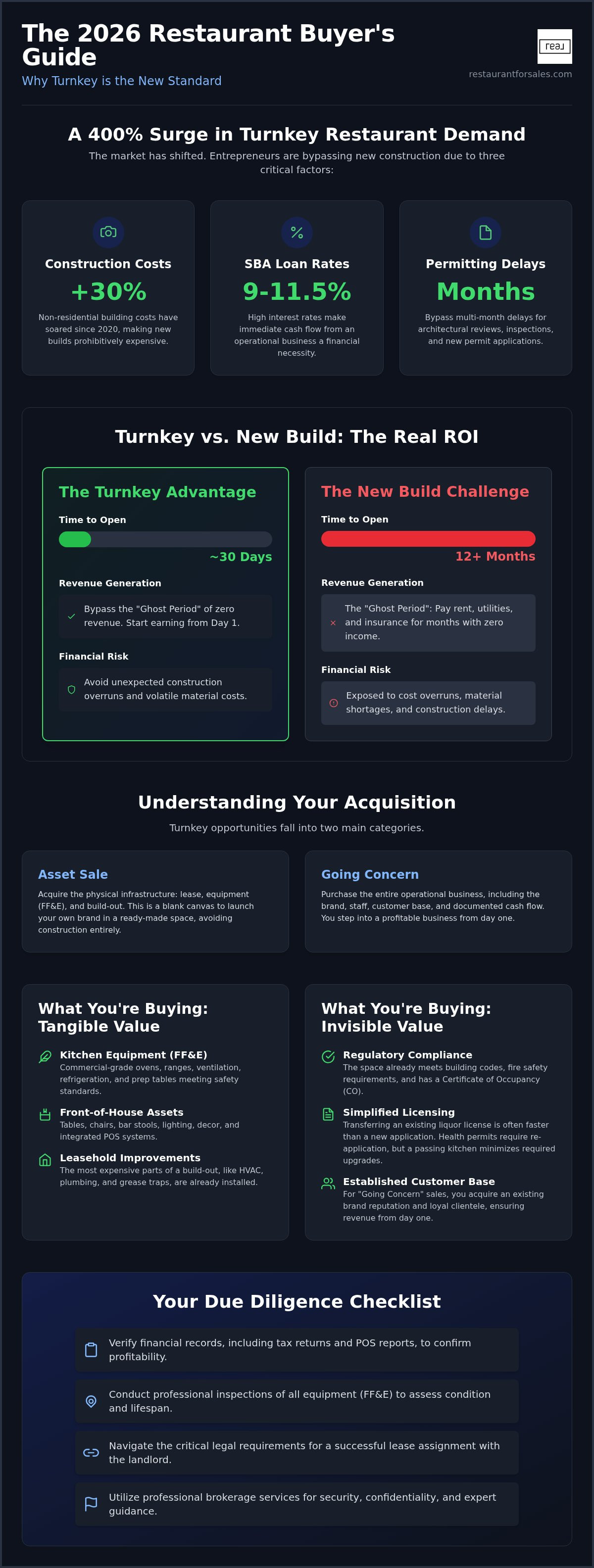
Why did buyer interest in a turnkey restaurant for sale surge by 400% in the first half of 2026? The answer lies in the current reality of commercial construction and finance. With non-residential building costs up roughly 30% since 2020 and SBA loan rates sitting between 9% and 11.5%, the traditional build-to-suit model is becoming increasingly prohibitive for many entrepreneurs. You're likely looking for a way to enter the market without the crushing weight of multi-month permitting delays or the inherent uncertainty of a brand-new location.
We understand that your primary goal is to generate immediate cash flow while securing a functional space with an established customer base. This 2026 buying guide provides a professional roadmap for identifying, evaluating, and acquiring a turnkey operation. You'll learn how to leverage expert brokerage guidance to navigate complex lease assignments and essential health permit transitions. We'll cover everything from current market multiples to the specific due diligence steps required to ensure you start your journey with a profitable, operational asset from day one.
Key Takeaways
- Understand the distinction between asset sales and going-concern opportunities to ensure you select the right turnkey restaurant for sale for your specific investment goals.
- Discover how acquiring an existing establishment allows you to bypass the "ghost period" of construction and begin generating revenue in weeks rather than months.
- Learn the essential steps for verifying tax returns and POS reports while conducting professional equipment inspections to mitigate financial risk.
- Identify the critical legal requirements for successful lease assignments and navigate the complexities of non-transferable health permits.
- Recognize the security and confidentiality advantages of utilizing professional brokerage services over unverified social media or private listings.
What is a Turnkey Restaurant for Sale?
A What is a Turnkey Restaurant? refers to a commercial food service business that is fully equipped and ready for immediate operation. In the 2026 market, a turnkey restaurant for sale represents a strategic move to avoid the high costs and lengthy timelines associated with new builds. These opportunities are generally categorized into two distinct types: asset sales and going concerns. An asset sale provides the physical infrastructure and leasehold interest without the existing brand or cash flow. A going concern includes the established brand name, trained staff, and documented financial performance.
The primary appeal of a turnkey acquisition is the "key" components already in place. This includes the leasehold improvements, such as HVAC systems and grease traps, which are often the most expensive parts of a restaurant build-out. With non-residential construction costs having risen by approximately 30% since 2020, purchasing a pre-configured space is the most efficient entry point for modern investors.
The FF&E Package: What You Are Actually Buying
FF&E is the tangible backbone of a turnkey transaction. This category covers everything from heavy-duty kitchen ranges and ventilation hoods to walk-in refrigeration and specialized machinery. In the front-of-house, you are acquiring dining furniture, decor, and integrated POS systems that are already networked and functional.
- Kitchen Equipment: Commercial-grade ovens, fryers, and prep tables that meet current safety standards.
- Front-of-House Assets: Tables, chairs, bar stools, and lighting fixtures.
- Inventory: Negotiations typically distinguish between perishable stock and non-perishable dry goods at the time of closing.
Permits and Licenses: The Invisible Value
The invisible value of a turnkey restaurant for sale lies in its existing regulatory compliance. While some permits are non-transferable, the fact that the space already meets building codes and fire safety requirements is a major advantage. For example, a location with an existing Certificate of Occupancy (CO) and fire safety clearance allows you to bypass months of architectural reviews and inspections.
Liquor licenses are particularly valuable. In many jurisdictions, transferring an existing license through a professional brokerage service is a significant shortcut compared to the months-long process of a new application. Although health department permits usually require a new owner to re-apply and pass a pre-opening inspection, taking over a kitchen that was recently passing inspections reduces the risk of expensive retroactive upgrades to meet 2026 codes.
Turnkey vs. New Build: Calculating the Real ROI
Choosing between a new build and a turnkey acquisition is essentially a calculation of time arbitrage. While a new build allows for complete customization, it typically requires 12 months or more to navigate architectural reviews, permitting, and construction. In contrast, a turnkey restaurant for sale can often be operational under new ownership within 30 days. This speed to market is critical in 2026, as it allows you to capture market share immediately rather than watching competitors from the sidelines while you wait for a contractor.
One of the most significant financial drains in a new build is the "ghost period." This is the timeframe where you're paying full commercial rent, utilities, and insurance while generating zero revenue due to construction or permitting delays. By acquiring an existing operation, you bypass this phase entirely. You step into a facility where the infrastructure is already producing income, which is a vital safeguard when SBA 7(a) acquisition loans are running at approximately 9% to 11.5%.
The Premium Price vs. Construction Savings
It's common for buyers to wonder why a turnkey listing carries a higher upfront price than an empty shell. The answer lies in the "replacement value." If you were to build the same kitchen today, you would face non-residential construction costs that have risen by roughly 30% since 2020. A professional valuation accounts for these savings, positioning the purchase price as a discount against the current reality of volatile labor and material markets. Reviewing the SBA guide to buying an existing business can help you understand how these valuations are structured to protect your investment.
A turnkey restaurant for sale offers several ROI advantages that a new build cannot match:
- Avoidance of Cost Overruns: Construction projects in 2026 frequently exceed original budgets by 15% or more due to supply chain instability.
- Verified Infrastructure: You aren't guessing if the plumbing or electrical panels can handle a high-volume kitchen; the systems are already proven.
- Immediate Cash Flow: Revenue starts on day one, which helps cover debt service and operational costs immediately.
Operational Continuity and Staffing
Beyond the physical assets, you're acquiring human capital and existing customer goodwill. Finding and training a reliable team is one of the most difficult challenges in the 2026 hospitality sector. A turnkey sale often includes an existing staff that knows the kitchen flow, the POS system, and the local customer base. This continuity ensures that service remains consistent from the first day of your ownership. For those looking for a detailed roadmap on managing this transition, our guide on how to buy a restaurant offers a step-by-step breakdown of the acquisition process. If you're ready to explore specific opportunities, you can browse our current national listings to find a location that fits your criteria.
Vetting a Turnkey Listing: The Due Diligence Checklist
Due diligence is the most critical phase when evaluating a turnkey restaurant for sale. It is the period where a seller's claims are tested against the reality of financial records and physical infrastructure. A comprehensive vetting process begins with a thorough lease review. You must confirm that the remaining lease term and renewal options are sufficient to justify your capital investment. Additionally, perform a reputation audit. Look beyond aggregate star ratings and analyze recent review trends to identify potential operational red flags or declining local sentiment that could impact future revenue.
Verifying Financial Performance (SDE vs. EBITDA)
Buyers must distinguish between Seller’s Discretionary Earnings (SDE) and EBITDA. SDE is the standard metric for small to mid-sized eateries, as it includes the owner’s salary and personal benefits. When reviewing tax returns, P&Ls, and POS reports, pay close attention to "add-backs." These are personal expenses like non-essential vehicle leases or travel that can inflate the perceived profit of the business. According to the SBA on business acquisition, accurate financial verification is the foundation of a secure transaction. To understand how these metrics influence the final purchase price, consult our guide on restaurant valuation methods.
The Physical Inspection: Beyond the Surface
A visual walkthrough is insufficient for a professional acquisition. You should hire specialists to test the refrigeration, HVAC systems, and specialized kitchen machinery. These assets are expensive to replace and often carry hidden "deferred maintenance" liabilities. Identifying a failing walk-in cooler or an outdated POS system during due diligence allows you to negotiate repairs or a price reduction before the closing date.
Early in your inspection, check the grease traps and hood ventilation systems. These components must meet 2026 fire safety and environmental codes to avoid immediate fines or mandatory shutdowns. You also need to verify compliance with Americans with Disabilities Act (ADA) standards. A turnkey restaurant for sale might be currently operational, but a change in ownership often triggers a requirement to bring the facility up to modern accessibility codes. Addressing these "invisible" costs early ensures that your first month of operation isn't derailed by unbudgeted facility upgrades.
Navigating Legal Transfers and Lease Assignments
Acquiring a turnkey restaurant for sale involves more than just a transfer of physical assets; it requires a precise legal transition of property rights and operational obligations. The most critical component of this process is the restaurant lease assignment. Unlike a new lease, an assignment transfers the existing tenant's rights and duties to you, the buyer. You must coordinate this transition carefully with the transfer of utility accounts and municipal permits to ensure zero downtime on your closing date. Any misalignment in these dates can result in temporary closures that disrupt the immediate cash flow you expect from a turnkey operation.
Landlord Approval: The Deal-Breaker
Commercial landlords hold significant power in a turnkey transaction. They must grant a "Consent to Assign" before the sale can finalize. To secure this, you should prepare a professional Buyer Profile that includes your hospitality experience, financial statements, and a concise business plan. Landlords often charge an assignment fee to cover their legal and administrative costs. While this is typically a seller's expense, it is often a point of negotiation in the final contract.
If the remaining lease term is short, use this window to negotiate a lease extension or new options to protect your long-term investment. Be prepared for the landlord to require a personal guarantee. This makes you personally liable for the lease obligations, a standard requirement in 2026 commercial real estate that underscores the importance of verifying the business's financial health before signing.
Asset Purchase Agreement (APA) Essentials
The Asset Purchase Agreement is the primary contract governing the sale. In a turnkey restaurant for sale scenario, you are typically buying the assets, such as equipment, leasehold improvements, and goodwill, rather than the corporate entity itself. This asset-only structure is preferred because it protects you from the seller's undisclosed liabilities or past legal issues.
- Price Allocation: Work with a professional to allocate the purchase price between tangible assets and goodwill for maximum tax advantages.
- Non-Compete Clauses: A robust APA must include a non-compete clause to prevent the departing seller from opening a competing concept within a specific radius.
- Inventory Counts: Conduct a final inventory count 24 hours before closing to adjust the final purchase price for food and beverage stock.
Navigating these legal hurdles requires expertise to ensure your interests are protected throughout the transaction. If you are ready to begin your search, you can explore our current restaurant lease assignments to find a location that meets your operational needs.
How to Secure a Turnkey Restaurant with a Professional Broker
Securing a turnkey restaurant for sale requires a level of discretion and verification that private, unverified social media listings cannot provide. Professional marketplaces act as a safeguard, ensuring that every listing has undergone a preliminary review before it reaches the public. This layer of professionalization is essential in a market where 2026 interest rates remain elevated, making the accuracy of financial data paramount for securing acquisition capital. By working within a structured marketplace, you avoid the risks of unvetted listings and incomplete financial disclosures.
The role of a restaurant broker is to act as a proactive facilitator between your investment goals and the seller's exit strategy. They provide critical connections to specialized lenders who understand the nuances of hospitality finance. Brokers also provide professional valuation services to ensure the purchase price aligns with current market multiples. In the first half of 2026, the average cash flow multiple for restaurant acquisitions rose to 2.41, a figure that highlights the importance of having an expert negotiator to verify that you aren't overpaying for goodwill.
Confidentiality: Protecting the Business During the Sale
Maintaining operational stability is the highest priority during an acquisition. If staff, vendors, or competitors learn about a potential sale prematurely, it can lead to employee turnover or a sudden drop in customer loyalty. This is why owners of a turnkey restaurant for sale never list their exact addresses or business names publicly. Confidentiality protects the very asset you are trying to buy.
You'll be required to sign a Non-Disclosure Agreement (NDA) before receiving sensitive financial or location details. Once the NDA is executed, your broker will often recommend a "secret shopper" visit. This allows you to experience the food quality, service standards, and physical atmosphere as a regular customer. It's the most effective way to gauge the true state of the operation without alerting the staff to your identity or the impending transaction.
Closing the Deal: The Role of Escrow and Title
The transition from an accepted offer to a final closing involves several protective legal layers. Using a neutral third-party escrow service is standard practice to protect your earnest money deposit until all contingencies are met. During the escrow period, the brokerage team ensures that all liens, UCC filings, and back taxes are cleared. This step is vital to ensure you receive a clean title to the assets and aren't inheriting the previous owner's debt obligations.
On the day of closing, you'll conduct a final walkthrough to confirm that all FF&E assets are in the condition specified in the contract. Simultaneously, a final inventory count is performed to adjust the closing statement for the actual value of food and beverage stock on hand. This methodical approach ensures that you move from inquiry to ownership with a clear understanding of the business's physical and financial standing, allowing you to focus on growth from the moment you take the keys.
Securing Your Future in the 2026 Restaurant Market
Acquiring a turnkey restaurant for sale is a strategic decision to bypass the volatility of modern construction costs and permitting delays. By focusing on established assets with verified infrastructure, you'll position yourself to generate revenue from the first day of ownership. Success in this market depends on rigorous due diligence, from inspecting kitchen equipment to navigating complex lease assignments with landlord approval. Professional guidance ensures these technical hurdles don't derail your operational goals.
Our national network of professional brokers is dedicated to professionalizing your transaction through expert restaurant valuation services and a success-based brokerage commission model. We provide the stability and expertise needed to bridge the gap between identifying an opportunity and executing a successful closing. Having a partner who understands the intricacies of the current commercial landscape is vital for your long-term success.
Browse Active Turnkey Restaurant Listings on Our Marketplace and take the first step toward ownership with a team that prioritizes your professional journey. Your next venture is ready for its next chapter.
Frequently Asked Questions
What exactly is included in a turnkey restaurant sale?
A turnkey restaurant for sale typically includes all furniture, fixtures, and equipment (FF&E) necessary for immediate operation. This encompasses kitchen appliances, front-of-house furniture, and point-of-sale systems. Additionally, the sale includes leasehold improvements like grease traps and ventilation hoods. Buyers also acquire the right to assume the existing lease and, in some cases, the established brand name, recipes, and digital assets. It's essential to verify the specific asset list during the due diligence phase.
Is it cheaper to buy a turnkey restaurant than to start a new one?
Acquiring an existing operation is generally more cost-effective than a new build-out. With non-residential construction costs rising by approximately 30% since 2020, buying established infrastructure provides significant savings. You also avoid the "ghost period" where you pay rent and utilities during months of construction and permitting delays. While the upfront purchase price may be higher than an empty shell, the total capital required to reach opening day is significantly lower.
Can I change the concept of a turnkey restaurant after I buy it?
You can change the concept, but you must first secure approval from the commercial landlord. Most lease assignments include a "use clause" that defines what type of food or service is permitted in the space. If your new concept requires structural changes or different utility loads, you may also need to update municipal permits. It's common for buyers to purchase an asset sale specifically to install their own unique brand into a fully equipped kitchen.
How do I know if the equipment in a turnkey listing is actually working?
You shouldn't rely on a visual inspection alone to verify equipment health. Hire professional technicians to test refrigeration units, HVAC systems, and specialized kitchen machinery during the due diligence period. These experts can identify deferred maintenance or failing components that aren't obvious during a walkthrough. Identifying these issues before closing allows you to negotiate repairs or a price reduction, ensuring you don't inherit expensive equipment liabilities on your first day of ownership.
What happens to the existing staff when a restaurant is sold turnkey?
In many turnkey transactions, the existing staff remains with the business to ensure operational continuity. This provides the buyer with a trained team that understands the kitchen flow and local customer preferences. However, the retention of employees depends on the terms of the Asset Purchase Agreement and the owner's communication strategy. Maintaining confidentiality during the sale process is vital to prevent premature turnover and ensure a smooth transition of the workforce to the new owner.
Do I need a lawyer or a broker to buy a turnkey restaurant?
While not always legally required, utilizing a professional broker and an attorney is highly recommended for high-value commercial transactions. A broker provides expert valuation services and manages the complex lease assignment process with the landlord. An attorney ensures the Asset Purchase Agreement protects you from the seller's past liabilities. These professionals act as facilitators to ensure the transfer of a turnkey restaurant for sale is legally sound and financially fair for all parties involved.
How long does the closing process typically take for a turnkey acquisition?
The closing process for a turnkey acquisition typically ranges from 30 to 90 days. The timeline is largely determined by the speed of the landlord's lease assignment approval and the complexity of permit transfers. Unlike new builds that can take over a year, this expedited timeframe allows for a rapid transition of ownership. Coordinating the closing date with utility transfers and final inventory counts is essential to ensure you can begin operations without any service interruptions.
Can I get financing for a turnkey restaurant purchase in 2026?
Financing remains available for turnkey acquisitions, particularly through SBA 7(a) loan programs. As of August 2026, these acquisition loans are running at approximately 9% to 11.5%. Lenders generally prefer turnkey operations over new builds because the business has a proven location and existing infrastructure, which reduces the overall lending risk. Providing clean financial records and a strong buyer profile is critical for securing favorable terms in the current interest rate environment.


