

If you rely on a seller's profit and loss statement at face value, you aren't conducting due diligence; you're taking a gamble with your life savings. Most buyers enter the market with a fear of hidden liabilities and deep uncertainty about the true Seller's Discretionary Earnings (SDE). Using a comprehensive restaurant due diligence checklist is the only way to verify that the cash flow you're buying is actually there, especially in a market where 87% of operators reported rising food costs in the first half of 2026. You deserve a clear, data-driven path to protect your investment.
This guide offers the professional framework necessary to vet acquisitions with the precision of a seasoned broker. By following this roadmap, you'll master the art of financial verification and handle the legal complexities of lease assignments. We'll walk through the specific documentation required to validate assets, ensure a secure lease transfer, and provide the confidence you need to close the deal. From analyzing prime cost benchmarks to auditing digital infrastructure, this framework transforms confusion into a sound asset acquisition strategy.
Key Takeaways
- Learn how to accurately calculate Seller’s Discretionary Earnings by standardizing the add-back process to reveal true cash flow.
- Use this restaurant due diligence checklist to evaluate lease renewal options and remaining terms for long-term investment security.
- Identify potential physical liabilities through a turnkey audit of kitchen infrastructure and verification of health department compliance.
- Secure the brand’s digital presence by auditing social media logins, domain ownership, and delivery platform credentials before closing.
- Understand how professional brokers use secure data rooms to manage sensitive documentation while maintaining confidentiality throughout the transaction.
Financial Due Diligence: Verifying Revenue and SDE in 2026
Financial vetting is the cornerstone of any due diligence process. For a buyer, the goal isn't just to see if the business is profitable; it's to determine how much money will actually end up in your pocket. A professional 2026 Restaurant Valuation is the essential first step. It provides the baseline for understanding whether the asking price aligns with current market multiples and verified performance data.
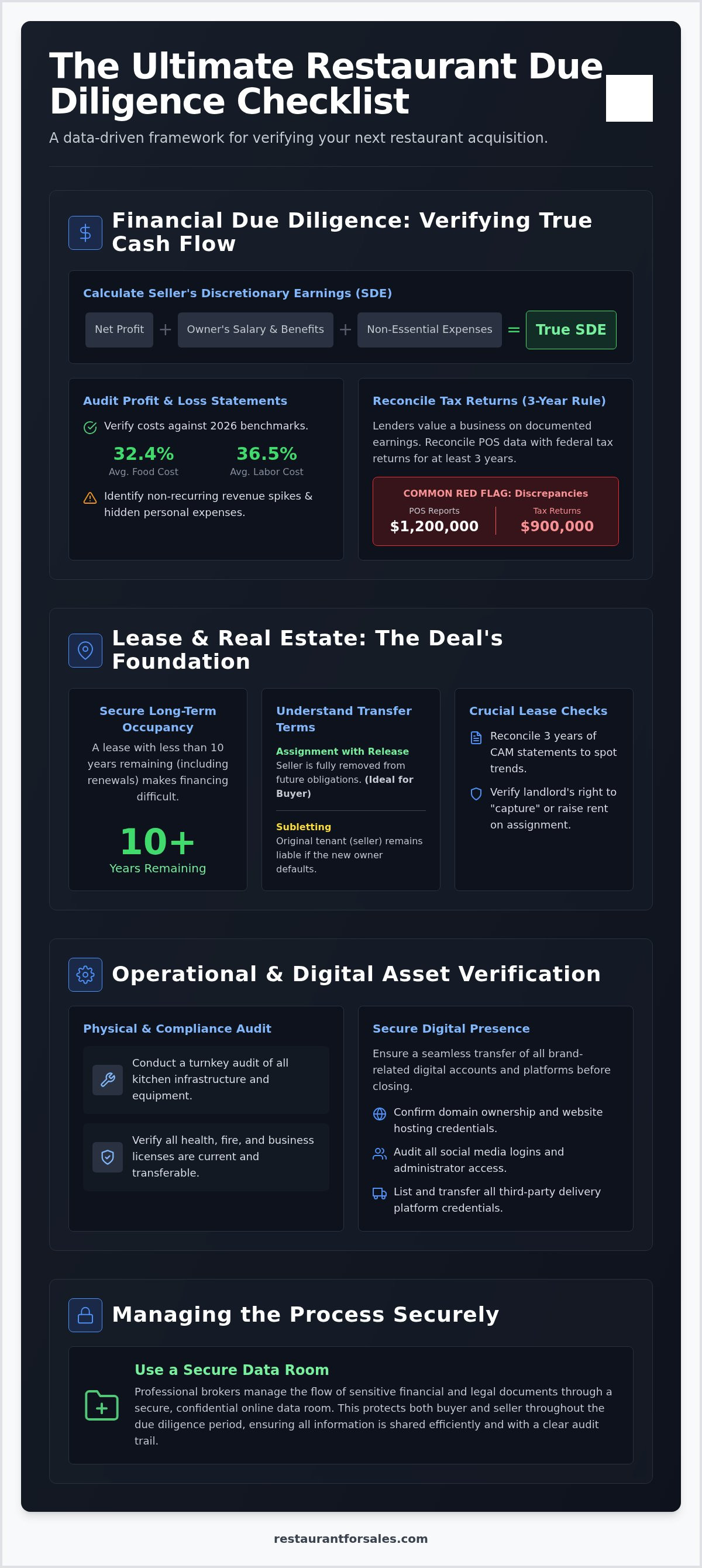
Most small-to-midsize restaurant deals hinge on Seller's Discretionary Earnings (SDE). While larger corporations focus on EBITDA, SDE reflects the total financial benefit to a single owner-operator. This includes the reported net profit plus "add-backs" like the owner's salary, health insurance, and non-essential personal expenses. Standardizing these add-backs is a critical part of your restaurant due diligence checklist to ensure you aren't overpaying for a "job" rather than a sound business asset.
Auditing Profit and Loss (P&L) Statements
A thorough audit identifies non-recurring revenue spikes that could artificially inflate the business's value. For example, a one-time catering contract for a local festival doesn't represent sustainable daily sales. You must also analyze food and labor costs against 2026 industry benchmarks. Currently, the average food cost for full-service restaurants is 32.4%, while labor costs typically sit around 36.5%. If the seller's P&L shows significantly lower percentages, they might be underreporting costs or deferring essential maintenance. Look for "hidden" owner expenses like personal travel or family cell phone plans buried in the "Miscellaneous" or "Utilities" categories.
Tax Return Reconciliation
Professional buyers follow the "Three-Year Rule" for tax return consistency. You need at least three years of federal returns to spot trends and ensure the business isn't in a terminal decline. Discrepancies between POS data and tax returns are common red flags. With the 2026 emphasis on digital tax reporting, cash-heavy businesses face more scrutiny than ever. If the POS reports show $1.2 million in sales but the tax returns only reflect $900,000, the lender will likely only value the business based on the lower, documented number. Every dollar of cash flow must be verified through bank statements to be considered a valid asset in your restaurant due diligence checklist.
Lease and Real Estate Assets: The Foundation of the Deal
In most restaurant acquisitions, the lease is the most valuable intangible asset you're purchasing. Without a secure, long-term right to occupy the space, the brand's goodwill and equipment have limited value. Total business value is inextricably tied to the location's longevity. If a lease has less than 10 years remaining, including renewal options, securing traditional financing becomes significantly more difficult. Thorough Restaurant due diligence requires a deep dive into the underlying occupancy agreement to ensure the business has a stable home for the duration of your investment horizon.
Common Area Maintenance (CAM) charges are a frequent trap for unwary buyers. In 2026, these costs are rising sharply alongside property taxes and insurance premiums. Your restaurant due diligence checklist must include a reconciliation of the last three years of CAM statements to spot aggressive upward trends. Additionally, the mechanics of a restaurant lease assignment are where many deals stall. Landlords typically require a comprehensive net worth statement and a professional resume from the buyer before granting consent. You should verify whether the landlord has the right to "capture" the space or increase the rent upon assignment.
Key Terms for Lease Transfers
The distinction between an "assignment with release" and "subletting" is critical for managing liability. In an assignment with release, the seller is fully removed from future obligations. Conversely, subletting often leaves the original tenant on the hook if the new owner defaults. For buyers in 2026, personal guarantees remain a standard requirement unless the purchasing entity has a substantial corporate balance sheet. Negotiating a "Right of First Refusal" during the assignment process can also provide a strategic path to eventually owning the property.
Evaluating Restaurants with Real Estate
There are distinct financing advantages when investing in a restaurant with real estate. SBA 7(a) loans can offer 25-year amortization schedules when real estate is included, which significantly lowers monthly debt service compared to standard business-only loans. When vetting these deals, it's vital to separate the business value, based on Seller's Discretionary Earnings, from the property value, based on comparable market sales. This dual-valuation approach ensures you aren't overpaying for the operations simply because the dirt is valuable. If you are looking for opportunities that include the underlying property, you can browse our current listings of restaurants with real estate to see how these deals are structured.
Operational and Technical Diligence: Beyond the Kitchen Door
Once you've verified the cash flow and secured the leasehold interest, the next phase of your restaurant due diligence checklist involves a technical audit of the physical and regulatory assets. A business that appears "turnkey" during a walkthrough can hide significant capital expenditure risks beneath the surface. Integrating the How to Buy a Restaurant framework into your vetting process ensures you evaluate the operational infrastructure with the same rigor as the financial statements. This step is designed to prevent "surprise" repair costs in your first 90 days of ownership.
Modern restaurant operations rely heavily on digital channel integrations. You must audit the Point of Sale (POS) system and its connectivity with third-party delivery platforms. Verify that the hardware is owned outright rather than leased, and confirm that software licenses are transferable without prohibitive onboarding fees. In 2026, a "Profitability Gap" often exists between operators who use integrated data and those who don't; ensuring you inherit a functional digital infrastructure is vital for maintaining margins.
Equipment and Inventory Assessment
Every item intended for transfer must appear on a detailed asset schedule attached to the Bill of Sale. In the 2026 market, replacement costs for commercial kitchen equipment have remained high due to structural supply chain shifts. You should evaluate equipment based on its depreciated value while factoring in its remaining useful life. If a walk-in cooler or a 10-foot hood system is nearing the end of its lifespan, this deferred maintenance must be quantified. Use these findings as a lever in final price negotiations rather than accepting the seller's "as-is" valuation without proof of recent service logs for HVAC and refrigeration units.
Permitting and Regulatory Compliance
Verifying compliance goes beyond checking for current health department scores. You must ensure the facility meets the standards of the most recent local adoption of the FDA Food Code. Many older restaurants operate under "grandfathered" status for certain plumbing or ventilation codes. However, a change in ownership often triggers a requirement to bring the entire facility up to current standards. This can lead to unexpected and expensive renovations before you're allowed to open.
- Check for outstanding Fire or Building Department violations that could stall your permit transfer.
- Confirm the grease trap meets current environmental capacity requirements and has been pumped according to schedule.
- Verify liquor license transferability, as local quota systems or "blue laws" can delay operations for several months if not handled proactively.
Structuring the deal as an asset sale is a standard strategy to avoid inheriting past regulatory fines. This ensures you start with a clean slate while the seller remains responsible for any liabilities incurred prior to the closing date.
Labor, Brand, and Digital Asset Verification
Beyond the kitchen and the lease, a restaurant's value lives in its reputation and its people. Verifying these intangible assets is a mandatory phase of your restaurant due diligence checklist. You aren't just buying equipment; you're buying a brand that customers recognize and a team that executes the menu. If the head chef or general manager plans to leave the day after the sale, the business's operational stability is at risk. You must identify "key employees" early and determine if their retention is tied to the current owner's personal relationships.
Digital Infrastructure and Delivery Channels
In 2026, a restaurant's digital presence is often its primary revenue driver. You must verify ownership and transferability of all third-party delivery accounts, such as UberEats and DoorDash. These platforms use historical performance data and customer ratings to determine search rankings. If you're forced to start a new account, you'll lose years of "ranking juice" and immediate visibility. Additionally, audit the POS database to ensure you own the customer email lists and loyalty program data. These digital assets allow you to drive repeat business without paying third-party commissions. If you're considering a branded concept, a thorough franchise resale audit is necessary to confirm that the franchisor approves the transfer of these digital rights and that all brand standards are currently met.
Staffing and Payroll Compliance
Labor is the most volatile expense in the 2026 hospitality market. With the median labor cost for full-service restaurants sitting at 36.5%, even minor compliance errors can destroy your projected profitability. You should review at least three years of payroll records to check for overtime violations or the misclassification of independent contractors. This is particularly vital in the seven states that prohibit tip credits, as labor economics there differ significantly from the federal model. You'll need to verify that the previous owner hasn't been "padding" the SDE by underpaying staff or ignoring local wage mandates.
Maintaining confidentiality is the greatest challenge during this phase of the transaction. Interviews with staff should only happen late in the process, usually after financing is secured and the deal is nearing the finish line. If word of a sale leaks too early, it can trigger a mass exodus of employees. You can view our latest restaurant listings to find businesses with established, professional management teams already in place. Finally, review the online reputation history across Google and Yelp. Look for patterns in feedback loops. A business with a declining star rating over the last six months suggests operational drift that you'll need to correct immediately upon taking ownership.
Closing the Deal: The Broker’s Role in Due Diligence
The final phase of a restaurant transaction requires a disciplined environment for document exchange and verification. A professional marketplace does more than just list businesses; it provides the infrastructure for a secure "Data Room." This digital repository allows for the organized flow of sensitive financial and legal records while maintaining strict seller confidentiality. Understanding the role of a restaurant broker in your business sale is essential because they act as the central hub, ensuring that every item on your restaurant due diligence checklist is addressed before the earnest money leaves escrow.
Brokers facilitate the transition by coordinating with landlords, lenders, and attorneys to keep the timeline on track. In the complex 2026 regulatory environment, delays in license transfers or lease approvals can jeopardize a deal. A proactive facilitator manages these moving parts, ensuring that the buyer's interests are protected through clearly defined contingencies. This structured approach prevents the emotional friction that often arises during high-stakes commercial negotiations.
Escrow and Contingency Management
Your earnest money deposit should always be protected by specific due diligence contingencies. These legal "out" clauses allow you to withdraw from the deal if the business fails to meet the standards established during your investigation. Common contingencies include:
- Lease Assignment Approval: Ensuring the landlord grants formal consent for the transfer under acceptable terms.
- Financing Commitment: Protecting the buyer if the lender's final appraisal doesn't align with the purchase price.
- License and Permit Transfer: Verifying that the health department and liquor board will issue the necessary operating permits to the new entity.
The release of funds from escrow only occurs once all conditions are satisfied and both parties have signed the final closing documents. This ensures a clean transfer of ownership where all liabilities are accounted for and the asset is delivered as promised.
The Final Transition Checklist
The 24 hours leading up to the closing are dedicated to the final walkthrough and inventory reconciliation. You'll need to conduct a "Day Zero" inventory count of all food, paper goods, and liquor. In most deals, this inventory is valued at the seller’s cost and paid as a separate line item at closing. You must also verify that all equipment listed on the asset schedule is in the same working condition as when you first inspected it.
Transferring merchant services and payment processing is a critical technical step. If this isn't handled 48 to 72 hours before closing, you won't be able to accept credit card payments on your first day of operation. Similarly, you must coordinate the transition of utility accounts, including gas, electric, and water, to ensure there's no service interruption. Once these operational hurdles are cleared, you can confidently step into your new role. If you're ready to begin this process, you can search active listings on our professional marketplace to find your next investment opportunity.
Securing Your Future in the 2026 Restaurant Market
Success in restaurant ownership depends on the quality of your vetting process. By applying a rigorous restaurant due diligence checklist, you move beyond guesswork and into a position of informed authority. You've learned how to verify true Seller's Discretionary Earnings, secure critical leasehold assets, and audit the digital infrastructure that drives modern revenue. These steps ensure your investment is protected from hidden liabilities and operational drift.
The transition from buyer to owner is a complex journey that requires specialized expertise. Whether you're managing a franchise resale or a complex lease assignment, having a professional facilitator makes the difference between a failed negotiation and a successful closing. Our platform provides the infrastructure you need to vet opportunities with confidence. We provide the professional support and market-driven appraisals necessary to ensure your transaction is grounded in reality.
Browse active, vetted restaurant investment opportunities on our national marketplace to access hundreds of listings with verified financials. We provide professional brokerage support to manage your due diligence and specialized expertise in lease assignments and franchise resales. Taking the first step toward acquisition is a significant milestone. With the right data and a structured framework, you're well-positioned to build a profitable legacy in the hospitality industry.
Frequently Asked Questions
What is a reasonable due diligence period for a restaurant purchase in 2026?
A standard due diligence period typically ranges from 14 to 21 days after the execution of a Letter of Intent. This timeframe allows you to execute your restaurant due diligence checklist without causing unnecessary delays for the seller. While digital data rooms have made document review faster, you still need time to coordinate with third party inspectors and legal counsel. Complex deals involving liquor license transfers or extensive lease negotiations may require a structured extension.
How do I verify a restaurant's cash sales if they aren't on the P&L?
You shouldn't rely on income that isn't documented on a P&L or tax return. Professional buyers and lenders only value a business based on verifiable income. If a seller claims unrecorded cash, you can request a proving period where you observe the business for two weeks to track actual receipts. However, unverified cash cannot be used to secure financing and usually represents a liability rather than an asset during the valuation process.
What is the difference between an asset purchase and an entity purchase?
An asset purchase involves buying specific items like equipment and the lease, while an entity purchase involves buying the seller's entire legal corporation. Asset sales are the industry standard because they allow you to start with a clean slate. This structure ensures you don't inherit the seller’s past debts, tax liens, or employment related lawsuits. By choosing an asset sale, you only take over the productive parts of the business while leaving the legal liabilities behind.
How do I know if the restaurant lease is actually transferable?
Review the Assignment and Subletting section of the lease to determine if the landlord’s consent can be unreasonably withheld. You should also look for clauses that allow the landlord to increase the rent or terminate the lease upon a change in ownership. A secure transfer often requires the buyer to provide a personal financial statement and a professional resume. Specialized expertise in lease assignments is often necessary to ensure the remaining term and renewal options stay intact.
Should I hire a professional appraiser during the due diligence phase?
Engaging professional restaurant valuation services is a critical step for any serious investor. An appraiser provides an unbiased, market driven appraisal that removes the emotion from the transaction. This ensures the asking price aligns with current industry multiples and the actual condition of the physical assets. Having a professional valuation also makes the lending process smoother, as banks require documented proof of value before approving a business acquisition loan.
What are the most common 'red flags' in restaurant financial statements?
Major red flags include a lack of reconciliation between POS reports and tax returns, as well as high owner add backs that seem non essential. If your restaurant due diligence checklist shows that food or labor costs are significantly higher than the 2026 industry averages of 32.4% and 36.5%, the business may be poorly managed. Additionally, sudden spikes in revenue just before the listing date often indicate temporary promotions that aren't sustainable for a new owner.
How does a franchise resale due diligence differ from an independent restaurant?
Franchise resales involve a third party approval process from the franchisor, which adds a layer of complexity. You must review the Franchise Disclosure Document (FDD) and verify if any mandatory re imaging or equipment upgrades are required upon transfer. Unlike independent restaurants, you'll likely need to pay a transfer fee and complete corporate training. It's essential to confirm that the franchisor is satisfied with the current operator’s performance before you move forward with the purchase.
Can I negotiate the price after the due diligence period has started?
You can certainly renegotiate the price if the due diligence process reveals undisclosed liabilities or physical defects. If an equipment audit shows that the HVAC system needs immediate replacement or if the verified SDE is lower than represented, a price adjustment is standard. The due diligence period is your opportunity to verify the facts. If the reality of the business doesn't match the seller's initial claims, you have the right to request a credit or a price reduction.


